

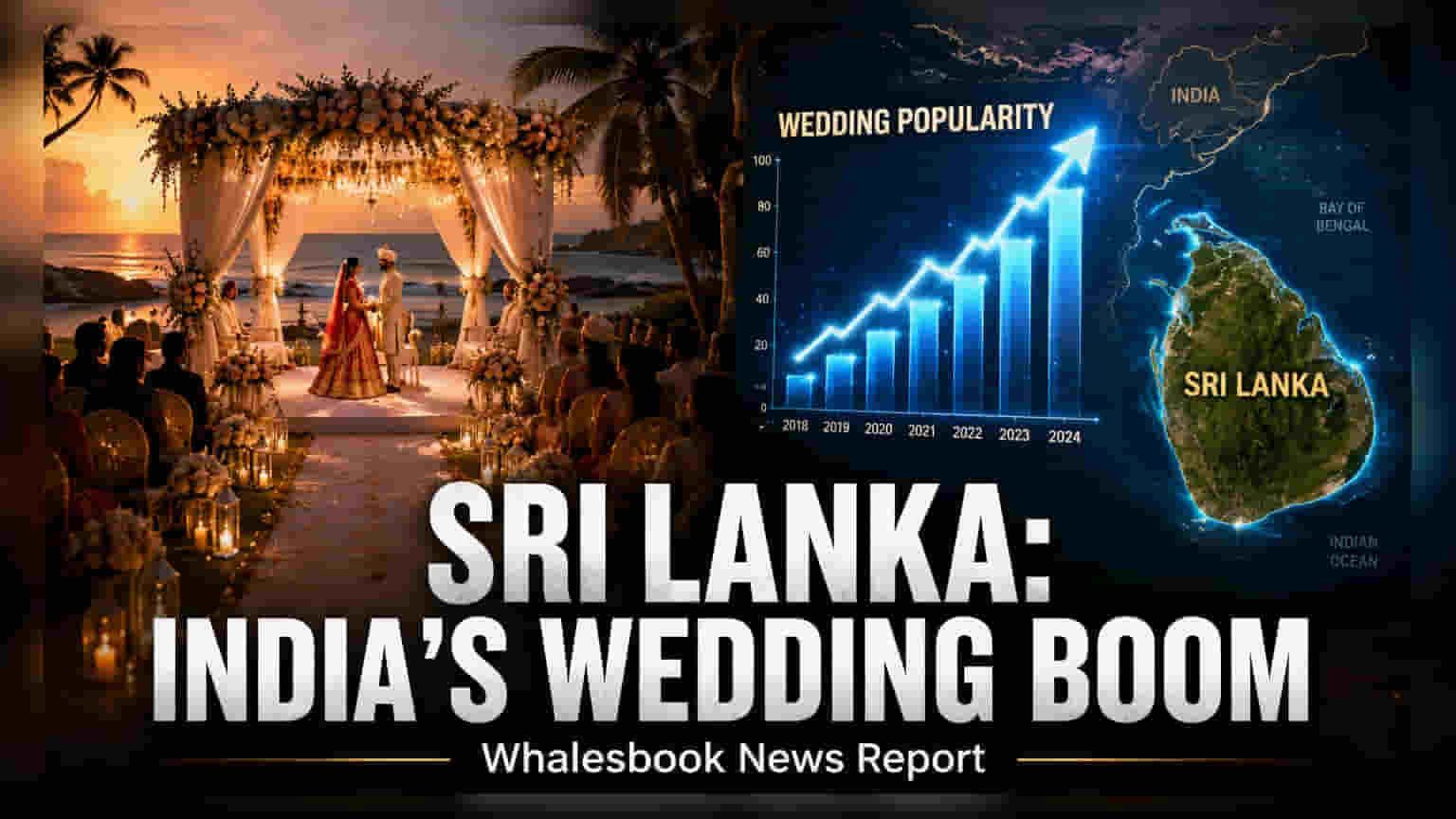
Sri Lanka’s destination wedding market grew by 25% in 2025, with average international wedding budgets reaching ₹1.5 crore. This trend signals strong demand for premium hospitality assets in the region, positioning Sri Lanka as a direct competitor to traditional hotspots like Thailand.
Sri Lanka has emerged as a major destination for Indian weddings in 2025, recording a 25% increase in popularity. This shift is driven by a growing preference for locations that offer both luxury hospitality and logistical convenience. Data from the industry platform WedMeGood suggests that destination weddings currently account for 25% of all surveyed weddings, with this figure expected to climb to 32% by 2028.
Impact on Hospitality and Travel Trends
The rising preference for Sri Lanka is reshaping budget allocations for luxury events. International destination weddings now command an average budget of ₹1.5 crore, while domestic destination events average ₹58 lakh. The duration of these celebrations has also extended significantly, now averaging 3.2 days compared to pre-2020 levels of 1.8 days. This trend benefits high-end hospitality operators with a strong presence in the island nation, such as the Shangri-La group, which manages key properties in Colombo and Hambantota, alongside local players like Amaya Hills and Jetwing Lagoon.
Competitive Landscape and Regional Dynamics
While Thailand continues to lead the market with 2.5 million annual arrivals—a 16% increase from the previous year—Sri Lanka is rapidly narrowing the gap in the premium wedding segment. The preference for Sri Lanka is partly attributed to its ability to offer a stable and accessible alternative to other international regions that have faced travel disruptions. Geopolitical instability in parts of West Asia has complicated logistics for some luxury travelers, leading wedding planners to favor regions with more predictable air travel and simplified visa processes.
What Investors Should Monitor
For investors monitoring the travel and tourism sector, the key development is the potential for higher occupancy and increased average room rates at luxury properties in Sri Lanka. As the destination wedding market matures, future growth for hospitality firms will depend on their ability to manage increased demand while maintaining service quality for large-scale events. Potential risks to watch include regional travel cost volatility, changes in local tourism policies, and the ability of infrastructure to sustain the increasing volume of large-scale international gatherings. The long-term sustainability of this growth will also depend on whether the shift toward experience-led weddings remains a priority for Indian families as wedding budgets adjust to shifting economic conditions.