

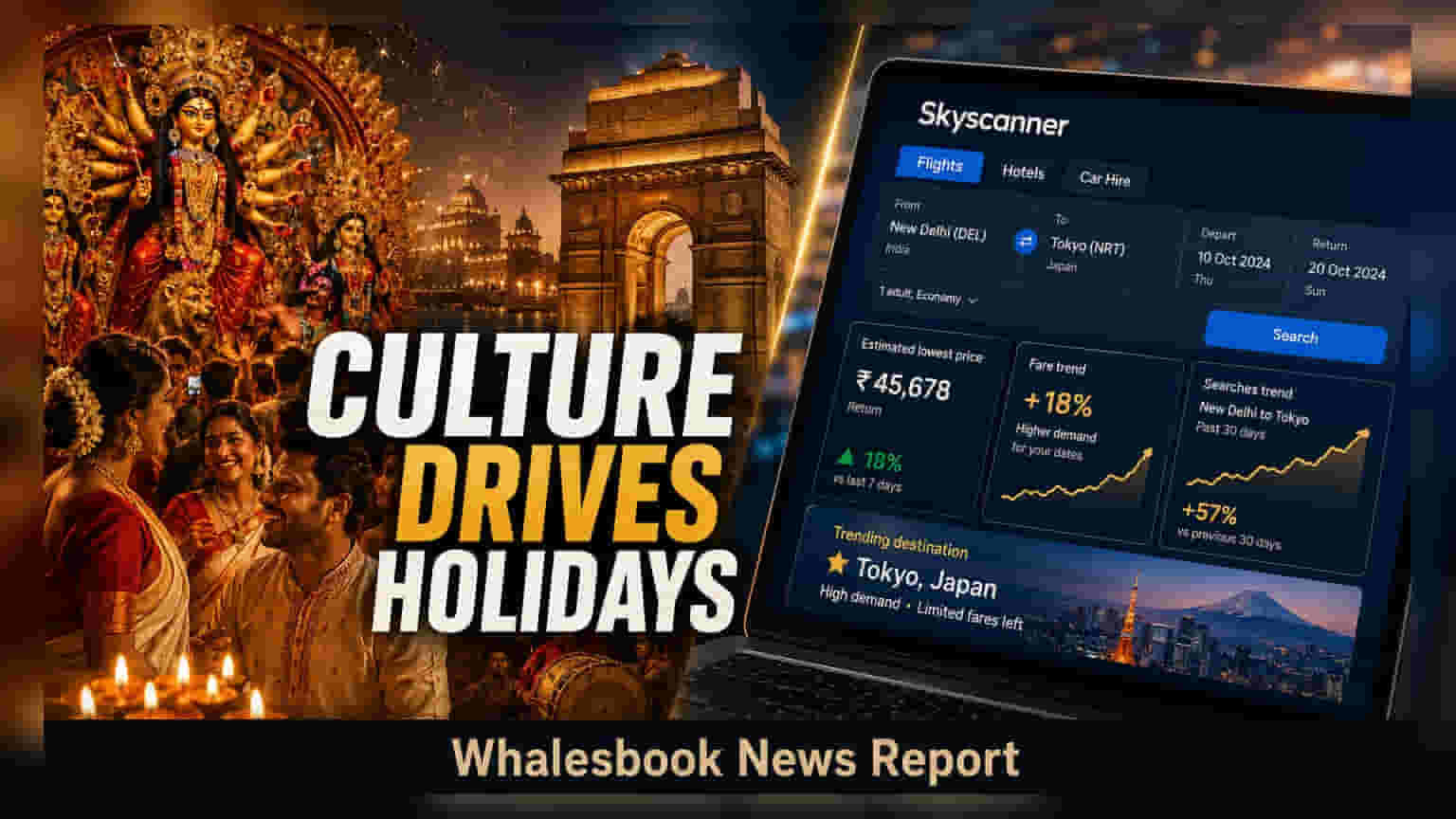
A Skyscanner report indicates that 67% of Indian travelers are now prioritizing heritage sites, festivals, and local cuisine for their holiday plans. This shift toward immersive experiences highlights growing opportunities for the domestic tourism and hospitality sectors, though concerns over travel costs remain a key hurdle for many families.
Indian travelers are changing the way they plan holidays, moving away from conventional sightseeing toward immersive cultural experiences. According to the latest 'India Culture Travel Index' by Skyscanner, 67% of respondents now prioritize heritage sites, festivals, and regional cuisine when choosing a destination. This trend is particularly strong for domestic travel, with 84% of surveyed travelers expressing a higher interest in exploring India's cultural roots than in previous years.
Impact on Travel and Hospitality
This shift in consumer behavior carries meaningful implications for companies operating in the travel, hospitality, and aviation sectors. With 47% of travelers actively planning trips specifically to visit heritage monuments, states like Rajasthan, Kerala, and Uttarakhand—which have a high density of historic sites—may see sustained demand. Furthermore, the rise of festival-based tourism, where 72% of travelers plan trips around events like Durga Puja or Ganesh Chaturthi, suggests that hotel chains and travel agencies that tailor packages to these specific dates could capture a larger share of the market.
Beyond domestic tourism, 46% of Indian travelers have already visited international destinations for cultural events or heritage trails. The data also reveals a decentralization of tourism, with 25% of travelers exploring smaller tier-two and tier-three cities. This movement could benefit regional tourism infrastructure, although it also creates a need for better connectivity and standardized services in these lesser-known locations.
Key Risks and Monitorables
While the demand for culture-focused travel is rising, the sector faces verified headwinds that could limit growth. The Skyscanner report identifies high travel costs as a significant barrier for 37% of respondents. For investors, this suggests that while demand for premium cultural experiences is growing, price sensitivity remains high, which may pressure profit margins for travel providers who cannot manage costs effectively. Additionally, 49% of travelers cited safety concerns, an operational risk that can impact the reputation and footfall of specific tourist destinations.
Investors in the hospitality and tourism space should track how companies manage these cost and safety pressures. The next important monitorable will be the ability of hospitality providers to curate and deliver these experiential packages at price points that appeal to the broader middle-class demographic. As travelers increasingly build trips around specific experiences like food trails or festivals, the ability of firms to provide authentic and seamless logistics will likely define their competitive advantage in the coming year.