

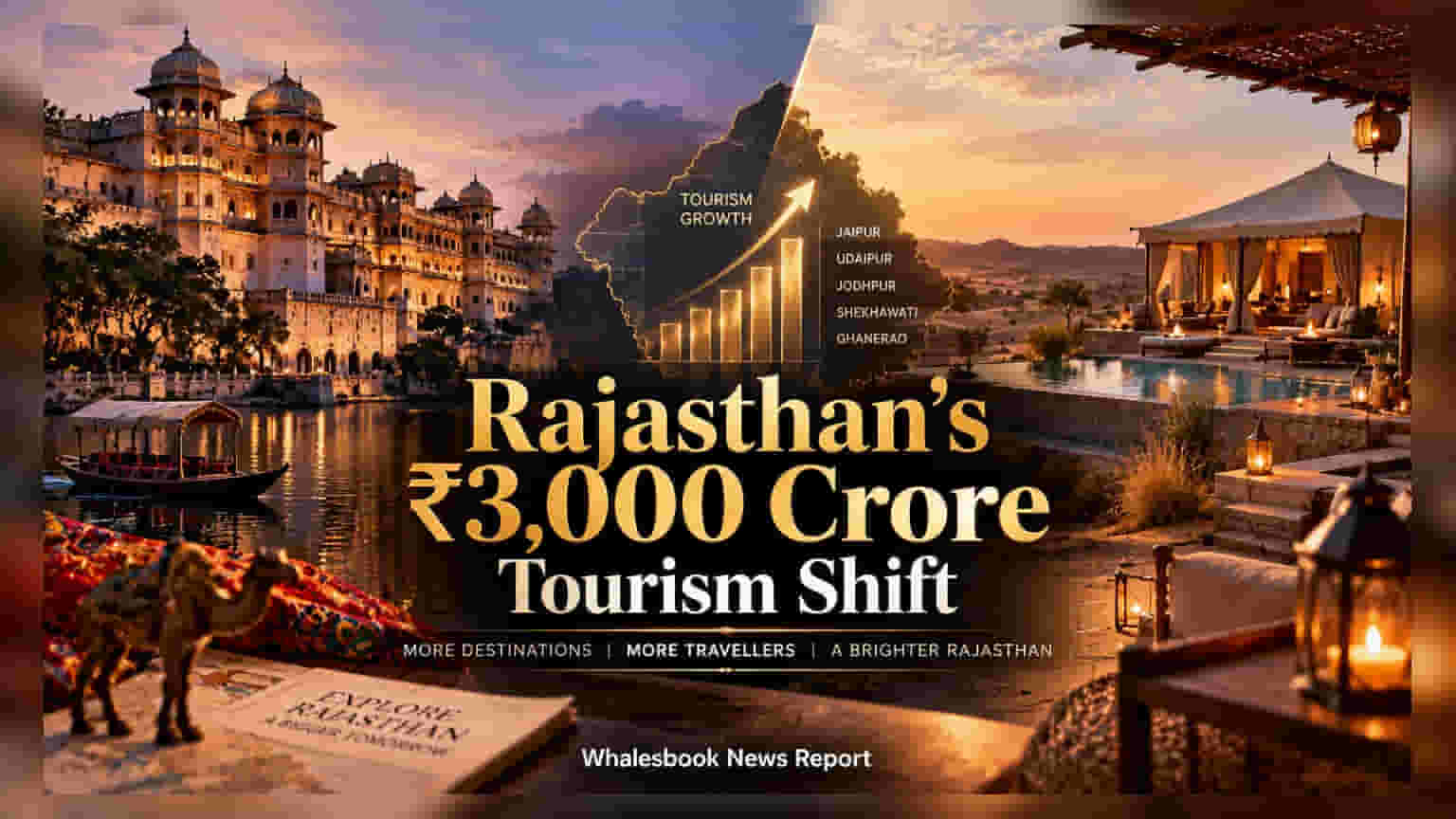
Rajasthan is launching ₹3,000 crore in tourism projects to attract mid-market travellers, moving beyond its traditional focus on ultra-luxury. The strategy aims to increase hotel capacity in emerging locations, offering an opportunity for hospitality chains to capture broader volume. Investors may monitor how connectivity improvements influence hotel occupancy in these new hubs.
The Rajasthan government is recalibrating its tourism strategy by directing ₹3,000 crore into projects aimed at the mass-premium market. This pivot seeks to bridge the gap between expensive luxury palaces and budget accommodations, a move that could reshape the state’s hospitality landscape. By focusing on the ₹35 lakh to ₹70 lakh price band, the state hopes to attract more corporate events, weddings, and volume-based tourism.
Historically, Rajasthan has been synonymous with high-end luxury tourism. However, the current strategy focuses on diversifying this base. Plans for the FY26-FY30 period indicate that nearly 45% of the new hotel pipeline is being directed toward mid-market and premium segments. This shift is designed to reduce the state's reliance on the seasonal luxury wedding market and create more stable demand throughout the year.
A key component of this expansion is moving beyond the traditional hotspots of Jaipur, Udaipur, and Jodhpur. New developments are being channeled into areas like Shekhawati and Ghanerao, which offer unique heritage-meets-nature appeal. For hospitality companies, this represents a potential increase in the total addressable market. Chains that operate in the mid-scale and upscale segments may find opportunities to expand their footprint in these emerging destinations.
However, the success of this capacity expansion depends heavily on infrastructure. Logistics remains a primary constraint. The industry has been highlighting the need for better connectivity to ensure that these secondary destinations are easily accessible. The demand for extending rail services, such as the Delhi-Jodhpur Vande Bharat, to areas like Jaisalmer, is seen as crucial for maintaining consistent room occupancy. If connectivity lags, these new hotel properties could face challenges in attracting sufficient footfall.
For investors, this shift offers a few key monitorables. First, it will be important to track the actual execution of these projects and how quickly they come online. Second, the ability of hotel operators to maintain occupancy in these newer regions without relying solely on the peak wedding season will be a sign of success. Finally, investors should watch for progress in state infrastructure, as better road and rail connectivity will likely act as a major catalyst for these regions to become popular choices for both corporate offsites and family travel.
The broader impact on the sector will depend on how successfully these mid-market properties can balance their operating costs while competing for volume. If the strategy works, it could lead to more predictable revenue streams for hospitality companies with a presence in the state, shifting the focus from high-margin but seasonal luxury to high-volume recurring business.