

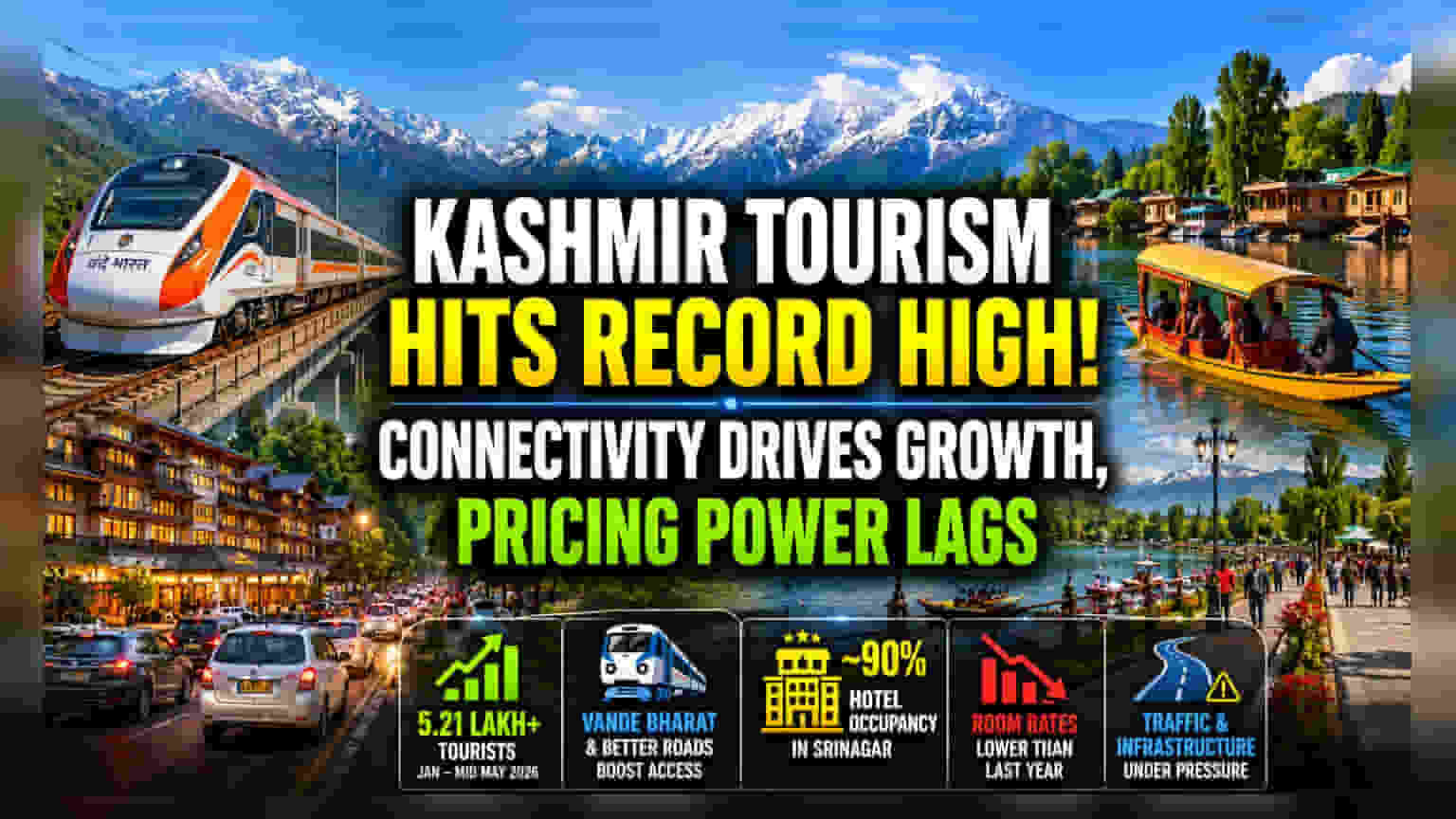
Kashmir is experiencing a significant surge in tourist arrivals, driven by the Vande Bharat Express and improved road networks. While hotel occupancy in key areas has hit 90%, industry feedback indicates that room rates are lower than last year, reflecting a volume-driven market where hospitality providers face challenges in increasing yields despite strong demand.
What Happened
Kashmir’s tourism industry is witnessing a strong recovery in the summer of 2026, with visitor numbers reaching record highs. Data indicates that over 5.21 lakh tourists visited the Valley between January and mid-May, marking a substantial increase in footfall compared to previous periods. This growth is being attributed to improved multi-modal connectivity, with the Vande Bharat Express and enhanced road infrastructure playing central roles in making the region more accessible to both domestic travelers and pilgrims.
The Connectivity Catalyst
The introduction of the Vande Bharat Express and smoother highway connectivity has significantly shifted travel behavior. Many tourists are now opting for rail travel due to the balance of comfort and affordability, while the ease of road travel has increased the number of self-driven vehicles entering the Valley. This improvement in access has effectively widened the visitor base beyond traditional segments, with weekend travelers and road-trippers from various Indian states becoming a common sight in major tourist hubs like Srinagar and Pahalgam.
The Occupancy and Pricing Paradox
While the influx of tourists has driven hotel occupancy in areas like Srinagar to approximately 90%, the financial impact on hospitality businesses is mixed. Despite the near-full occupancy levels, many hotel operators report that room rates are currently lower than those charged during the same period last year. This trend points to a market dynamic where providers are prioritizing volume—ensuring rooms are filled—over aggressive pricing. For the broader hospitality sector, this suggests that even with sustained demand, increasing Average Room Rates (ARR) or 'pricing power' remains a hurdle, likely due to intense competition and a price-sensitive traveler demographic that may be shifting preference toward budget-friendly options.
Infrastructure and Operational Pressure
The rapid rise in tourist numbers is also creating localized challenges. Stakeholders, including tour operators and hotel owners, have highlighted increasing traffic congestion in popular areas such as Boulevard Road in Srinagar. The reliance on road-based travel, while beneficial for tourism flow, has strained local infrastructure, raising questions about whether current capacity can handle the persistent rise in volume without impacting the overall visitor experience. Managing this growth while maintaining service quality will be a critical task for local administration.
What Investors May Track
For those looking at the broader tourism and hospitality sector, the key monitorable is whether companies operating in these regions can move from high-volume growth to better profit realization. Investors may watch for whether the trend of lower room rates persists throughout the peak season or if operators can eventually command better pricing as demand matures. Additionally, sustained infrastructure development, ongoing stability, and the ability of the local administration to manage traffic and utility loads will determine the long-term health and growth potential of the tourism ecosystem in the Valley.