

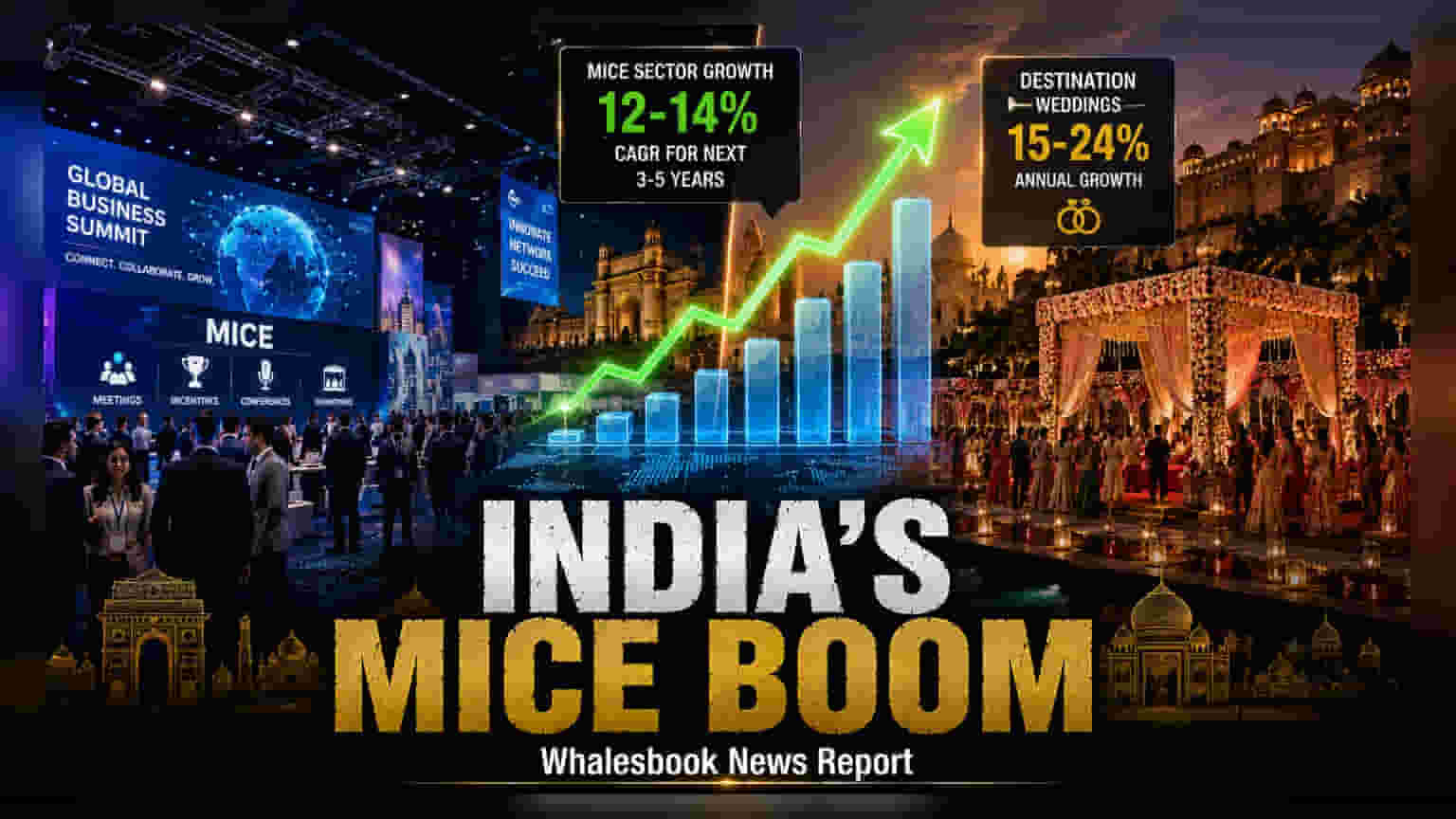
India’s MICE sector is projected to grow by 12-14% annually, driven by strong demand for corporate events and destination weddings. While tier II and III cities are attracting new interest, the industry faces headwinds from rising fuel costs and global visa challenges that investors should monitor.
The meetings, incentives, conferences, and exhibitions (MICE) sector in India is entering a period of steady growth, with industry experts projecting an annual expansion of 12-14% over the next three to five years. This outlook was shared by the Network of Indian MICE Association (NIMA) during the Travel & Tourism Fair (TTF) held in Mumbai in August 2026.
Growth Drivers in MICE and Weddings
The industry is currently supported by two major pillars. Corporate MICE events, which include business conferences and incentive travel, are growing at a rate of 10-15% year-on-year. Simultaneously, the destination wedding market is expanding at a faster pace of 15-20%. This combined demand is helping the broader sector maintain its strong growth momentum. For investors, this shift suggests a sustained increase in demand for hotel capacity, premium conference facilities, and specialized travel services.
Shift Toward Tier II and III Cities
While major urban centers like Delhi NCR, Mumbai, Bengaluru, Hyderabad, and Chennai remain primary hubs, a significant trend is the increasing popularity of tier II and III cities. Locations such as Goa, Udaipur, Jaipur, Kochi, Varanasi, and Indore are becoming preferred destinations for conferences and weddings. This move is driven by improved infrastructure, cultural appeal, and the cost benefits of operating in these regions compared to metro cities. For hotel operators and infrastructure companies, this geographic expansion offers new revenue opportunities as businesses and event planners seek alternative venues.
Sector Challenges and Risks
Despite the positive outlook, the sector faces several risks that can affect operational costs and consumer demand. Rising prices of Aviation Turbine Fuel (ATF), which have reportedly increased significantly in recent months, are putting pressure on airline finances and raising overall travel costs for both domestic and international tourists.
Additionally, global headwinds are influencing travel patterns. Visa challenges for popular outbound destinations in the European Union and the United States are causing travelers to reconsider their plans, which can shift demand toward domestic locations or shorter-haul international trips. Geopolitical tensions, such as the ongoing crisis in West Asia, have also led to flight disruptions and longer routes, adding complexity to logistics and increasing expenses for the travel and tourism industry.
Investor Monitorables
For investors observing the tourism and hospitality landscape, the performance of this sector will depend on several factors. Key areas to watch include the ability of companies to manage inflationary pressures, such as rising fuel costs, and their capacity to expand into emerging tier II and III markets. The industry's ability to advocate for better infrastructure, such as city-level convention bureaus and streamlined visa processes, will also be critical for sustaining long-term growth. Performance metrics like revenue per available room (RevPAR) for hospitality firms and airline capacity utilization remain important indicators of the sector's health.