

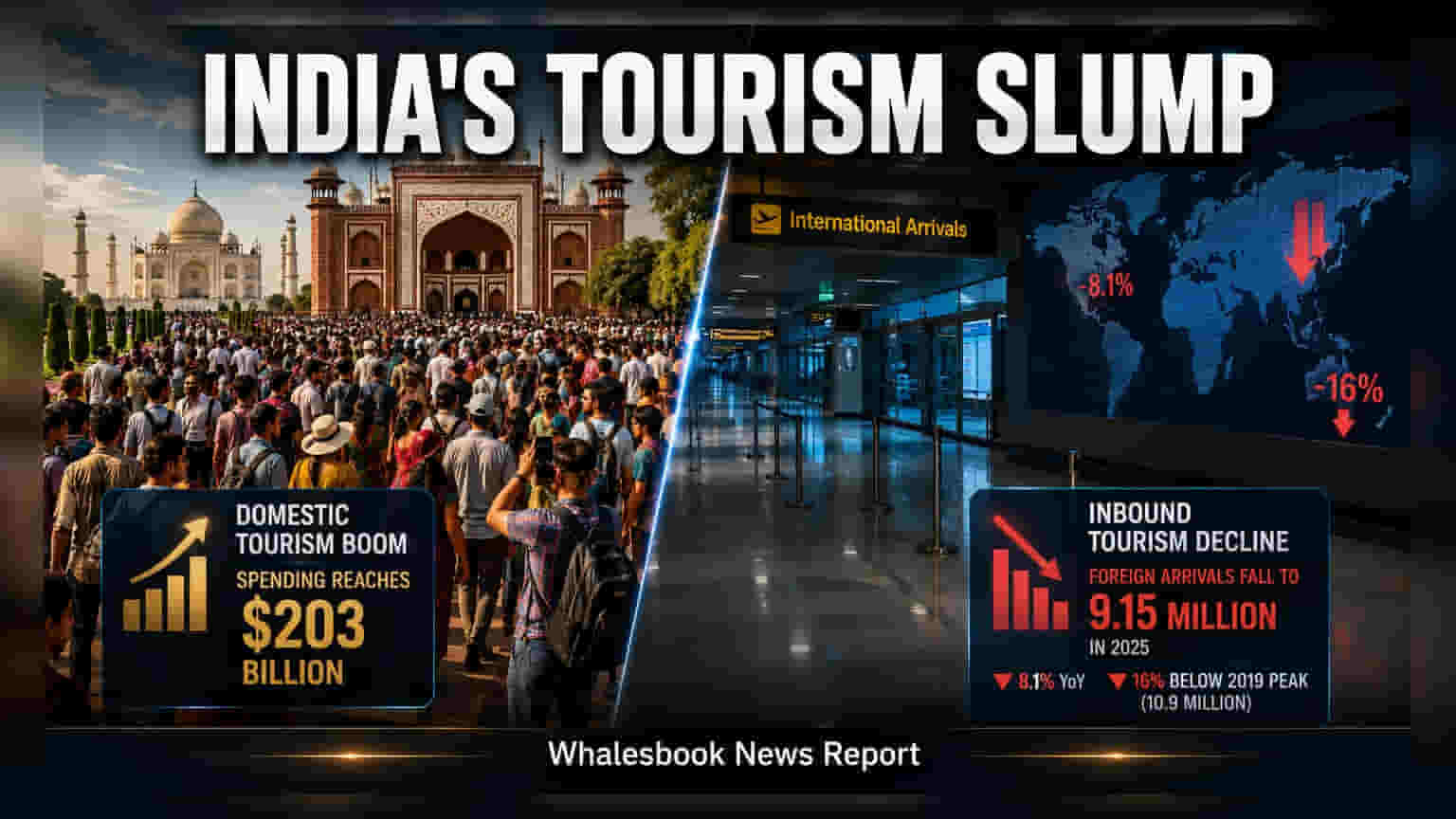
India's tourism sector is witnessing a sharp contrast as foreign tourist arrivals fell 8.1% in 2025 to 9.15 million, even as domestic travel surges. Investors in the hospitality and aviation sectors should monitor this trend, as the reliance on high-volume domestic traffic may affect premium profit margins and overall international competitiveness.
India’s tourism industry is currently navigating a significant split in its growth trajectory. While domestic travel is seeing explosive growth, with spending reaching $203 billion last year, the inbound international segment is struggling. Official data shows that foreign tourist arrivals dropped to 9.15 million in 2025, marking an 8.1% decline compared to the previous year and a 16% shortfall from the 2019 pre-pandemic peak of 10.9 million.
The Volume Versus Value Disconnect
The tourism sector currently derives about 86% of its total expenditure from domestic travelers. For listed hospitality and aviation companies, this reliance on domestic volume has provided a steady revenue base as the economy grows. However, the lack of high-value international visitors presents a different set of challenges. International travelers typically spend more per visit and occupy premium room categories and higher-tier travel classes.
When these high-value visitors are missing, hotels and travel operators may find it harder to maintain premium pricing. In popular destinations, the surge in local travelers has driven up costs, which can inadvertently make the country less attractive to price-sensitive international tourists who might opt for more accessible or competitively priced alternatives in Southeast Asia, such as Thailand, Malaysia, or Vietnam. For investors, the risk lies in whether hospitality companies can improve margins without the typical boost provided by international tourist spending.
Competitive and Operational Hurdles
The decline in inbound tourism is not merely a post-pandemic remnant but is linked to several systemic issues. Industry reports and stakeholder feedback frequently point to complex visa processes, limited international connectivity, and higher travel costs as major deterrents. While the government has focused on long-term infrastructure projects like high-speed rail and regional airport expansion to boost domestic accessibility, international marketing budgets remain constrained.
The modest allocation for global promotion in recent budgets has been noted by industry bodies as insufficient to compete with the aggressive marketing campaigns run by regional peers. Furthermore, geopolitical tensions in various parts of the world have also impacted air connectivity, adding to the volatility of the inbound travel market.
What Investors Should Monitor
Investors tracking the hospitality and travel sector should watch for updates beyond just domestic volume growth. Key monitorables include the foreign exchange earnings reported by travel companies and any shift in the average room rate (ARR) composition for major hotel chains. If hotel operators can shift their guest mix back toward a higher percentage of international visitors, it could indicate improved premium pricing power. Additionally, any regulatory changes regarding visa facilitation or increased budgetary support for global marketing will be important signals for the potential recovery of the high-value inbound segment.