

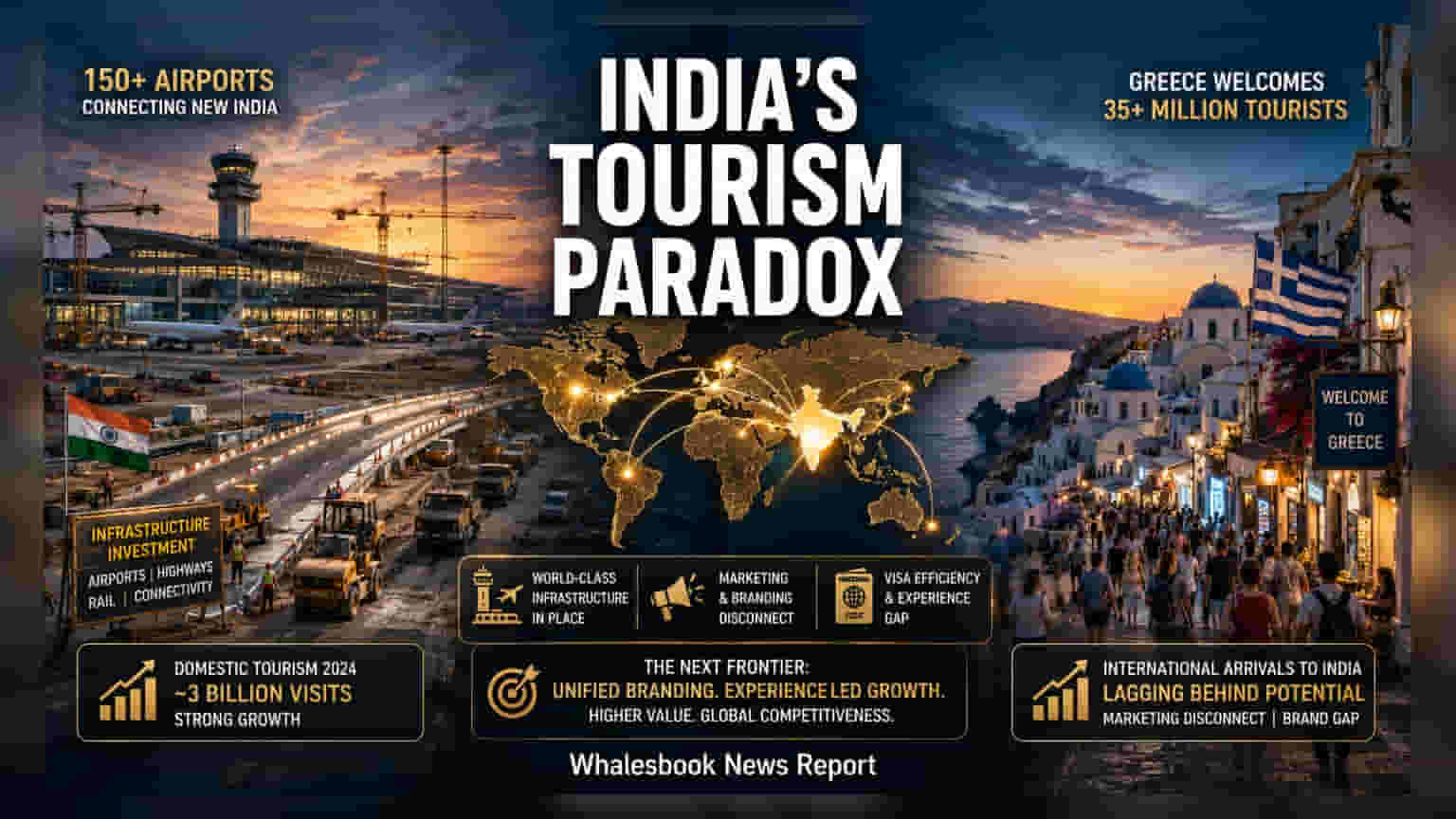
Despite massive airport and road expansion, India's international visitor growth remains disconnected from its infrastructure scale. While domestic travel hits record levels, the tourism sector faces a structural imbalance as outbound travel rises faster than inbound traffic. Investors are monitoring whether a shift in marketing strategy can translate this capital spending into higher international occupancy and revenue for hospitality firms.
India is currently in the midst of one of its largest infrastructure expansions in history. With the operationalization of over 150 airports and thousands of kilometers of new highways, the physical hardware for tourism is arguably stronger than ever. However, a significant gap remains between this connectivity and the actual volume of international tourist arrivals. While domestic tourism is thriving—recording nearly 3 billion visits in 2024—the inbound international segment has struggled to match the growth trajectory seen in smaller global tourism powerhouses.
For investors in the hospitality sector, this creates a unique operational environment. Major hotel chains and tourism-related firms have benefited immensely from the surge in domestic demand, which has provided a stable base for room rates and occupancy. However, domestic travelers often behave differently from international tourists, particularly regarding stay duration and spending on premium services. The hospitality industry typically relies on international arrivals to drive higher average daily rates and revenue per available room, making the current lag in inbound traffic a key factor in long-term margin expansion.
Industry analysts point to a 'marketing disconnect' as a primary hurdle. While infrastructure spending is visible, the cohesive, global narrative required to attract international travelers remains fragmented. Unlike competing destinations that maintain aggressive and unified global promotion, India’s tourism branding often varies by state, leading to a diluted message for the global traveler. Experts suggest that the next phase of growth for the sector may not come from building more roads or airports, but from a strategic pivot toward unified branding and experience-led destination marketing.
Another trend worth watching is the rapid growth of outbound travel. As Indian household incomes rise, an increasing number of citizens are traveling abroad. This has created a situation where outbound tourism is currently outpacing inbound growth, causing concerns about India becoming a net spender of foreign exchange in the tourism sector. For hotel operators and tourism companies, capturing the ‘share of wallet’ from this outbound segment is a defensive strategy, but it does not replace the need for strong inbound demand to balance the trade account.
Moving forward, the primary monitorables for investors will be how the hospitality sector navigates this reliance on domestic sentiment and whether government-led initiatives can successfully ‘sell’ India as a competitive international destination. Key indicators will include trends in international occupancy rates across premium hotel portfolios, changes in visa processing efficiency, and the efficacy of future national tourism campaigns. The sector’s ability to transition from a volume-based domestic market to a value-driven international one remains the defining challenge for long-term growth.