

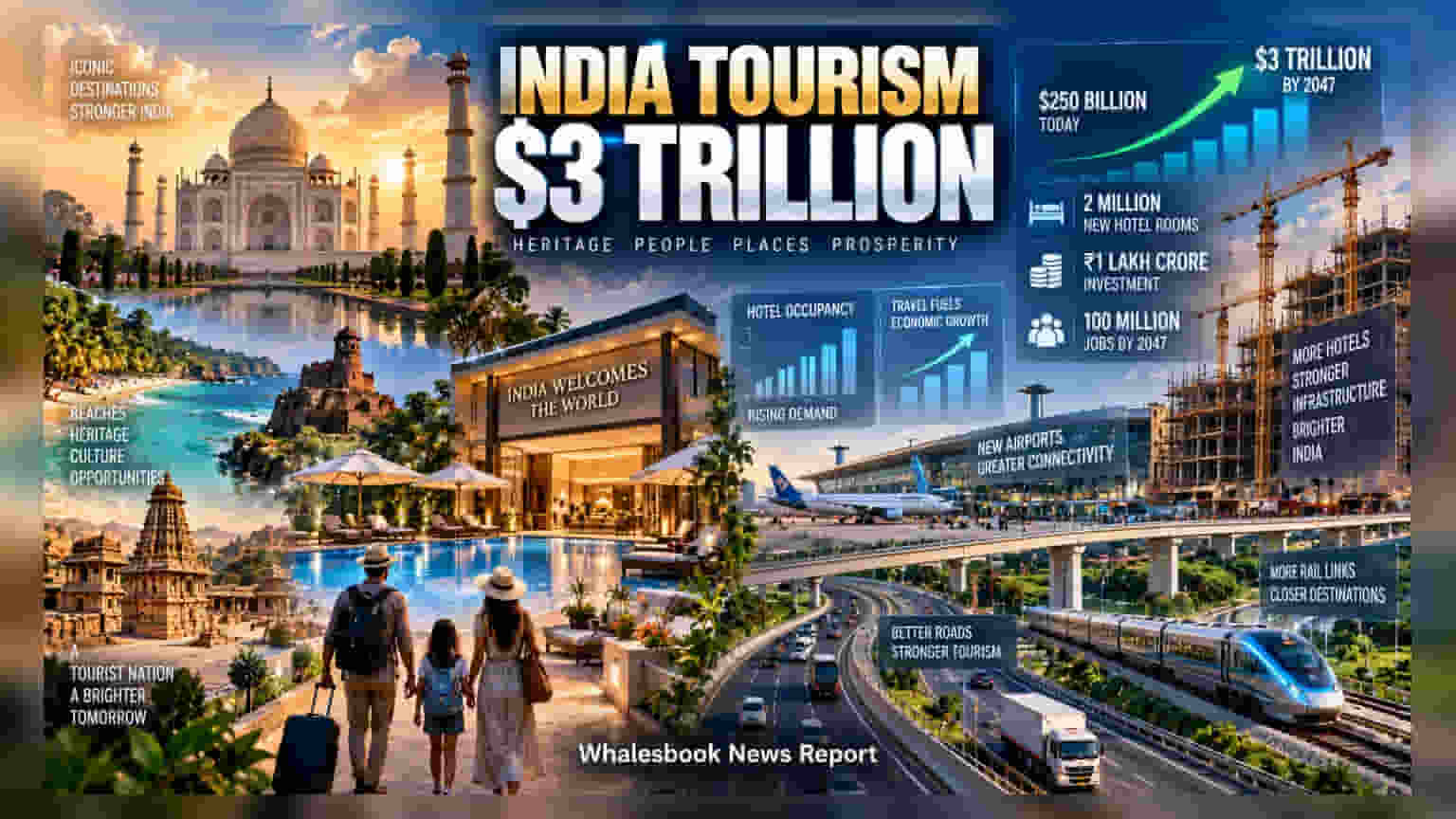
IHCL Managing Director and CEO Puneet Chhatwal projects India's tourism sector could grow to $3 trillion by 2047, provided the country adds 2 million branded hotel rooms. Investors should monitor how hospitality firms manage the high capital costs associated with this expansion while balancing debt levels and policy support.
Indian Hotels Company Ltd. (IHCL) Managing Director and CEO Puneet Chhatwal has outlined a growth projection for the domestic tourism sector, suggesting it could expand from the current $250 billion to $3 trillion by 2047. To reach this target, Chhatwal emphasized the need for a massive increase in supply, specifically calling for an additional 2 million branded hotel rooms across the country.
Developing this inventory is estimated to require an investment of nearly ₹1 lakh crore. For investors in the hospitality sector, this creates both an opportunity and a challenge. While the long-term demand for quality accommodation is rising due to increased domestic and international travel, the industry is capital-intensive. High borrowing costs in India often act as a barrier to new development, making it difficult for companies to expand without putting pressure on their balance sheets.
To navigate these costs, many listed hospitality players, such as IHCL, Lemon Tree Hotels, and Chalet Hotels, have adopted varying growth strategies. Some firms are increasingly relying on an asset-light model, where they manage properties owned by third parties rather than buying the land and building the hotels themselves. This strategy allows companies to grow their footprint and brand presence without the heavy debt load associated with owning real estate. Comparing these models is important for investors, as companies with lower debt generally offer more financial flexibility during periods of high interest rates.
Beyond just building hotels, Chhatwal highlighted that the industry faces structural bottlenecks that could delay the required growth. These include inadequate last-mile connectivity to tourist destinations and fragmented policymaking across different levels of government. While airports and major infrastructure have improved, the ability of tourists to travel efficiently from hubs to specific locations remains a concern. The CEO also called for a unified policy framework, which could help streamline investments and speed up project approvals.
Tourism is a significant contributor to employment, currently supporting about 45 million jobs. Chhatwal noted that for every ₹1 crore invested in the sector, roughly 80 jobs are created. If the industry can improve its infrastructure and successfully add the necessary hotel capacity, he expects total employment in the sector to climb toward 100 million by 2047.
For shareholders, the key monitorables moving forward will include the pace of hotel room additions, the ability of companies to manage their debt-to-equity ratios, and whether government policies reduce the cost of capital for the hospitality industry. Investors should also track how management teams choose to fund their future expansion, as that choice directly impacts long-term profitability and return on capital.