

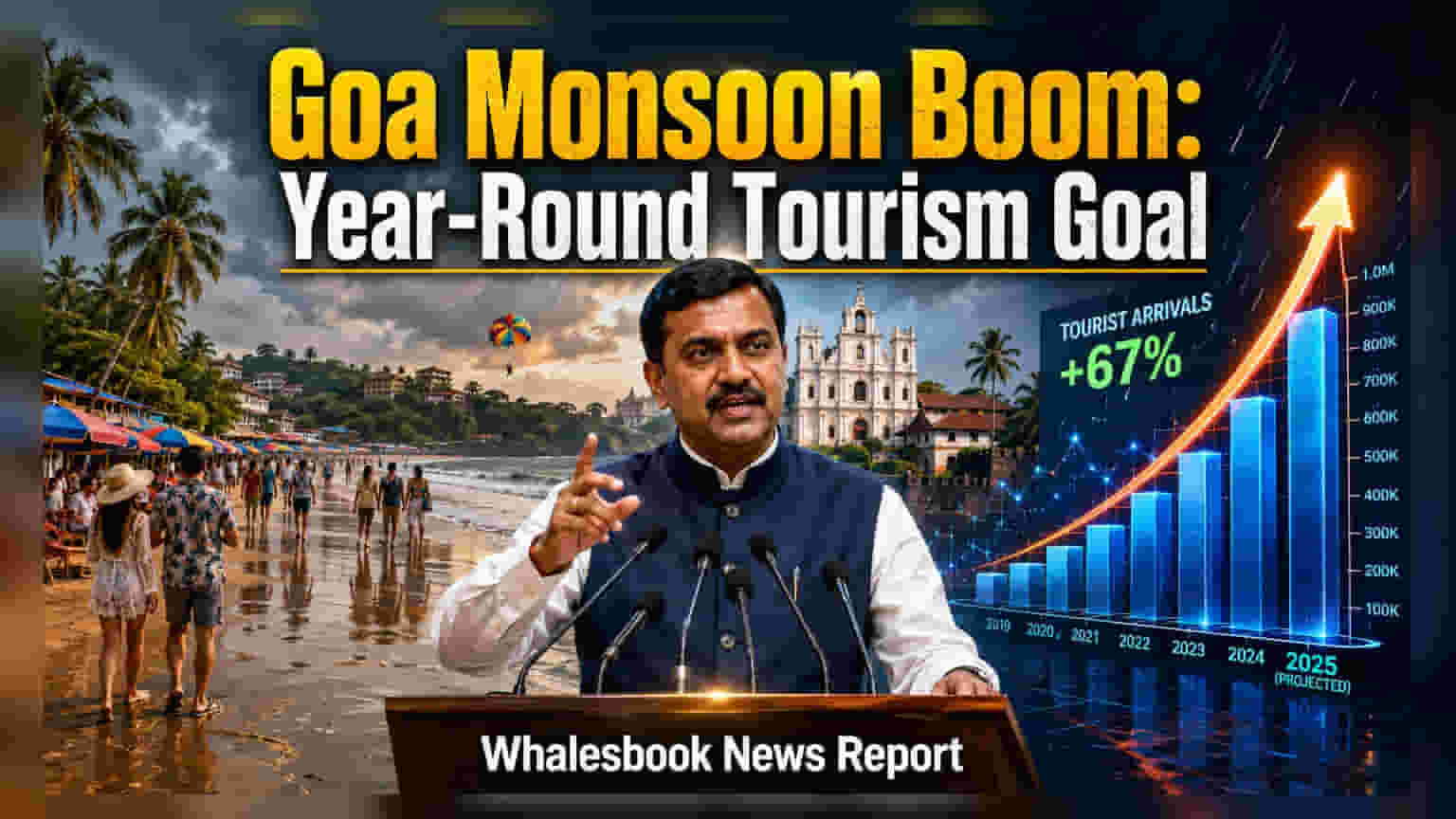
Goa recorded 61.38 lakh visitors between January and July 2026, with July arrivals climbing 2.27% year-on-year. The state is actively pushing non-beach travel like MICE, wellness, and heritage events to reduce seasonal dependency. This shift toward year-round tourism, if executed successfully, could provide steadier revenue streams for the regional hospitality and travel sector, though infrastructure sustainability remains a key concern.
Goa is moving to change its image from a seasonal beach destination to a year-round travel hub. New data shows that the state welcomed 61.38 lakh visitors in the first seven months of 2026. A notable highlight is the July performance, which recorded 6.94 lakh arrivals—a 2.27% increase compared to the same month last year. This trend suggests that promotional efforts for 'monsoon tourism' and experience-led travel are beginning to attract visitors even during the traditional rainy off-season.
The state government is focusing on diversifying its offerings to bridge the gap between peak seasons. By promoting wellness, heritage, adventure, and spiritual tourism, officials aim to draw different types of travelers. A significant part of this strategy includes boosting the Meetings, Incentives, Conferences, and Exhibitions (MICE) segment. By encouraging corporate events and professional gatherings, the state hopes to ensure hotels and transport services maintain steady business throughout the year, rather than relying only on the winter holiday rush.
For businesses in the hospitality and travel sector, this move toward year-round demand is important. Seasonality has historically been a challenge for hotel margins and airline ticket pricing in the region. If the state can successfully maintain these arrival numbers during traditionally slow months, it could help companies stabilize their revenue and manage operating costs more efficiently. The strategy also includes better international connectivity and 'workation' packages designed for longer stays.
However, this growth brings specific challenges that investors and local stakeholders are watching. As footfall increases, the state faces pressure on its existing infrastructure. Sustainability is a major concern, as the region must balance rising tourist numbers with the need to protect its environment and local quality of life. Issues such as waste management, water supply, and the ability to maintain service standards during high-volume periods are critical factors.
Furthermore, the success of this plan relies on discretionary spending. Travel demand is sensitive to macro-economic conditions, such as the cost of airfare and general economic health. If costs rise too sharply, travelers may reduce their spending on non-essential trips. The long-term impact on the sector will depend on how effectively the government can scale its infrastructure to meet this year-round demand without compromising the appeal of the destination. Investors will likely track upcoming quarterly results for major hospitality chains with high exposure to Goa to see if this shift toward year-round occupancy is translating into better financial stability.