

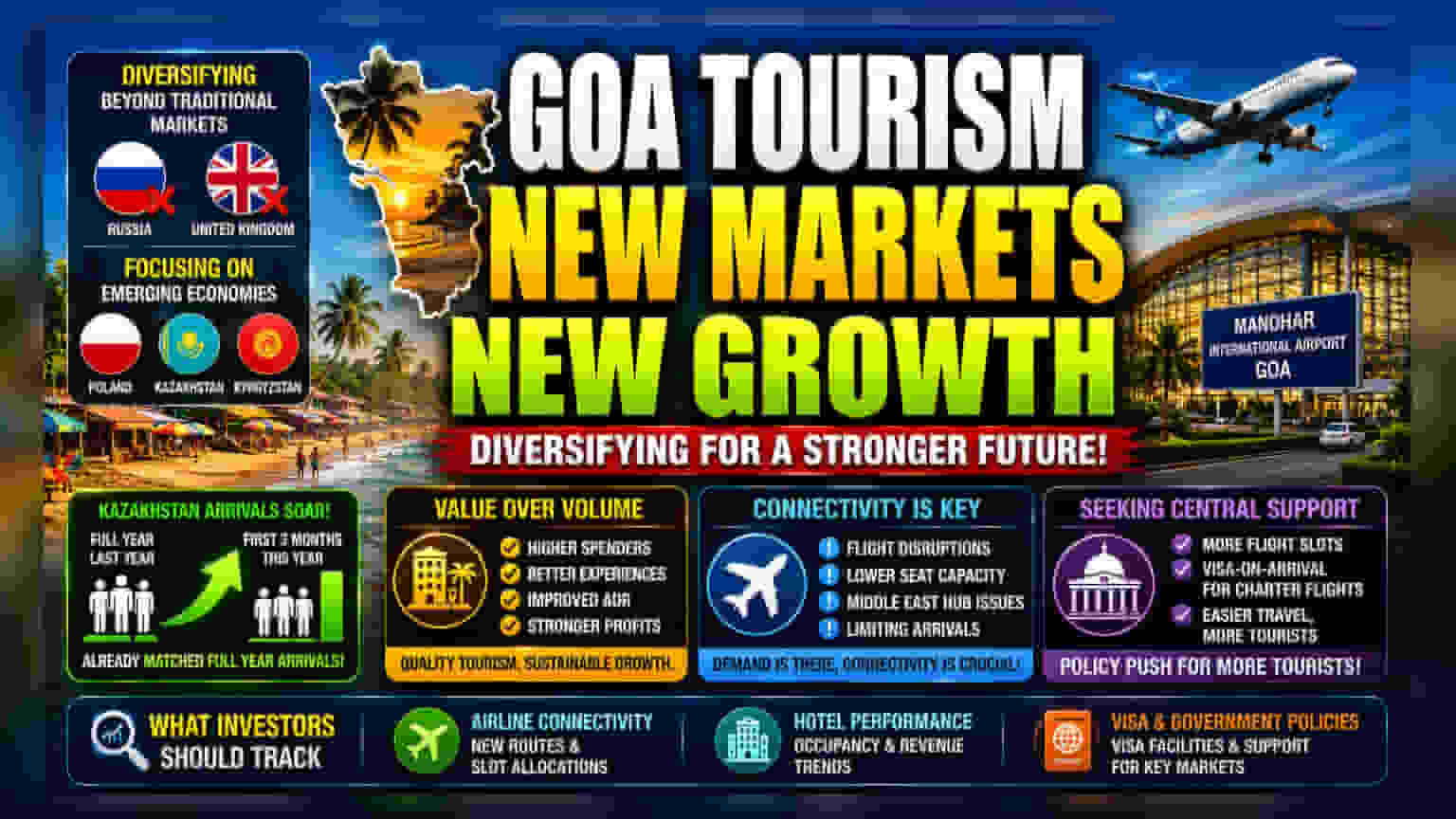
Goa is reducing its reliance on traditional tourism sources like Russia and the UK, focusing instead on markets like Kazakhstan and Poland to mitigate geopolitical risks. While early visitor numbers are promising, the state continues to battle flight connectivity issues that restrict global reach. This strategy marks a pivot toward prioritizing higher-spending tourists to boost the local hospitality economy.
What Happened
Goa’s tourism department is actively diversifying its target markets to shield the state’s economy from geopolitical disruptions. Historically, Goa has relied heavily on tourists from Russia and the United Kingdom. However, recent geopolitical instability has forced the state to reduce this dependency. Instead, the government is focusing on emerging economies, including Poland, Kazakhstan, and Kyrgyzstan. The results are showing early signs of success; for instance, visitor numbers from Kazakhstan in the first three months of this year have already matched the total arrivals from that country for the entire previous year.
The Shift to 'Value' Over 'Volume'
Beyond just finding new countries, the strategy reflects a shift in business philosophy. Officials are moving away from a "volume game"—trying to attract the largest number of tourists possible—to a "value game." This involves attracting tourists who are willing to spend more on accommodation, experiences, and local services. For the hospitality sector, this could be a positive development. Hotels, resorts, and premium service providers in Goa often see better profitability when catering to higher-spending guests, as it helps improve the Average Daily Rate (ADR) and overall revenue per room. However, the success of this strategy depends on the state's ability to maintain its brand as a premium destination rather than a budget one.
Connectivity: The Primary Bottleneck
While the demand from new markets exists, the state faces a significant operational risk: connectivity. Despite recent infrastructure investments, such as the opening of the Manohar International Airport, international tourist arrivals have been hampered by flight disruptions and reduced seat capacity. Disruptions in major transit hubs in the Middle East have limited the flow of international travellers. Without reliable and frequent flight operations, even the most effective marketing strategy will struggle to convert interest into actual tourist arrivals. This infrastructure-versus-connectivity gap remains a key risk for the local tourism and hospitality ecosystem.
Seeking Central Government Support
To bridge the gap, the Goa government is engaging with the central government to improve airline connectivity. This includes requests for more scheduled flight slots and potential visa-on-arrival facilities for charter flights from target markets. These policies are designed to reduce the friction for international travellers and encourage more carriers to include Goa in their schedules. For the travel and hospitality industry, these regulatory updates are critical, as they dictate the ease with which potential customers can actually reach the destination.
What Investors Should Track Next
Investors with an interest in the hospitality and travel sector should monitor three key areas. First, watch for updates on airline slot allocations and new international routes to Goa, as these directly impact tourist footfall. Second, observe the revenue trends and occupancy rates of hotel chains with significant exposure to the Goa market. Finally, monitor any changes in visa policies or government support, as these will likely be the primary triggers for sustained growth in international arrivals from the new, targeted markets.