

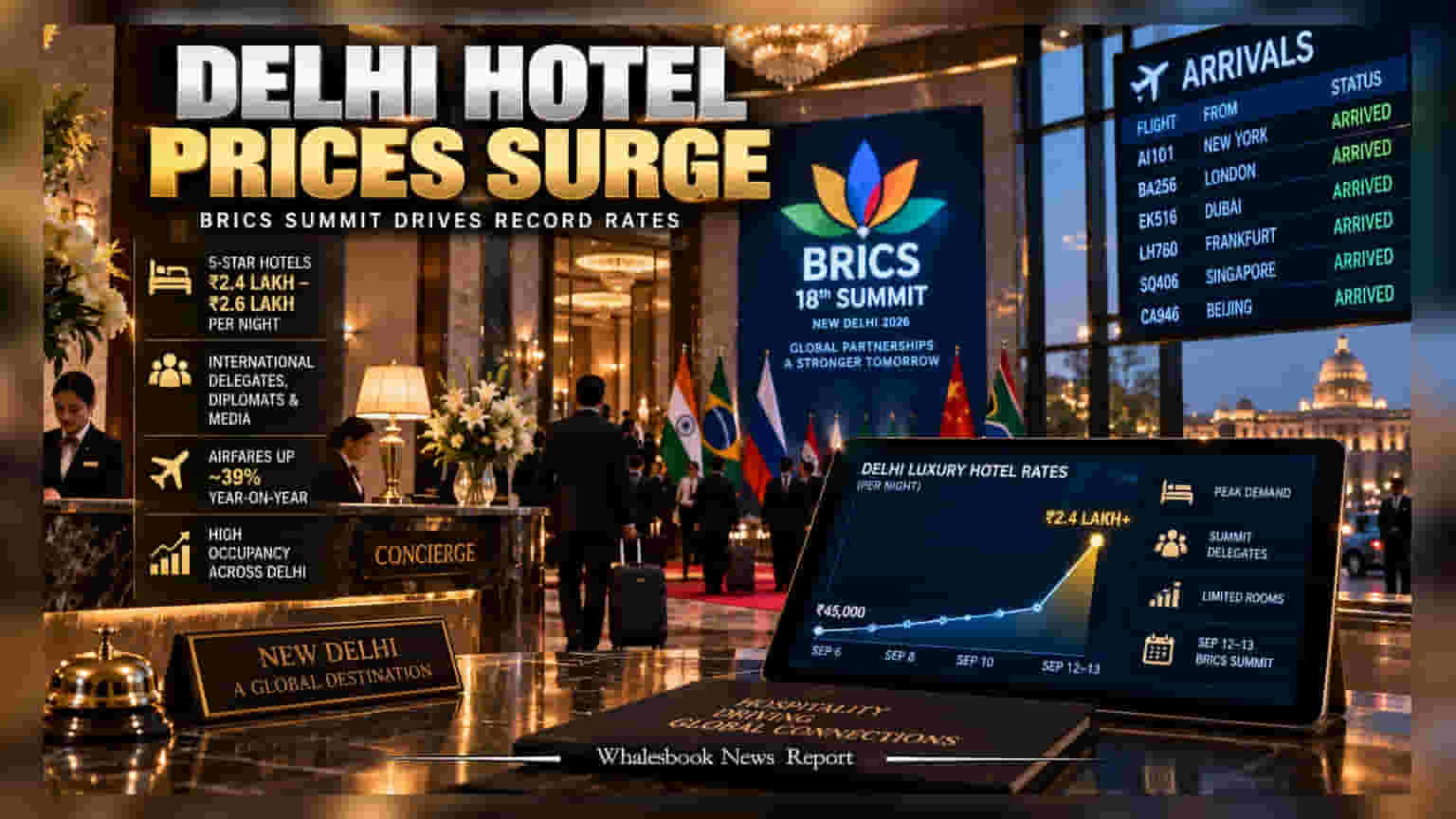
Luxury room rates in New Delhi have surged to ₹2.6 lakh per night for the upcoming BRICS Summit, creating a significant short-term demand spike. The trend has inflated travel costs, with airfares rising 39% year-on-year. While this offers a revenue boost for hospitality firms, investors may monitor how this temporary event influences quarterly financial margins.
New Delhi’s hospitality sector is experiencing an unprecedented price surge as the city prepares to host the 18th BRICS Summit on September 12–13, 2026. Industry data shows that premium five-star hotels are quoting rates between ₹2.4 lakh and ₹2.6 lakh per night for the peak dates of September 11–13. This rapid increase is driven by a massive influx of international delegates, diplomats, and media personnel, forcing many top-tier properties to close bookings as they reach full occupancy.
For investors tracking the hospitality sector, this event acts as a significant, albeit temporary, catalyst for revenue growth. Listed companies with a strong presence in the National Capital Region, such as The Indian Hotels Company Ltd (IHCL), EIH Ltd (which operates the Oberoi and Trident brands), and Chalet Hotels, typically see a sharp rise in their Average Daily Rate (ADR) and Revenue Per Available Room (RevPAR) when such high-profile international events occur in major business hubs. A strong quarter for these companies often correlates with their ability to command premium pricing during these specific peak demand windows.
The surge is not limited to luxury accommodation. The spillover effect is being felt across the travel ecosystem. Budget and mid-market hotels are reporting higher-than-average occupancy levels as visitors look for alternatives, while air travel has become significantly more expensive. Airfares for flights to Delhi have jumped approximately 39% year-on-year, adding to the total travel cost for both domestic and international visitors. This creates a challenging environment for general business travelers who may be postponing trips to the capital to avoid the peak pricing and logistics congestion.
While the revenue boost from the summit is a positive development, investors should balance this against the reality of event-driven demand. This is a one-time phenomenon rather than an indicator of long-term organic growth. There are also operational risks to consider. High-security requirements and VVIP movements often disrupt standard hotel operations, which can potentially limit the capacity for regular food and beverage services or restrict access for non-summit guests. Furthermore, extreme dynamic pricing, while immediately profitable, carries potential reputational risk if it creates a perception of excessive costs, which could influence brand sentiment in the future.
The key monitorable for investors will be how these companies manage their operating costs and capacity during this high-pressure period. While the immediate revenue impact will likely be visible in the upcoming quarterly results, the sustainability of demand and pricing power after the summit concludes remains the critical factor for assessing the sector's performance for the remainder of the financial year.