

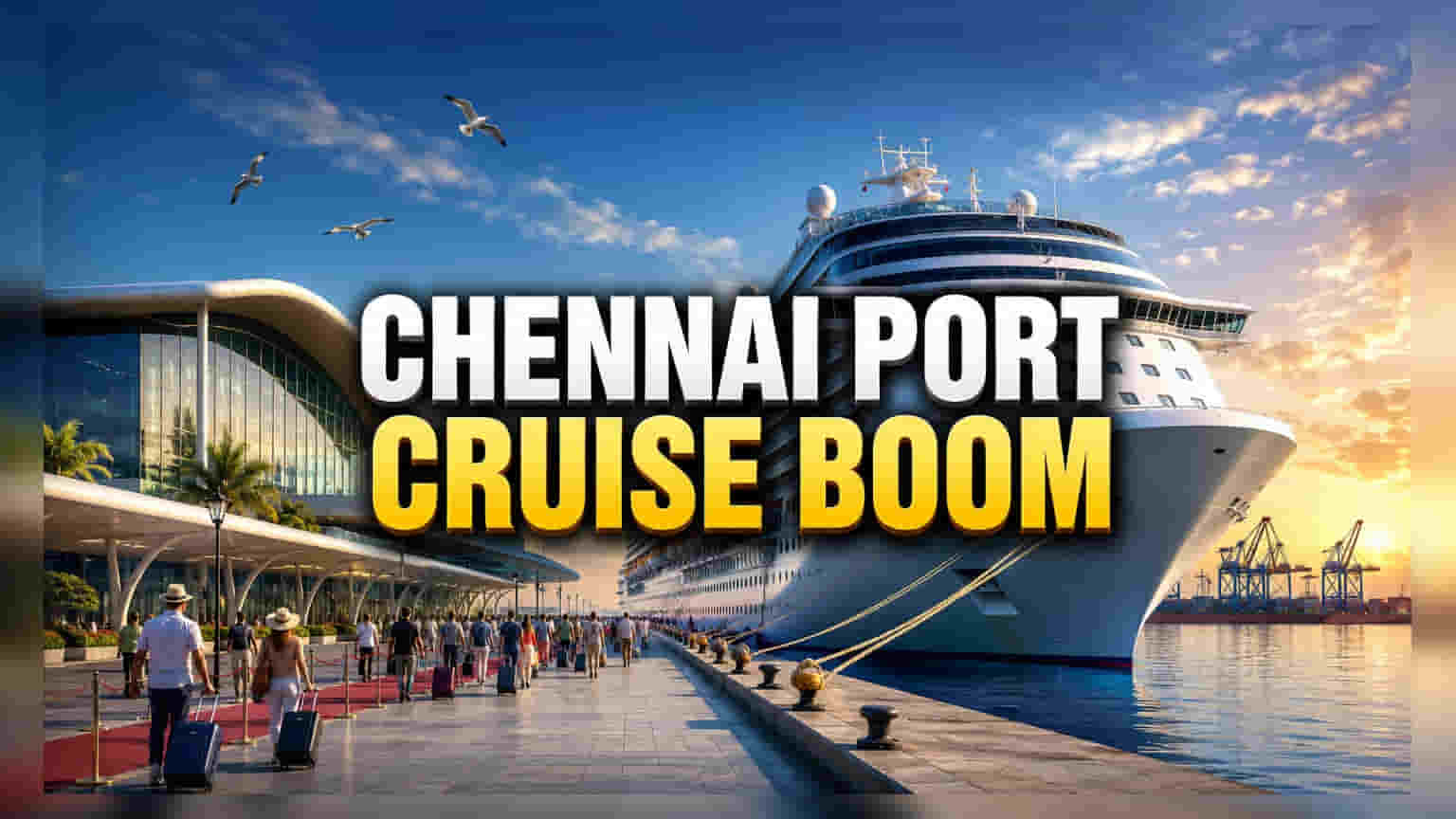
Chennai Port has launched its cruise season with the arrival of MV Empress, marking the start of 21 planned voyages over the next three months. The port successfully managed a record 3,600 passengers, signaling a push to expand non-cargo revenue through modernized infrastructure. This operational milestone highlights India's ongoing focus on developing regional maritime hubs to boost tourism connectivity.
What Happened
Chennai Port has officially opened its cruise season, marked by the arrival of the luxury vessel MV Empress. The port has announced a schedule of 21 voyages to be completed over the next three months, connecting the port to various domestic and international destinations. During the launch, the port authority reported processing a record 3,600 passengers in a single day, handling 1,800 arriving and 1,800 departing travelers seamlessly. This operational efficiency is being highlighted as a key marker of the port's readiness for high-volume cruise traffic.
Modern Infrastructure And Revenue Diversification
Central to this development is the newly modernized cruise terminal at West Quay (WQ-IV). The facility spans 4,103 square meters and is designed to handle up to 800 passengers per hour. Features like HVAC-enabled lounges, integrated customs and immigration counters, and advanced baggage screening are designed to meet international standards.
For the port and the broader logistics sector, this move is part of a strategy to diversify revenue streams beyond traditional cargo handling. By positioning itself as a transit and tourism gateway for Southeast Asia, the port aims to improve asset utilization and increase non-operating income, which can be less sensitive to the cyclical nature of freight and commodity trade.
The Tourism And Maritime Link
This initiative involves collaboration with the Tamil Nadu Tourism Development Corporation to integrate local culture into the passenger experience. The cruise itinerary includes stops in Sri Lankan ports like Hambantota, Trincomalee, and Kankesanthurai, alongside domestic destinations such as Visakhapatnam and Puducherry. This expansion reinforces the role of Indian ports not just as logistics nodes, but as active participants in the regional tourism economy.
Risks And Business Challenges
While infrastructure improvements are positive, cruise tourism faces unique challenges compared to standard cargo operations. The demand for cruise services is highly seasonal and often dependent on discretionary consumer spending, which can be influenced by broader economic conditions. Furthermore, cruise lines operate on tight schedules; any delay or operational bottleneck in port handling can lead to reputation risks and impact future bookings. Maintaining consistent passenger volumes throughout the year, rather than just during the peak season, remains a challenge for port operators focused on steady revenue growth.
What Investors Should Track
Investors interested in the infrastructure and logistics space should monitor how these modernized facilities impact the port's non-cargo revenue share. Key monitorables include the consistency of passenger traffic, the port's ability to maintain high utilization of the new terminal, and whether this model is replicated successfully at other major Indian ports. Future quarterly reports from port authorities or government infrastructure updates will be useful for tracking the financial contribution of these tourism-focused projects.