 Whalesbook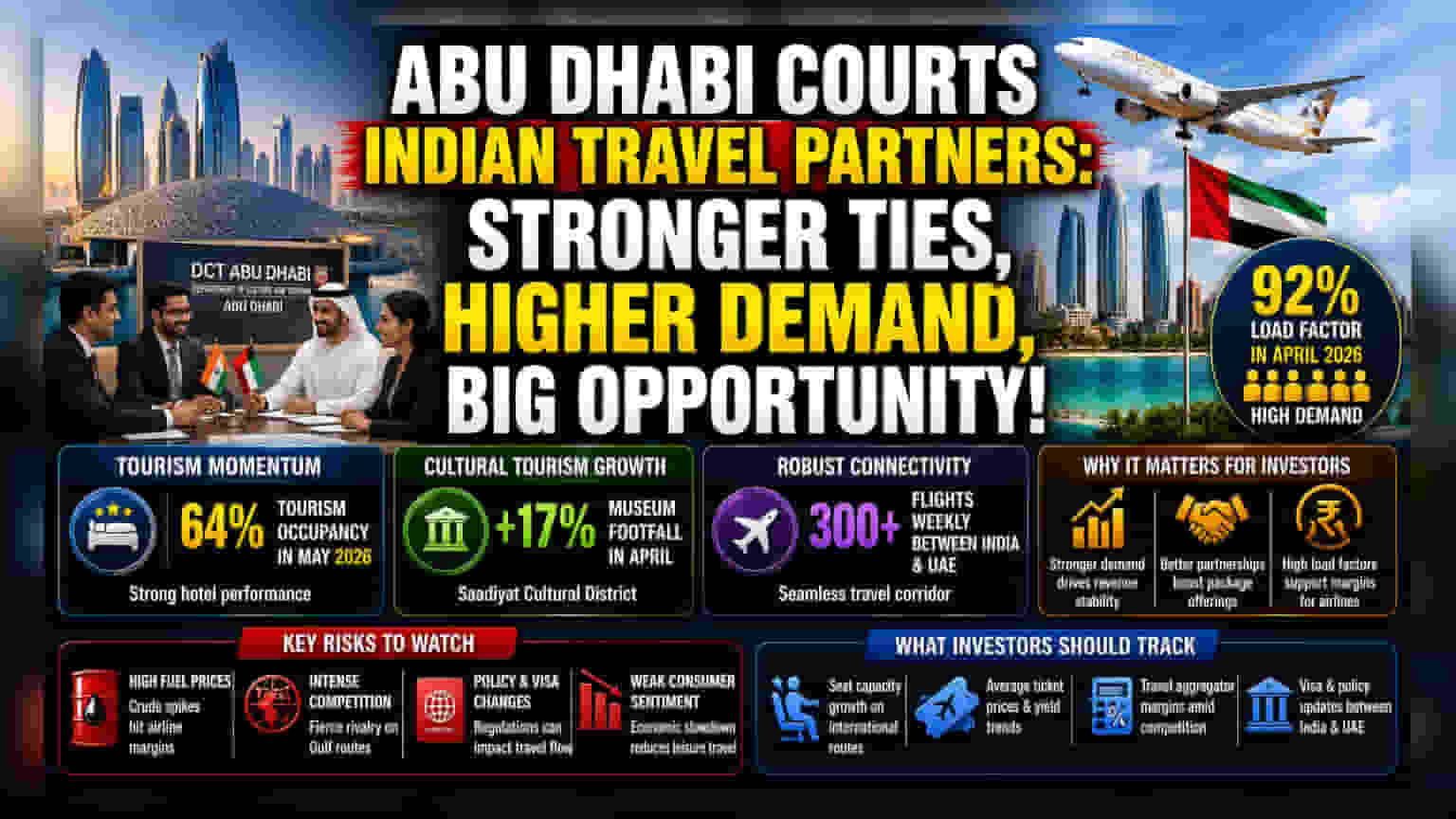


Abu Dhabi’s Department of Culture and Tourism (DCT) recently met with top Indian travel executives to strengthen ties, highlighting a robust 92% airline load factor and over 300 weekly flights. This move signals a focus on the India-UAE travel corridor. For Indian investors, the focus remains on how rising outbound travel demand may influence revenues for listed airlines and travel service providers.
What Happened
The Department of Culture and Tourism – Abu Dhabi (DCT Abu Dhabi) recently hosted a group of senior executives from India’s travel agencies and distribution networks. The primary goal of the visit was to reinforce partnerships and highlight the emirate's growing appeal as a destination for Indian travelers. During the discussions, officials shared performance data, noting that tourism occupancy rates in the emirate reached 64% in May 2026. Furthermore, museum footfall in the Saadiyat Cultural District rose by 17% in April compared to the previous month, signaling a recovery and growth in cultural tourism.
Why This Matters For Investors
The India-UAE travel corridor is a significant route for both airlines and travel agencies. With more than 300 flights operating weekly between the two regions, connectivity is a key driver for business in this sector. A reported 92% load factor—which measures how full flights are—in April 2026 suggests high demand for travel on these routes. For investors, this level of utilization is an important indicator of potential revenue stability for airlines and tour operators that have a strong presence in the Middle East travel market.
The Bigger Business Context
Indian travel companies and airlines are increasingly looking at short-haul international destinations to drive growth. The shift in traveler preference towards quick, accessible international trips makes the UAE an attractive market. For Indian travel agencies, a stronger partnership with the Abu Dhabi tourism board can lead to better package offerings, which may help in capturing a larger share of the outbound tourism market. For airlines, maintaining high load factors on these routes is essential to managing the high cost of operations, particularly fuel.
Sector Pressure And Risks
While the demand for outbound travel from India is showing growth, companies in this sector face specific risks that investors should consider. Airline profitability is sensitive to global crude oil prices, which directly impact aviation turbine fuel (ATF) costs. Any significant spike in fuel prices can create margin pressure across the aviation industry. Additionally, the travel and tourism sector is highly competitive. Indian airlines face competition not only from each other but also from international carriers that operate heavily on the Gulf routes. Changes in visa regulations, geopolitical tensions in the broader region, or a slowdown in consumer spending on leisure travel could also act as potential headwinds for travel and tourism companies.
What Investors Should Track
Investors may want to watch how these partnerships translate into actual booking numbers in upcoming quarterly reports. Key monitorables include seat capacity growth on international routes, trends in average ticket prices, and how travel aggregators manage their service margins amid heavy competition. Additionally, any policy updates regarding visa processes between India and the UAE will remain a critical factor for the seamless flow of travelers, which ultimately supports the revenue models of players in this sector.