

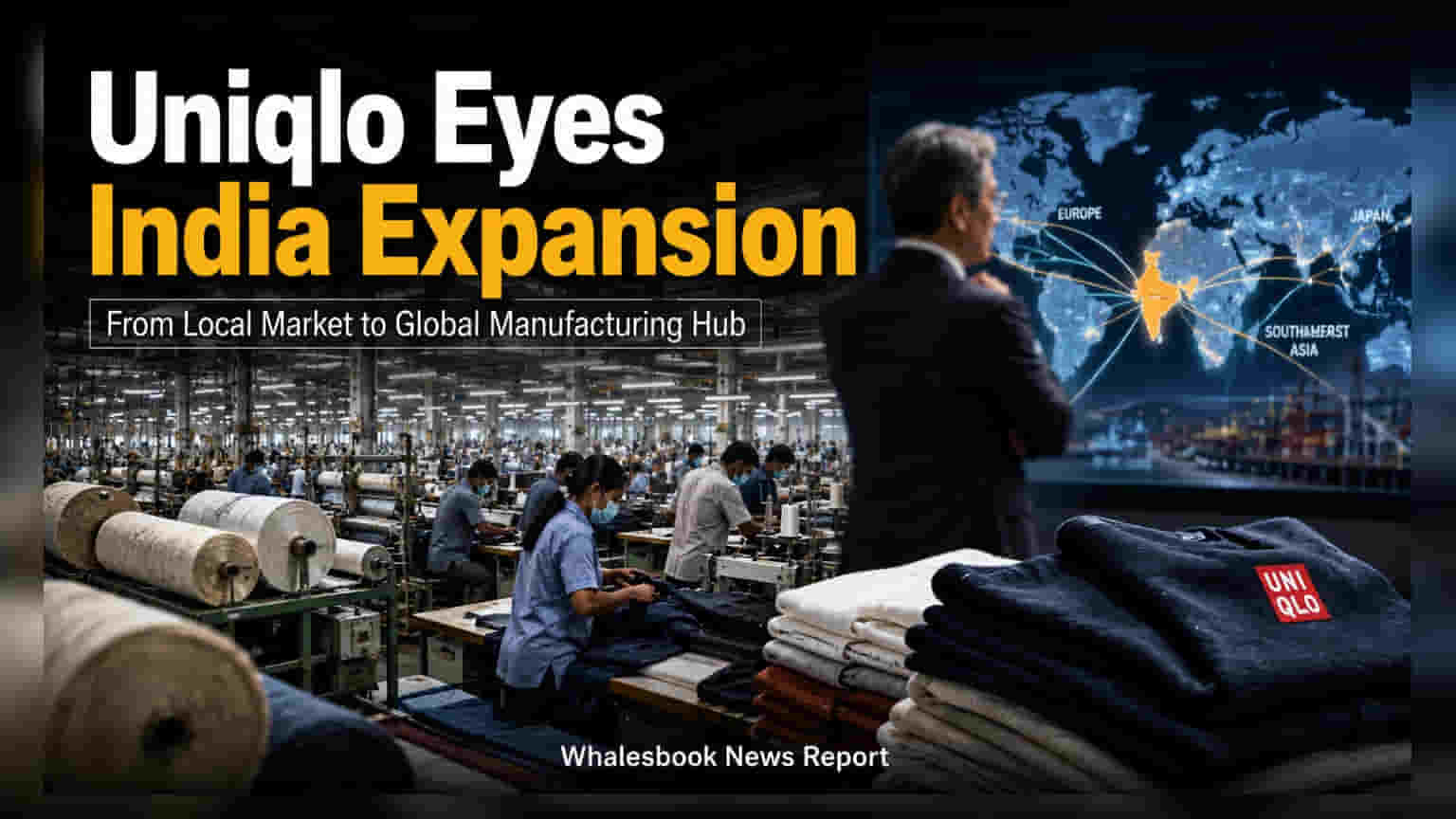
Commerce Minister Piyush Goyal confirmed that Japanese apparel giant Uniqlo, owned by Fast Retailing, plans to make India a primary hub for its global supply chain. This shift moves beyond mere domestic retail and aims to integrate Indian manufacturing into the company’s international network of thousands of stores.
Indian Commerce and Industry Minister Piyush Goyal announced a major strategic update following discussions with Uniqlo’s leadership in Tokyo. The retail giant, owned by Fast Retailing Co., Ltd., is shifting its strategy in India, moving beyond the goal of just selling clothes to Indian consumers. The company now intends to utilize India’s manufacturing infrastructure as a key pillar for its global operations.
This marks a notable change for the Japanese retailer, which entered India in 2019 and has since grown its footprint to over 20 retail outlets across the country. By treating India as a primary global sourcing hub, Uniqlo aims to support its massive international network of 3,500 to 4,000 stores. This alignment is part of a broader push to diversify the company's supply chain, potentially reducing reliance on existing production centers in other parts of Asia.
Fast Retailing has been reporting strong results, with its international operations, particularly in the South and Southeast Asia region, serving as a primary driver of growth. Recent financial reports for the first nine months of fiscal year 2026 showed consolidated revenue reaching ¥3.0651 trillion, representing a 17.1% increase compared to the previous year. This robust financial position provides the capital flexibility needed to expand its manufacturing ecosystem.
While the move signals confidence in India’s textile capacity, the retailer faces several challenges. Currency volatility, particularly the weakening of the Japanese yen, can inflate import costs and put pressure on operating margins. Additionally, the Indian apparel market remains highly competitive, with established global giants like H&M and Zara, as well as powerful local conglomerates like Reliance and Tata, vying for market share. Scaling production to meet strict international quality standards across a vast, complex supply chain also presents a significant logistical hurdle.
The key monitorable for investors and stakeholders will be the progress on the company's stated goal of achieving 30% local sourcing in India. As Uniqlo looks to integrate Indian factories into its global network, the speed and scale at which it qualifies and onboards local suppliers will determine the long-term success of this initiative.