

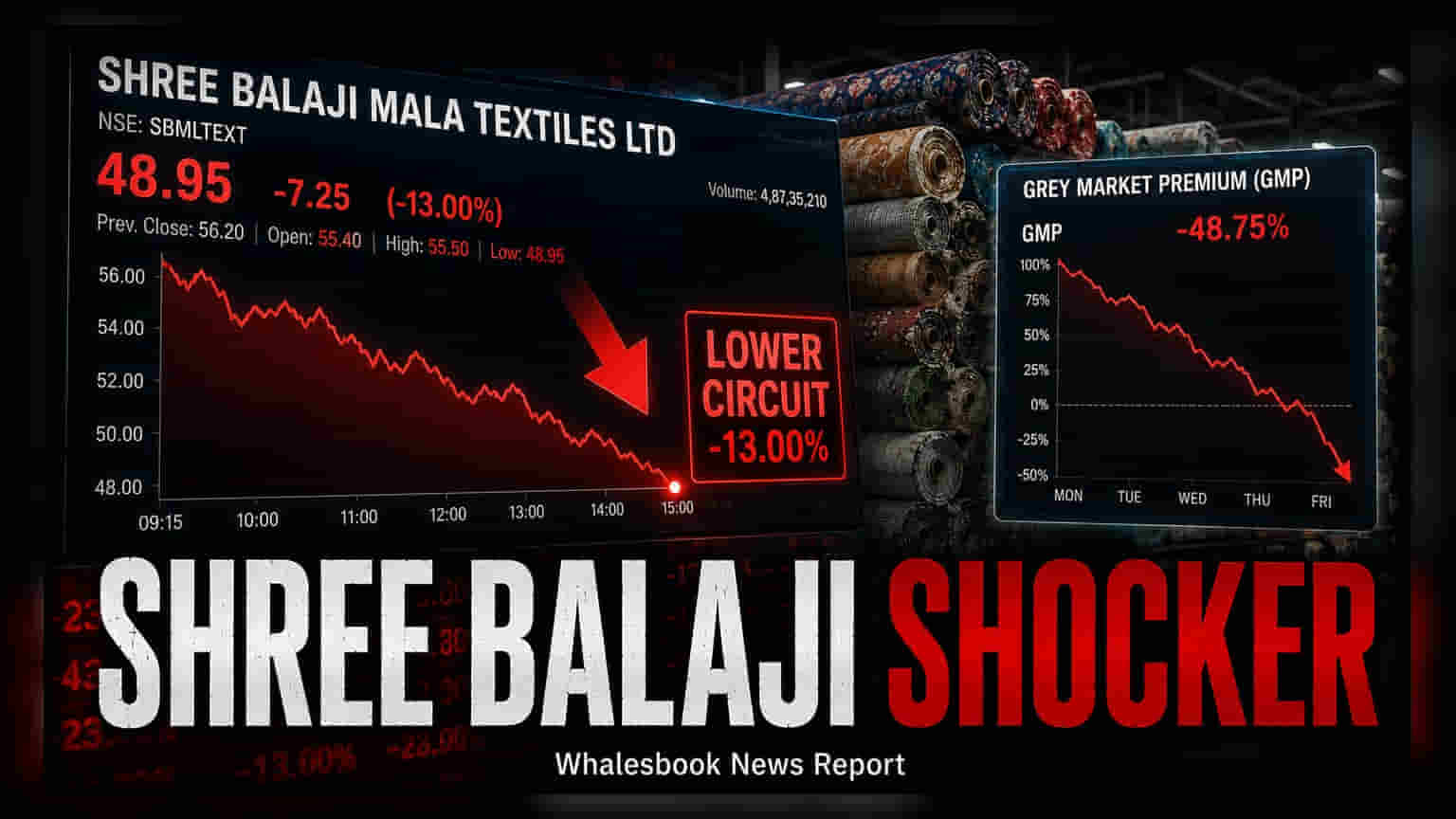
Shree Balaji (Mala) Textiles shares jumped 90% in their BSE SME market debut, opening at ₹133 against the ₹70 issue price. Following the sharp listing gains, the stock hit a 5% lower circuit as early investors moved to book profits. The company's ₹19 crore IPO saw massive demand, closing with a subscription of 200 times.
Shree Balaji (Mala) Textiles saw a volatile start to its journey on the BSE SME platform on July 29, 2026. After a strong debut that saw the stock open at ₹133—a 90% premium over its IPO issue price of ₹70—the share price quickly faced selling pressure. The stock moved downward by 5% to reach ₹126.35, hitting the lower circuit limit shortly after trading began.
Strong Subscription and Listing Context
The public offering, which concluded on July 24, 2026, generated significant interest from market participants. The ₹19 crore issue was oversubscribed by 200 times, indicating high demand for the textile manufacturer’s shares. Allotment for the IPO was finalized on July 27, 2026. The funds raised through this 100% fresh issue of 27 lakh equity shares are intended to support the company’s working capital requirements and general corporate purposes.
Business Model and Market Position
Shree Balaji (Mala) Textiles operates as a contract manufacturer and wholesaler in the Indian cotton saree market. The company distributes its products under the 'Mala Saree' brand. As a B2B player, its financial performance is closely tied to wholesale demand for cotton textiles. Investors often look at how small and medium-sized enterprises manage their working capital cycles, as these companies frequently rely on consistent order flow to maintain healthy profit margins.
Managing Market Volatility
For investors, the primary monitorable following a high-premium SME listing is the stock's ability to stabilize once the initial excitement settles. The sharp move to a lower circuit reflects profit-taking, a common pattern in IPOs that see massive oversubscription and high listing premiums. Because this is an SME-platform listing, liquidity can often be lower than on the main board, which may lead to wider price swings during early trading sessions. Moving forward, shareholders may track the company’s ability to execute its business plan using the fresh capital and whether it can sustain its growth trajectory in the competitive textile wholesale sector.