 Whalesbook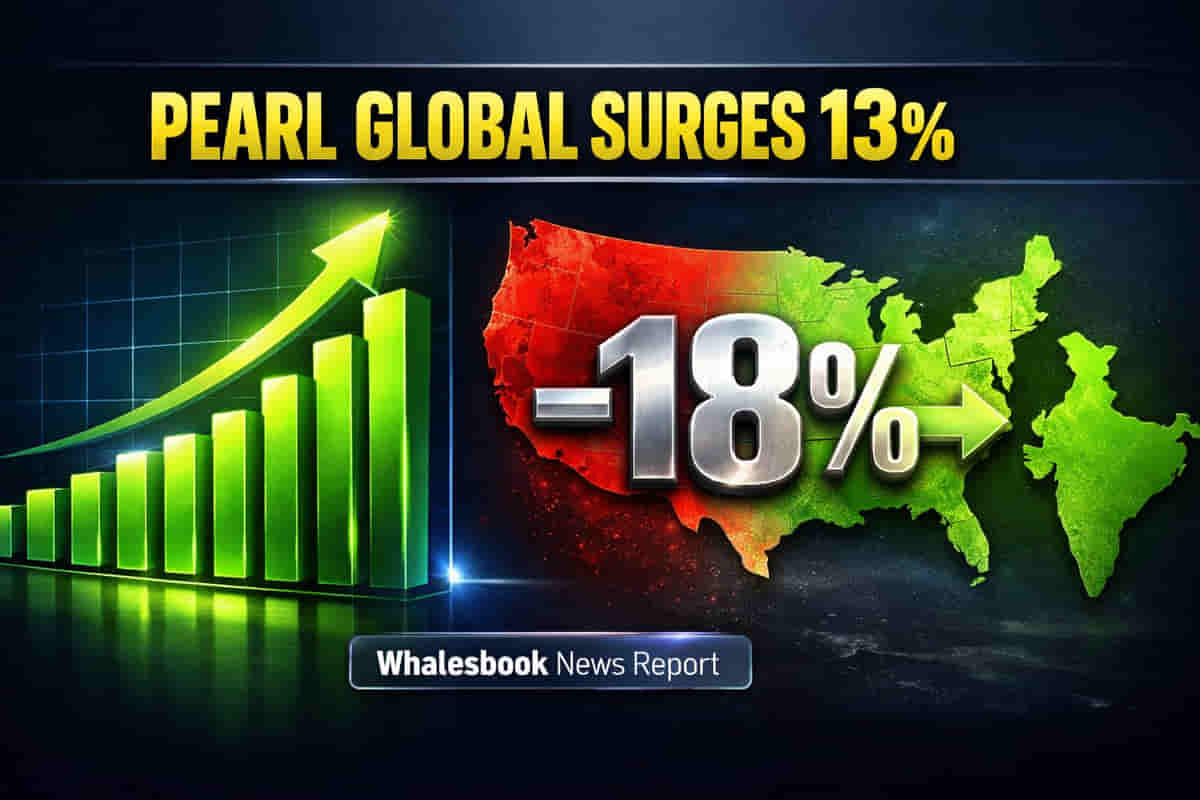
### Tariff Relief as Profitability Tailwinds
Pearl Global Industries has unveiled its financial results for the first nine months of Fiscal Year 2026, revealing a robust 13.2% year-on-year surge in consolidated revenue, reaching ₹3,711 crore. This top-line expansion was accompanied by a healthy 14% increase in Adjusted EBITDA to ₹333 crore, and profit after tax climbed to ₹189 crore. Management has identified the recent reduction of elevated US tariffs as a critical catalyst, signaling an immediate uplift in margins. Vice-chairman Pulkit Seth indicated that the decrease in US tariffs to 18% removes a significant cost burden, directly enhancing profitability and supporting future revenue expansion.
As of February 6, 2026, Pearl Global Industries' stock was trading around ₹1,834.80, with a market capitalization of approximately ₹8,660 crore. While the company has demonstrated strong performance over the last six months, with a 37.60% price increase, the current valuation metrics, including a P/E ratio ranging from 32.5 to 48.9 across various reports, suggest a potentially premium trading multiple within the Indian textile sector. The company's last reported dividend yield stood at 0.63%.
### Diversification: The Strategic Bedrock
The company's resilience in navigating volatile global apparel supply chains and geopolitical uncertainties stems from its strategically diversified manufacturing presence. With facilities spread across India, Bangladesh, Vietnam, Indonesia, and Guatemala, Pearl Global has effectively mitigated the impact of trade disruptions. Vietnam and Indonesia, in particular, have led growth, driven by a focus on higher value-added products and optimal capacity utilization. Managing Director Pallab Banerjee emphasized that the removal of US tariffs, combined with the rollback of discounts offered during the tariff period, would directly boost profitability from February onwards. The company is also poised to leverage India's expanding trade architecture, including the India-EU and UK Free Trade Agreements, to route more global orders through its domestic facilities, tapping into markets collectively valued at over $250 billion.
### Competitor Landscape and Valuation
Pearl Global Industries operates within a competitive Indian textile and apparel export sector. Peers such as Arvind Ltd. boast a larger market capitalization, around ₹9,707 crore, and a P/E ratio of approximately 23-33, indicating a more established, though potentially less aggressively valued, profile. Gokaldas Exports, another key player, has a market capitalization of approximately ₹5,719 crore and P/E ratios ranging from 41 to 49, placing it closer to Pearl Global's valuation range. While Pearl Global's ROCE of 22.1% is strong, its Price-to-Book ratio of 10.76 or 5.6 suggests a significant premium on its book value. The broader textile industry's average P/E ratio is around 30.61, indicating that Pearl Global's valuation, while not an outlier, is at the higher end, reflecting investor expectations for continued growth.
### The Bear Case: Expensive Valuations and Supply Chain Headwinds
Despite the positive outlook driven by tariff reductions and diversification, several cautionary factors merit attention. The company's valuation, with P/E ratios often exceeding 30-40 times earnings, can be considered expensive. MarketsMojo has rated the stock 'Hold', citing expensive valuation despite solid fundamentals. Furthermore, while US tariffs are easing, global apparel supply chains remain susceptible to geopolitical uncertainties and volatile demand. The company's reliance on international markets means it is exposed to currency fluctuations and potential shifts in global trade policies beyond US tariffs. Although capacity expansion in Bangladesh is on track and Southeast Asian factories maintain high utilization, any resurgence in global trade tensions could impact future performance.
### Outlook and Analyst Sentiment
Pearl Global anticipates FY27 will mark a return to faster growth for its India operations, supported by the easing tariffs and existing capacity. ICRA has upgraded the company's long-term rating to A+ (stable), reflecting confidence in its financial health and operational strategy. Analysts at one firm initiated coverage with a 'BUY' rating in December 2024, projecting significant revenue and earnings CAGR and a target price of ₹1,600, implying upside from a previous CMP of ₹1,222. However, another analyst noted a 'Hold' rating due to a balanced view of strengths against valuation concerns. The company's management is scheduled to discuss its Q3 FY26 and nine-month performance on February 7, 2026, providing further insights into its forward-looking strategy and outlook.