

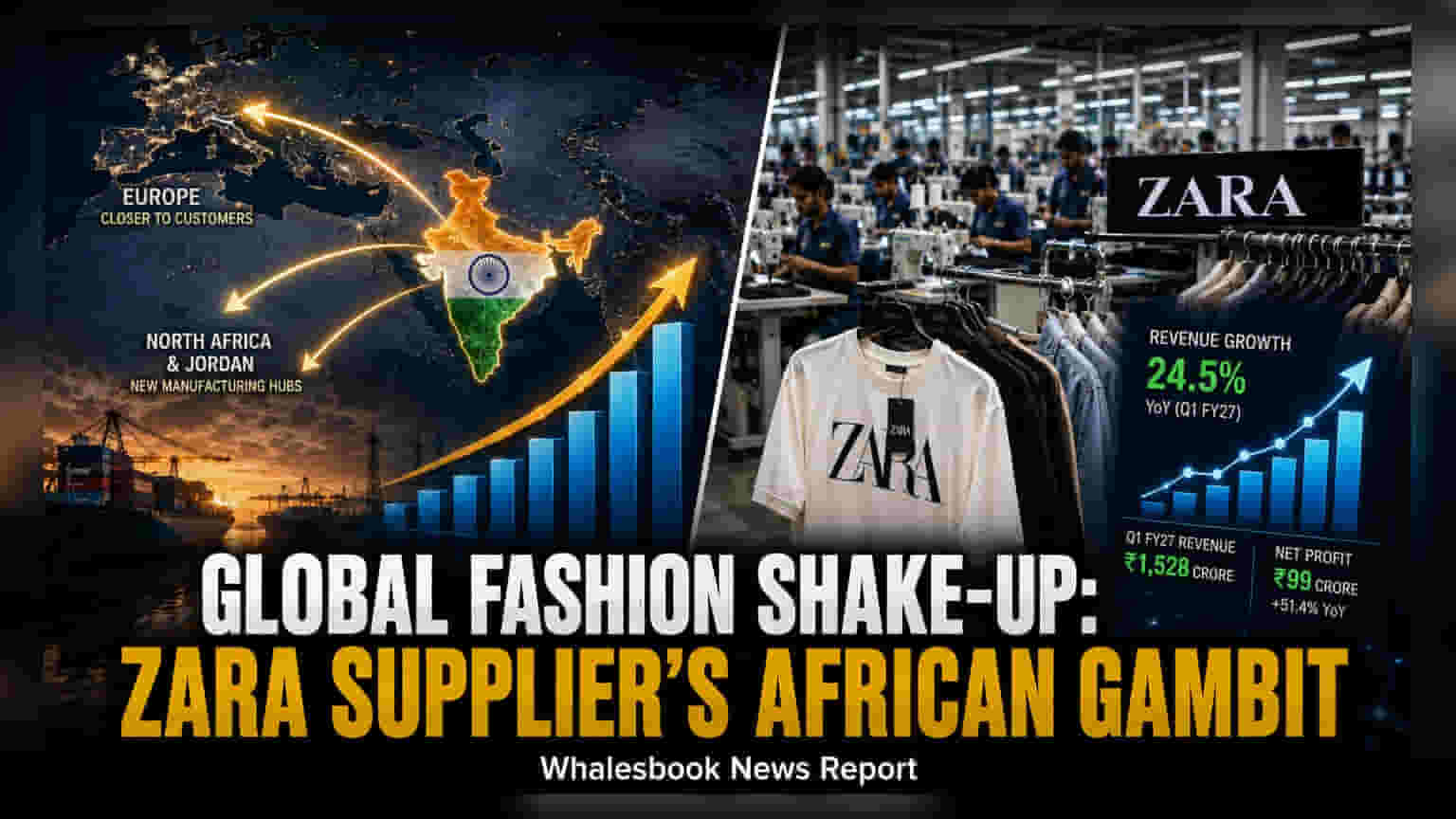
Pearl Global Industries is exploring new manufacturing hubs in North Africa and Jordan to serve European customers, aiming to reduce dependence on the U.S. market. The company, which counts Zara as a client, recently reported a 24.5% revenue jump in Q1 FY27. This move follows a broader industry trend among Indian exporters seeking to improve logistics and navigate global trade shifts.
Pearl Global Industries, a prominent apparel manufacturer known for supplying global fashion brands such as Zara, Levi's, and Gap, is evaluating plans to set up manufacturing facilities in North Africa and Jordan. This strategic shift is intended to place production closer to its European customers and further diversify its manufacturing footprint. The move represents a continuing effort by the company to reduce its reliance on the U.S. market, which has seen its revenue contribution decline from over 85% in fiscal 2021 to approximately 50% currently.
Strategic Pivot and Market Context
This expansion aligns with a larger shift seen across the Indian textile sector. Many exporters are currently diversifying their manufacturing locations into regions like Africa to solve for shipping delays and bypass trade policy risks associated with the U.S. market. Other industry players, including Raymond Lifestyle and Gokaldas Exports, have also been scaling up production in countries like Ethiopia and Kenya to better capture European demand and improve supply chain efficiency.
Pearl Global has been delivering strong financial growth while undergoing this transition. For the first quarter of the 2027 fiscal year, the company reported consolidated revenue of ₹1,528 crore, marking a 24.5% increase compared to the previous year. Net profit also rose significantly, growing 51.4% to ₹99 crore. Management remains optimistic, targeting revenue growth of over 15% for fiscal 2027 and aiming to reach a revenue target of ₹60 billion by fiscal 2028.
Risks and Investor Monitorables
While the growth outlook appears positive, investors should remain aware of potential challenges in the apparel export sector. Expanding manufacturing into new geographies brings execution risks, such as the possibility of delays in setting up factories or cost overruns that could impact profit margins. Additionally, the company remains exposed to global economic fluctuations, including potential changes in U.S. trade policies, volatility in raw material costs like cotton and synthetic fibers, and currency exchange rate movements.
Management's ability to maintain high utilization levels at these new potential sites and successfully manage operating costs will be critical. The company has previously faced stock market volatility, with the exchange seeking clarification on share price movements as recently as June 2026. Going forward, investors may track updates on project timelines, the actual commissioning of new facilities, and the company's ability to sustain its profit margins amid fluctuating global demand.