 Whalesbook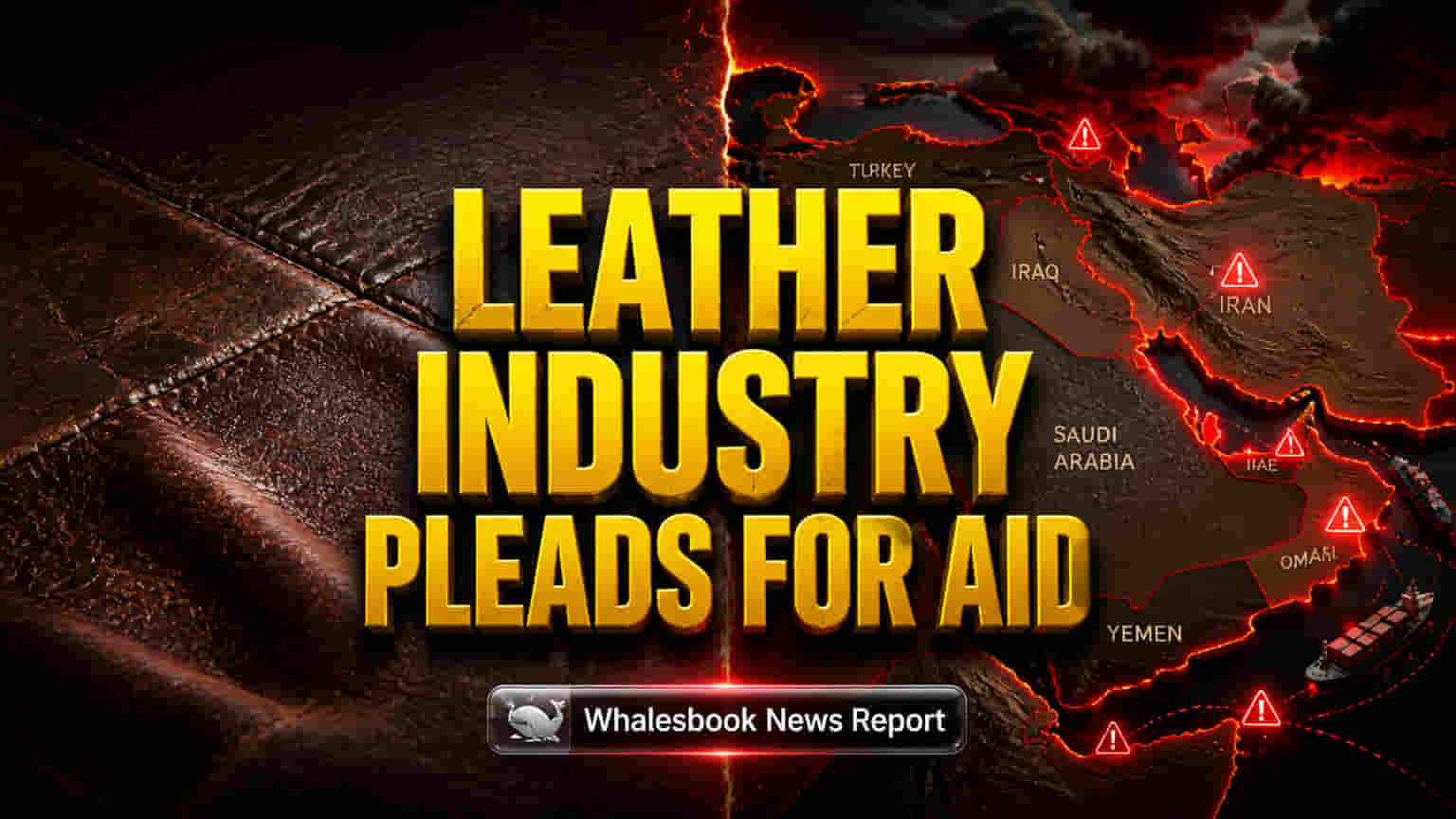


Geopolitical Shocks Amplify Input Costs
Geopolitical instability in West Asia is significantly disrupting India's leather and footwear industry, pushing up input costs for critical materials by as much as 60%. Tensions impacting global shipping routes, especially related to Iran and the Strait of Hormuz, have dramatically raised costs and delivery times for petroleum-derived components like certain rubber chemicals, PU leather, adhesives, plastics, and shoe soles. These disruptions compound existing supply chain challenges and pressure manufacturers already navigating a complex import scenario. The surge in prices for synthetic leather, for instance, has been noted globally, with some reports indicating increases of 15-20%.
Industry Seeks Government Relief and Policy Support
The industry has formally asked the commerce and industry ministry for immediate relief. Key demands include duty exemptions on essential materials like synthetic leather (PU-coated fabrics), footwear components, metal accessories, machinery, threads, moulds, toe puffs, eyelets, and specialized leather chemicals. Exporters are also pushing for quick and full implementation of the proposed FOOTWEAR and Leather Oriented Transformation (FLOAT) scheme. This initiative aims to provide integrated support across the entire product range, from raw materials to machinery and export promotion, underscoring a need for systemic reform rather than piecemeal solutions. The industry is also urging duty-free import of crust and finished leathers to bolster domestic manufacturing capabilities.
Supply Chain Dependence and Competitive Landscape
The current crisis highlights India's heavy reliance on imported inputs, sourced from countries like China, Korea, Indonesia, and Japan. Although overall sector imports dipped slightly by 4.49% to $938 million recently, this reliance remains a critical vulnerability. Global competitors like Vietnam and China benefit from large-scale integrated manufacturing and lower operational costs, leaving Indian firms challenged to match their cost efficiency and supply chain resilience. Previous supply chain disruptions have caused temporary cost spikes and delays, often leading to renewed calls for import diversification and more domestic production. However, structural changes have been slow.
The sector's export performance shows this delicate balance. Leather and leather product exports fell 2.36% year-on-year to $4.26 billion in 2025-26. Projections for total sector exports, including non-leather items, indicate $5.6 billion for the same period, suggesting a reliance on volume and varied products to maintain revenue. Major listed companies like Bata India (market cap ~INR 25,000 Cr, P/E ~45) and Relaxo Footwears (market cap ~INR 18,000 Cr, P/E ~55) operate in this challenging environment. Their valuations suggest market expectations of growth despite these systemic risks.
Structural Weaknesses and Operational Challenges
This geopolitical shockwave accentuates the inherent fragility within India's leather and footwear supply chain, a weakness going beyond immediate cost pressures. The sector's heavy reliance on imported components, especially from East Asian nations, makes it susceptible to global trade friction and logistical disruptions. Unlike some regional competitors with more robust domestic sourcing, Indian manufacturers often depend on international shipping costs and availability. This was acutely demonstrated by vessels rerouting around the West Asia crisis.
While specific company management allegations are not prominent, the sector has historically struggled to rapidly adopt advanced manufacturing tech and achieve economies of scale like global leaders Vietnam and China, pointing to structural operational inefficiencies. Furthermore, the slow implementation of supportive policies, such as the FLOAT scheme, despite industry pleas, suggests a lag that hinders modernization efforts. The indirect impact on petroleum-derived inputs adds volatility, making long-term cost predictability a significant challenge.
Outlook: Navigating Uncertainty and Seeking Reforms
The industry's urgent appeals signal a critical point where sustained cost pressures could erode margins and export competitiveness. Government intervention via duty exemptions and faster policy implementation is expected, though the extent and speed of these measures are uncertain. Analysts suggest that without structural reforms in backward integration, domestic raw material development, and technology adoption, the sector may struggle to effectively mitigate future supply chain shocks. The FLOAT scheme's success, if implemented decisively, could offer a path to greater self-reliance and global standing for Indian manufacturers. However, the immediate future is clouded by geopolitical uncertainty and its tangible impact on operational costs.