 Whalesbook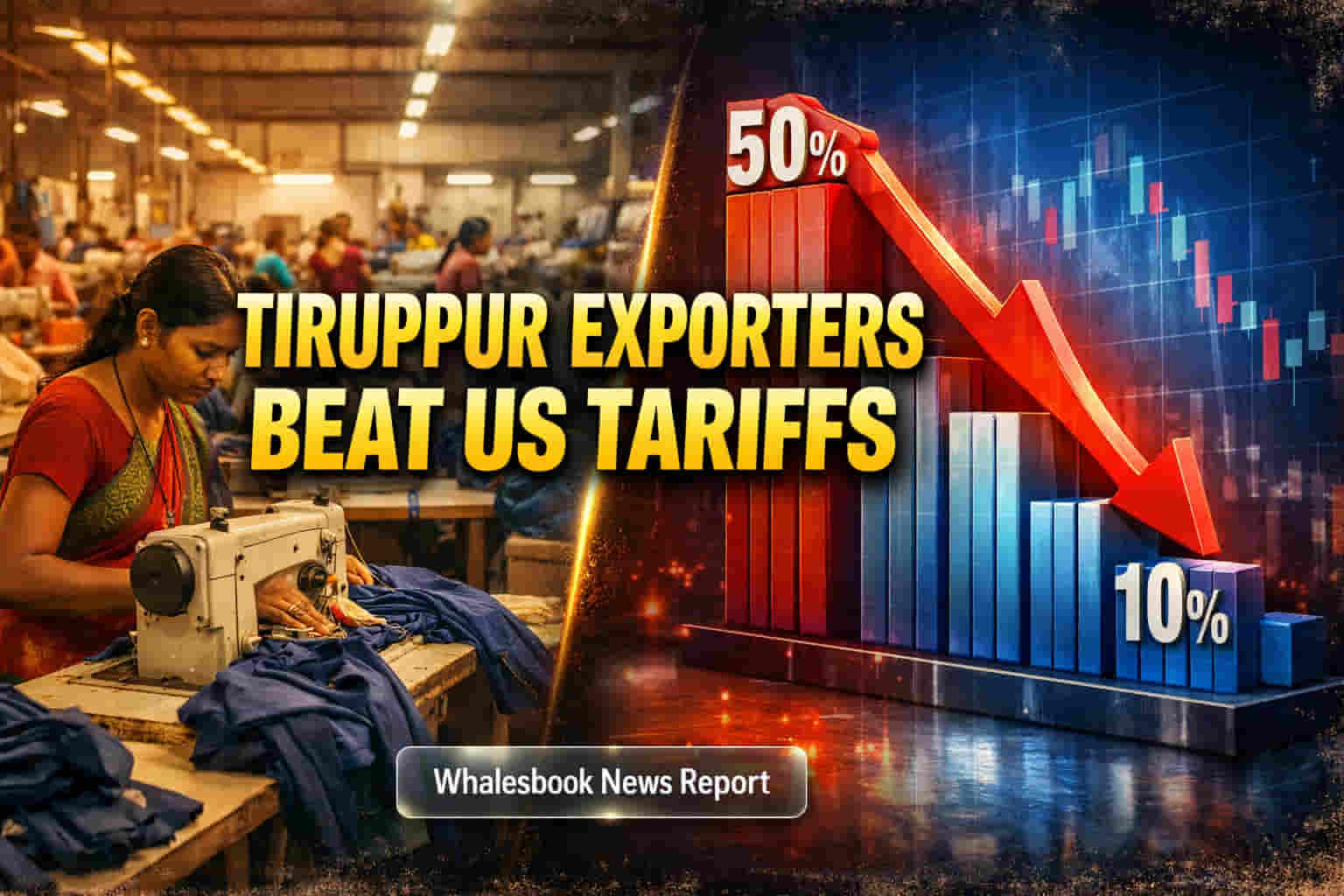


THE SEAMLESS LINK
The recent abatement of punitive US tariffs on Indian apparel imports signals a welcome, albeit precarious, reprieve for manufacturers in centers like Tiruppur. While the immediate threat of crippling duties has subsided, the underlying current of trade policy uncertainty and intense global competition has reshaped strategic imperatives. The focus has shifted from crisis management to a more deliberate recalibration of market exposure and operational resilience.
The Valuation Reset
The Indian textile and apparel sector, a significant contributor to the nation's GDP and employment, has historically relied on robust export demand. In 2025, the sector's total exports reached an estimated $37.7 billion, with the US as a primary destination, although its share saw a 3% decline to $3.6 billion during April-December 2025 due to tariff pressures. Average P/E ratios for Indian textile companies hovered around 54.9 in early 2026, with specific firms like Vardhman Textiles trading at 19.0x and K.P.R. Mill at 34.04x, reflecting varied market valuations within the sector. The recent tariff reductions, from a peak of 50% down to 10-18%, have brought immediate relief, enabling renegotiation of prices and a return to more normal business rhythms.
The Analytical Deep Dive
Competitive Pressures Intensify
India's position in the US apparel market is increasingly nuanced when viewed against key competitors. Vietnam has emerged as the top apparel supplier to the US, overtaking China in 2025, benefiting from strong trade agreements and a consistent focus on mass production for global brands. Bangladesh, another major player, experienced robust growth in US apparel exports during the first half of 2025, capturing market share partly due to higher barriers faced by others. While India achieved a 4.49% growth in value for its US apparel exports in the first 11 months of 2024, its volume increase of 13.26% suggests a competitive pricing strategy, aided by locally sourced raw materials. However, other nations like Vietnam faced a 20% drop in fashion and textile exports to the US in August-September 2025 after a 20% tariff was imposed. The overall US apparel import market is vast, projected to reach $399.77 billion by 2026.
Macroeconomic Headwinds and Consumer Behavior
Global trade uncertainty persists, with forecasts suggesting stagnant or declining clothing retail sales in key markets like the United States and Western Europe for 2026. US consumers, while showing a strong inclination towards fashion spending, are prioritizing 'value for money' above all, with durability, quality, and brand desirability driving purchasing decisions more than trendiness or discounts. Tariffs have already led to price increases of up to 17% on fashion items in the US, making consumers more price-sensitive and potentially discouraging purchases of new clothing, especially among Gen Z. This macro environment necessitates a strategic focus on efficiency and cost management for exporters.
Diversification as a Strategic Imperative
In response to tariff volatility and to mitigate overdependence on the US, Indian textile exporters are actively pursuing diversification. Government-led outreach programs focusing on 40 priority nations have shown traction, with 38 markets registering over 50% growth in imports of Indian textiles in April-September 2025. The India-UK Free Trade Agreement, signed in July 2025, offers duty-free access for 99% of India's textile and apparel exports, a move expected to significantly boost trade with the UK. This strategic shift is also supported by growth in domestic demand and the burgeoning technical textiles segment.
The Forensic Bear Case
Despite the recent tariff reductions, significant risks loom. The US trade policy environment remains prone to unpredictability, potentially reversing recent gains. Exporters who previously faced a combined 50% tariff, including a 25% penal duty, found themselves absorbing discounts of 15-18% to US retailers, severely compressing margins. For many small and medium-sized enterprises (MSMEs) in India's textile hubs, this has translated into financial strain and potential order cancellations, impacting millions of workers. While competitors like Bangladesh and Vietnam might benefit from specific trade agreements or have a more streamlined cost structure for certain product categories, Indian exporters face direct competition and the ongoing challenge of managing volatile input costs and trade barriers. For instance, Bangladesh has secured zero-rate tariffs on certain goods made with US materials, a concession India is seeking to emulate. Furthermore, the reliance on a few key markets, even with diversification efforts, leaves the sector vulnerable to shifts in major importing economies, such as a potential stagnation or decline in US consumer spending on apparel in 2026.
The Future Outlook
Industry analysts suggest that while the worst of the tariff shock might be over, the demand for certainty remains unmet. The ongoing need to balance the allure of the high-consuming US market against the predictability of other geographies will define the sector's trajectory. With the US market accounting for approximately 28-29% of India's textile and apparel exports in the years leading up to 2024, and still a significant destination, its policy shifts will continue to demand agile responses. The success of Indian exporters will increasingly hinge on their ability to leverage diversified market access, enhance value-added product offerings, and navigate an unpredictable global trade policy landscape, particularly as major players like Vietnam and Bangladesh continue to strengthen their competitive stances.