

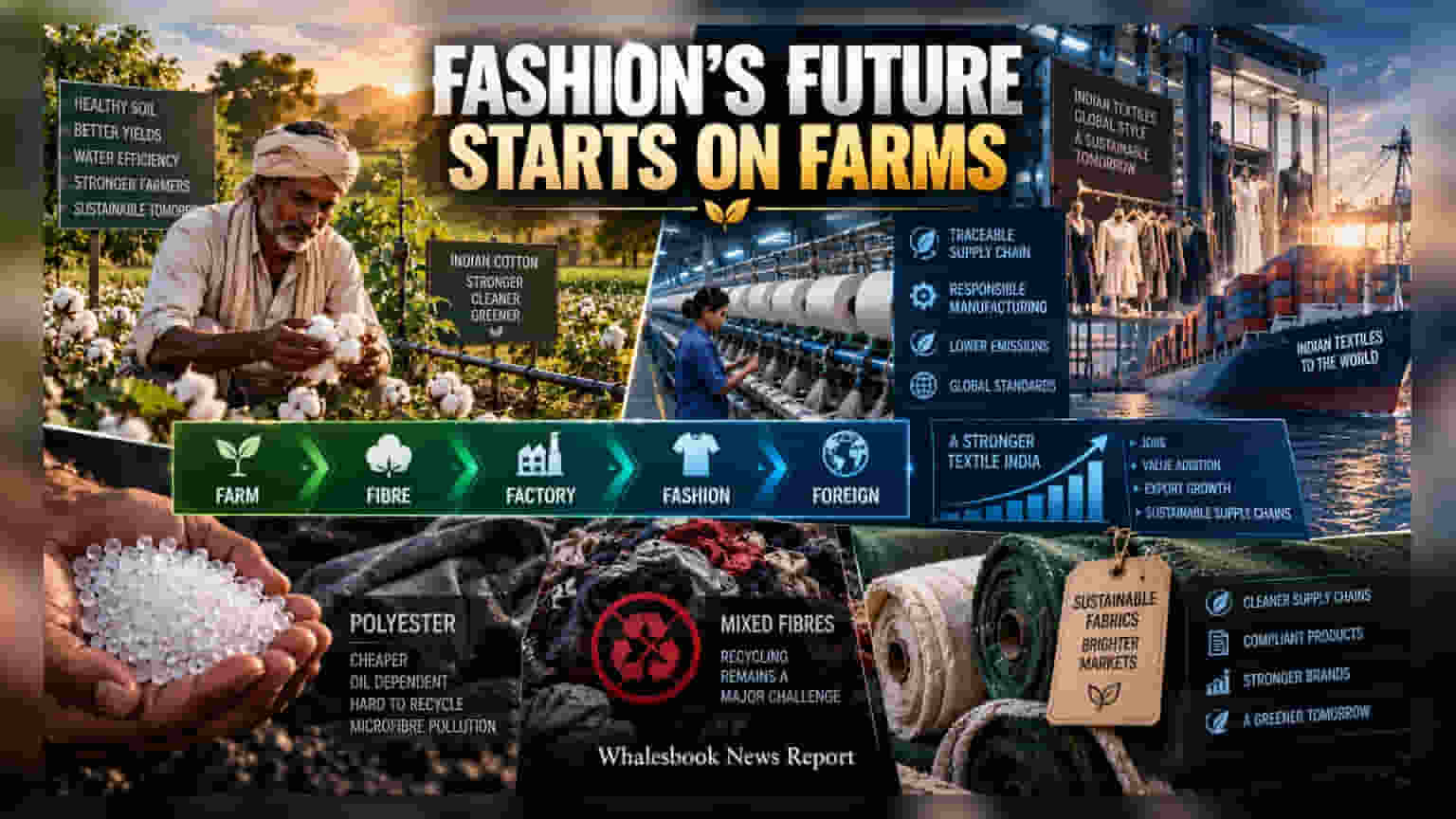
India’s $350 billion textile target faces a major test as exporters prepare for strict global sustainability compliance. Companies must now integrate supply chains from the farm level to meet upcoming EU traceability standards, a move that will likely influence profit margins and capital spending in the coming years.
The Indian textile industry, which provides jobs for more than 45 million people, is working toward a target of $350 billion by 2030. Achieving this goal requires more than just scaling up production; it requires a complete shift in how the country manages its supply chain, from the cotton farm to the finished export product. Investors and industry leaders are now focusing on sustainability not just as an environmental goal, but as a core business requirement for maintaining market access.
The Challenge of Upstream Integration
India’s strength lies in its full vertical chain, where it grows natural fibres, processes them, and manufactures finished goods domestically. However, the weakest link in this chain remains at the farm level. Cotton production is largely handled by millions of small farmers who depend on rainfall. Rising costs for farm inputs and inconsistent crop yields create a volatile foundation for the entire industry. To ensure a stable supply of raw materials, textile companies are under pressure to support regenerative agriculture practices—such as crop rotation, better soil management, and improved water use—to lower costs and boost resilience. The difficulty for the industry is that these practices often require upfront investment, and their success depends on whether farmers can receive fair compensation for the shift.
New Export Hurdles in European Markets
For Indian textile exporters, the biggest near-term challenge comes from regulatory changes in the European Union. The EU’s Digital Product Passport framework, expected to be effective by 2027 and 2028, will require detailed, verified data on every textile product sold in the region. This data must cover the origin of the raw materials, chemical inputs, and recyclability of the fabric.
This creates a significant execution risk for Indian firms. Many export supply chains remain fragmented, making it difficult to collect and verify this level of detail. Companies that cannot provide this information risk losing market share to competitors who can prove their sustainability credentials. Consequently, investors may track the capital spending companies allocate toward supply chain digitization and traceability software, as this will likely become a mandatory cost of doing business rather than an optional expense.
The Material Dilemma
Beyond natural fibres, the industry faces structural issues with synthetic materials like polyester. While polyester is cheaper and offers scale, its economics are tied to crude oil prices, exposing manufacturers to global commodity volatility. Furthermore, recycling these materials is complex. Separating cotton-polyester blends is technically difficult at a commercial scale in India, and recycled polyester alone does not solve the environmental impact of garments shedding microfibres during use.
For shareholders and industry participants, the most important monitorable over the next few quarters will be how companies balance these rising compliance costs with their profit margins. While the shift toward sustainable design—making clothes that are easier to repair and recycle—is a long-term strategic necessity, the transition period may put pressure on operating margins as companies invest in new technologies and processes to comply with these global standards.