

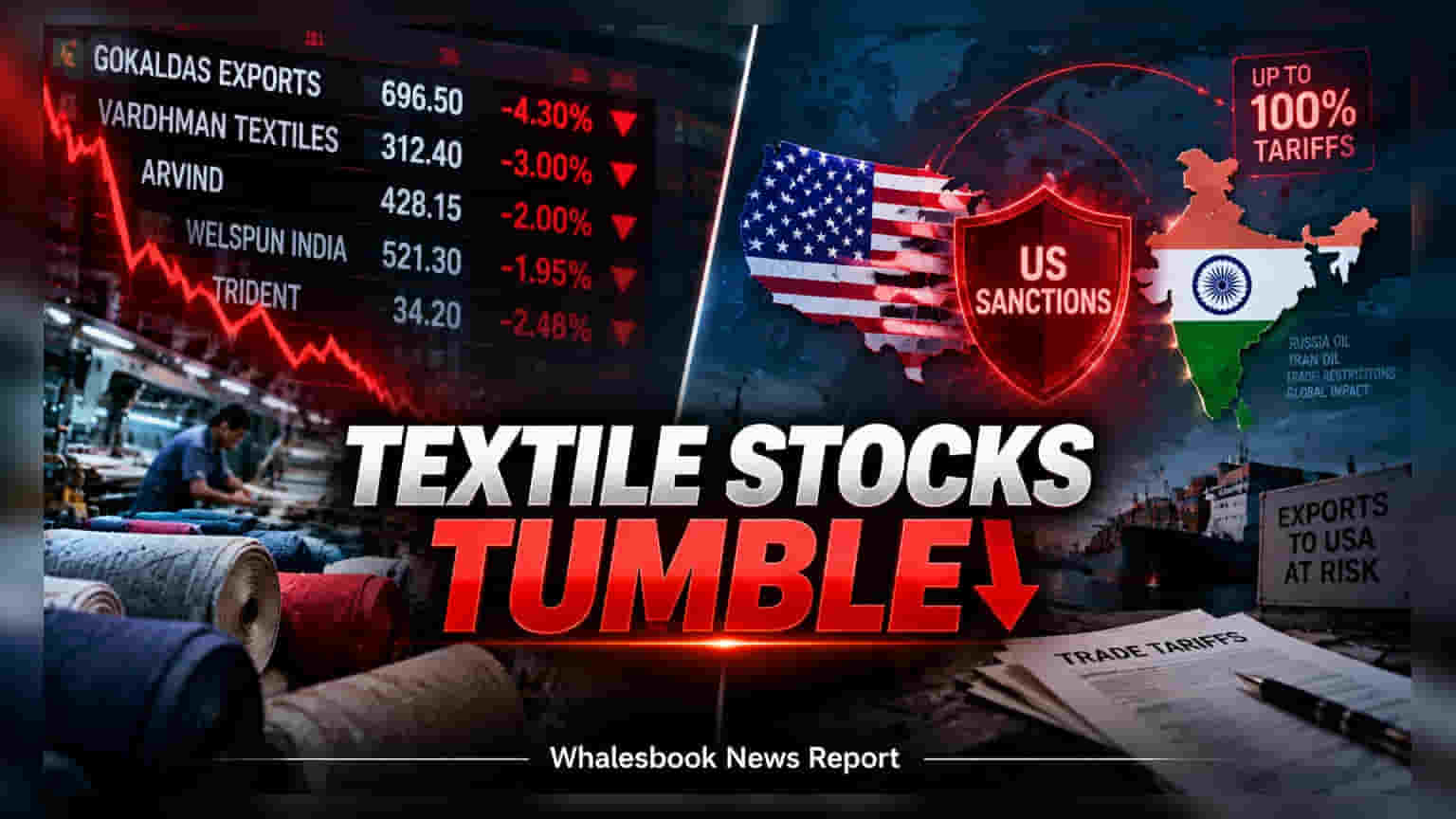
Shares of companies like Gokaldas Exports, Vardhman Textiles, and Arvind dropped after the US enacted the Lindsey O. Graham Sanctioning Russia and Iran Act of 2026. The law allows potential tariffs on nations buying Russian energy, though analysts see it as a trade bargaining tool rather than an immediate economic blockade.
Indian textile stocks saw a sharp decline on September 21, 2026, following the enactment of the United States' "Lindsey O. Graham Sanctioning Russia and Iran Act of 2026." The legislation empowers the US government to impose tariffs of up to 100% on countries that continue to import Russian crude oil and natural gas. Investors reacted to the uncertainty of this move, leading to a 4.3% fall in Gokaldas Exports to Rs 696.5. Other major companies also faced selling pressure, with Vardhman Textiles slipping 3% and Arvind declining 2%.
The textile industry is sensitive to global trade policies because companies in this sector rely heavily on exports to the US and often face high energy costs during manufacturing. The prospect of trade barriers can raise concerns about both export demand and the stability of input costs if global energy supply chains are disrupted.
Despite the aggressive nature of the new law, market observers believe it may serve primarily as a strategic bargaining tool in international trade talks. The act grants the US President significant discretion to waive or defer tariffs if doing so aligns with American national interests. A blanket imposition of 100% tariffs could increase costs for US consumers and fuel inflation, making an immediate, wide-reaching trade war less likely in the short term. Most analysts suggest the legislation is designed to influence energy purchase decisions rather than to cut off trade with major partners entirely.
For investors, the immediate challenge is managing uncertainty. The sector is currently monitoring how Washington intends to use this authority and whether it will affect India's specific energy and trade agreements. While the market reaction has been negative, the actual impact on textile companies will depend on whether this legislation leads to real trade barriers or if it remains a diplomatic tool. Investors may want to track upcoming statements from the White House, trade negotiation updates between New Delhi and Washington, and any commentary from company management regarding potential shifts in export demand or production costs.