

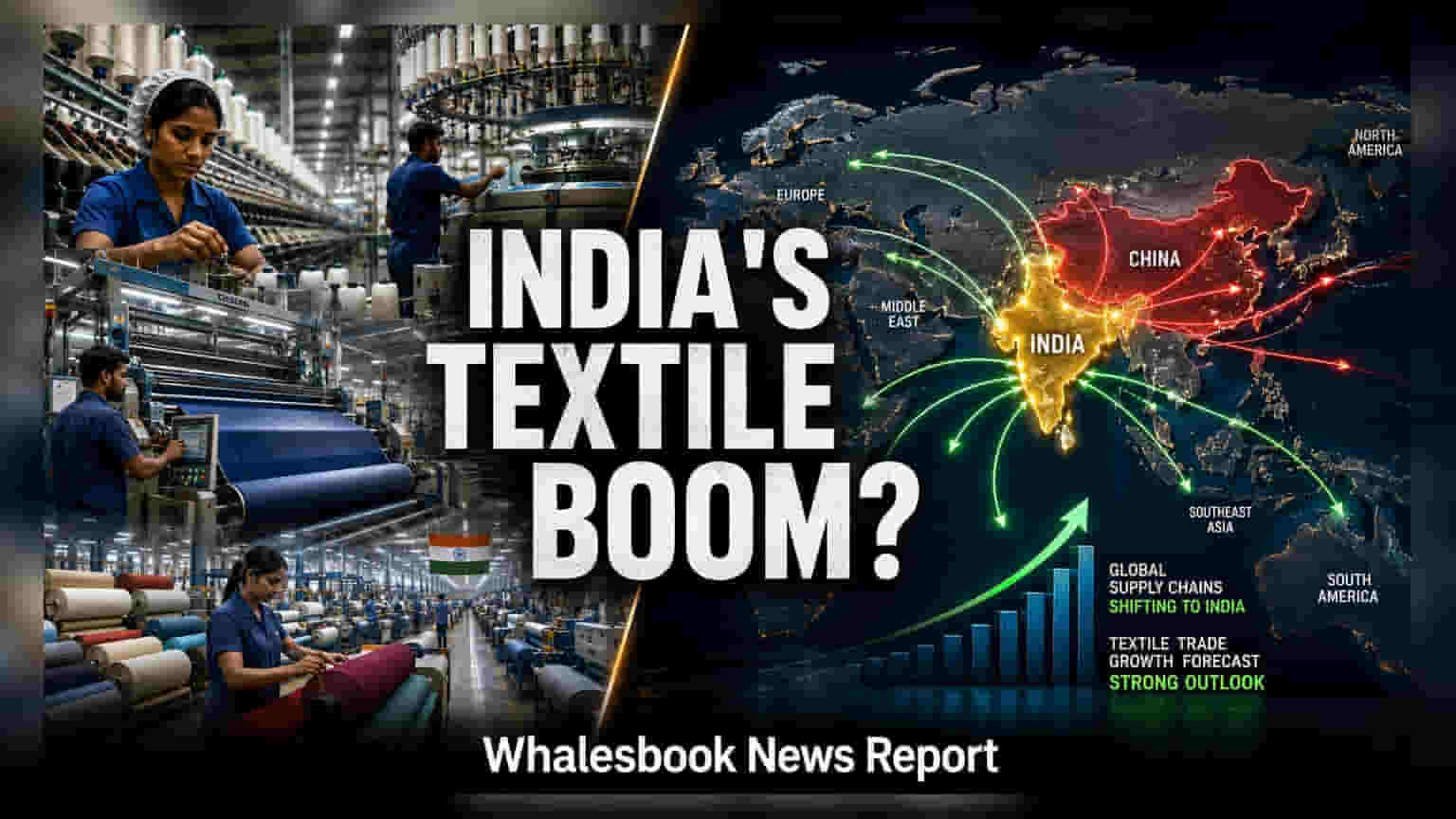
India’s textile industry faces a structural growth opportunity as global brands diversify supply chains away from China. Success depends on the ability of local manufacturers to improve factory-level productivity, scale up garment operations, and shift toward man-made fibers. Historically, India has lagged behind regional competitors like Bangladesh and Vietnam in global apparel market share.
The Indian textile sector is currently positioned for a potential long-term shift, driven by the global 'China+1' strategy where international retailers are actively seeking to diversify their manufacturing base. While this shift offers a significant opportunity for Indian manufacturers to gain global market share, historical data shows the industry has struggled to sustain a competitive edge in apparel exports. For two decades, India’s share of the global apparel trade has remained near 3 percent, falling well behind the 9 to 10 percent held by Bangladesh and the 6 to 7 percent share of Vietnam.
Scaling Operations and Market Competitiveness
For investors, the primary monitorable is the ability of Indian companies to overcome structural limitations. Much of the industry remains fragmented, with small-scale production units that often struggle to handle large, consistent orders from global brands. To compete effectively, companies need to move beyond simple cost advantages. International buyers are now prioritizing factors such as factory-level reliability, rapid lead times, and logistical efficiency. The ability to integrate manufacturing—from raw material processing to final garment assembly—will likely be a key factor in which companies secure long-term contracts.
Moving Beyond Traditional Cotton
The sector’s future performance also depends on its ability to diversify its product mix. While India has a strong history in cotton-based textiles, global demand is increasingly leaning toward man-made fibers, technical textiles, and performance apparel. Expanding into these higher-value segments requires significant capital spending on technology and training. Investors may track whether companies are investing in automation and advanced fiber capabilities to meet this changing demand, rather than relying solely on traditional cotton manufacturing.
Execution and Policy Hurdles
While trade agreements are intended to provide tariff advantages, their practical impact on company revenue and profit margins is tied to operational readiness. A tariff benefit is only valuable if a manufacturer can consistently meet strict global compliance standards, sustainability requirements, and delivery timelines. The industry also faces the challenge of creating new, large-scale manufacturing clusters that can support higher worker productivity. Historically, the inability to scale has often led to cost overruns and lower returns on invested capital for many players in this sector. The success of the current shift will be determined by disciplined capital allocation and the ability of companies to maintain margins despite competitive pressure from regional peers who have already mastered large-scale garmenting operations.