

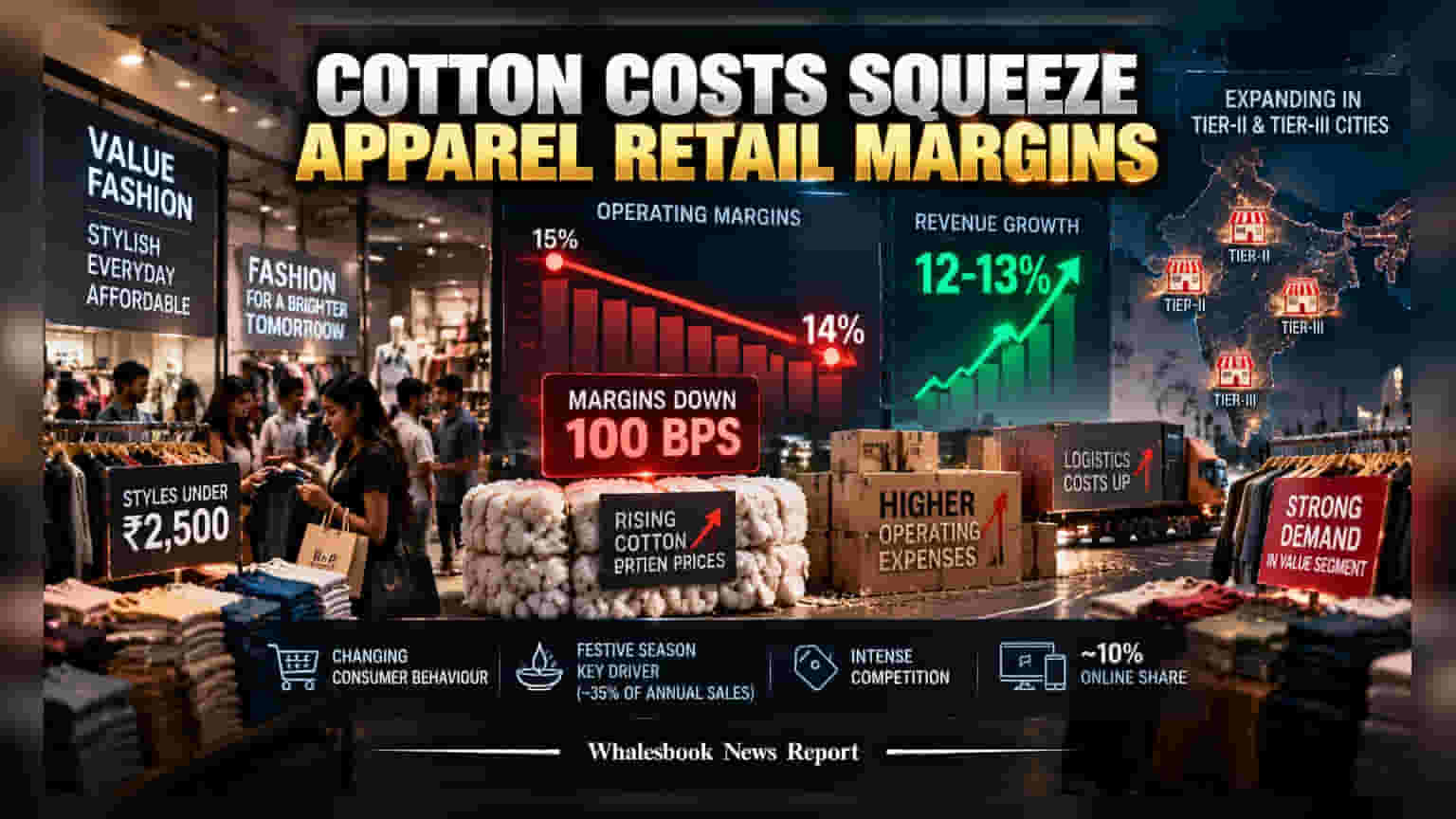
Indian apparel retailers expect revenue growth to moderate to 12-13% this fiscal as consumers diversify spending. Profitability is projected to dip by about 100 basis points due to higher input costs that companies are struggling to pass on to buyers. The upcoming festive season remains a critical window for volume recovery.
India’s organised apparel retail sector is entering a challenging period as rising input costs begin to impact profitability. According to a recent assessment by Crisil Ratings, the industry expects revenue growth to moderate to 12-13% for the current fiscal year, down from approximately 15% recorded in the previous year. While demand remains present, a shift in consumer behaviour, where buyers are spreading discretionary spending across a wider range of categories, is limiting the pace of growth in apparel sales.
Profit margins are facing more immediate pressure than revenue. Operating margins are expected to decline by about 100 basis points to roughly 14% this fiscal year. This contraction is primarily driven by elevated cotton prices and higher operating expenses. For many retailers, passing these increased costs on to price-sensitive customers remains difficult due to intense competition, especially in the value and mid-premium segments.
Value fashion has emerged as the most resilient part of the sector. Its revenue share has expanded to 46% from 39% over the past three years. This trend highlights the preference for budget-friendly clothing, supported by stronger aspirational spending among consumers in smaller towns. Retailers are capitalising on this by expanding into tier-II and tier-III cities, where store setup and operational costs are lower compared to major metros.
The upcoming festive season is a critical monitorable for the sector. It typically accounts for nearly 35% of annual apparel sales, making it the primary driver for both total volumes and pricing power. While physical stores continue to dominate retail sales, companies are increasingly investing in omnichannel capabilities to bridge the gap between digital discovery and in-store purchases. Online channels currently account for about 10% of total apparel retail sales.
Despite the pressure on profitability, the credit profiles of these retailers are expected to remain stable, supported by careful expansion strategies and managed debt levels. The primary risk for the sector remains the potential for sustained volatility in cotton prices and general inflationary pressures, which could weigh on consumer budgets. Investors and stakeholders will be watching how companies navigate pricing and festive-season volumes to protect their bottom line.