

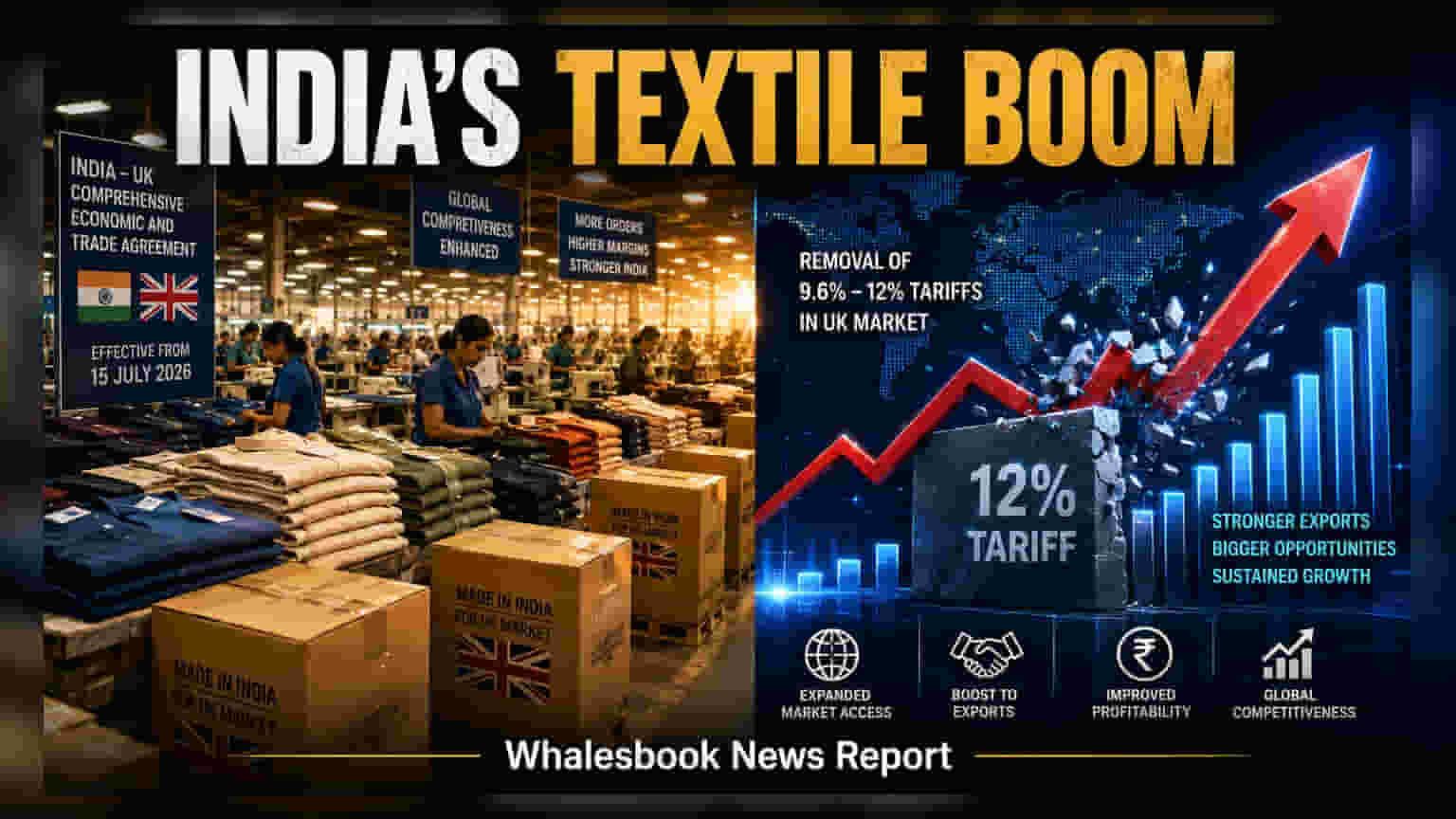
The India-UK Comprehensive Economic and Trade Agreement, effective since July 15, 2026, has eliminated textile tariffs of up to 12%. This policy change helps Indian manufacturers compete on a level playing field against rivals like Bangladesh and Pakistan. Investors are monitoring how this structural shift influences export volumes and profit margins, while the government accelerates outreach programs to help exporters capitalize on the new duty-free access.
The implementation of the India-UK Comprehensive Economic and Trade Agreement on July 15, 2026, marks a major shift for the domestic textile sector. By removing tariffs that previously ranged from 9.6% to 12%, the agreement allows Indian textile exporters to compete more effectively in the UK market. Historically, competitors such as Bangladesh, Pakistan, and Vietnam maintained a structural advantage due to zero-duty access in key regions. This new trade framework effectively narrows that gap, allowing Indian companies to vie for larger international orders based on price and quality.
Scaling Opportunities and Market Access
For investors, the primary takeaway is the potential for improved export margins and increased volume. Textile companies that are well-positioned to scale production are now re-evaluating their UK export strategies to leverage these duty savings. Beyond the UK market, the industry is closely following the status of the EU-India Free Trade Agreement. While that pact has been signed, the market is currently waiting for its full implementation, which would open further high-demand markets for Indian apparel and home textiles.
To ensure the benefits reach the ground level, the government has launched a nationwide utilization drive. Export Promotion Councils are conducting workshops across major textile clusters, including Ahmedabad, Coimbatore, Ichalkaranji, Solapur, Panipat, and Jaipur. These sessions are designed to simplify the complex regulatory requirements and compliance standards necessary to access these trade benefits. By helping small and medium enterprises navigate the transition, the initiative aims to catalyze sustained growth in outbound shipments.
Strategic Risks and Competitive Dynamics
While the tariff removal is a clear positive for export-oriented textile firms, there are nuances that investors should monitor. Trade agreements are reciprocal, meaning that India’s reduction of import duties—such as those on foreign spirits—increases competition for certain domestic industries. Furthermore, the advantage gained in the UK is contingent on the industry's ability to maintain high standards of compliance and product traceability. As exporters shift toward a more rigorous verification model, companies with robust supply chain management will likely have an advantage.
Looking ahead, the sector is also focusing on potential negotiations for a US-India trade deal. If successful, such a deal could provide similar tariff advantages in the American market, which remains one of the largest consumers of global textiles. The key monitorable for the coming quarters will be export data, specifically whether the removal of these barriers translates into tangible gains in market share and improved profitability for domestic textile manufacturers.