

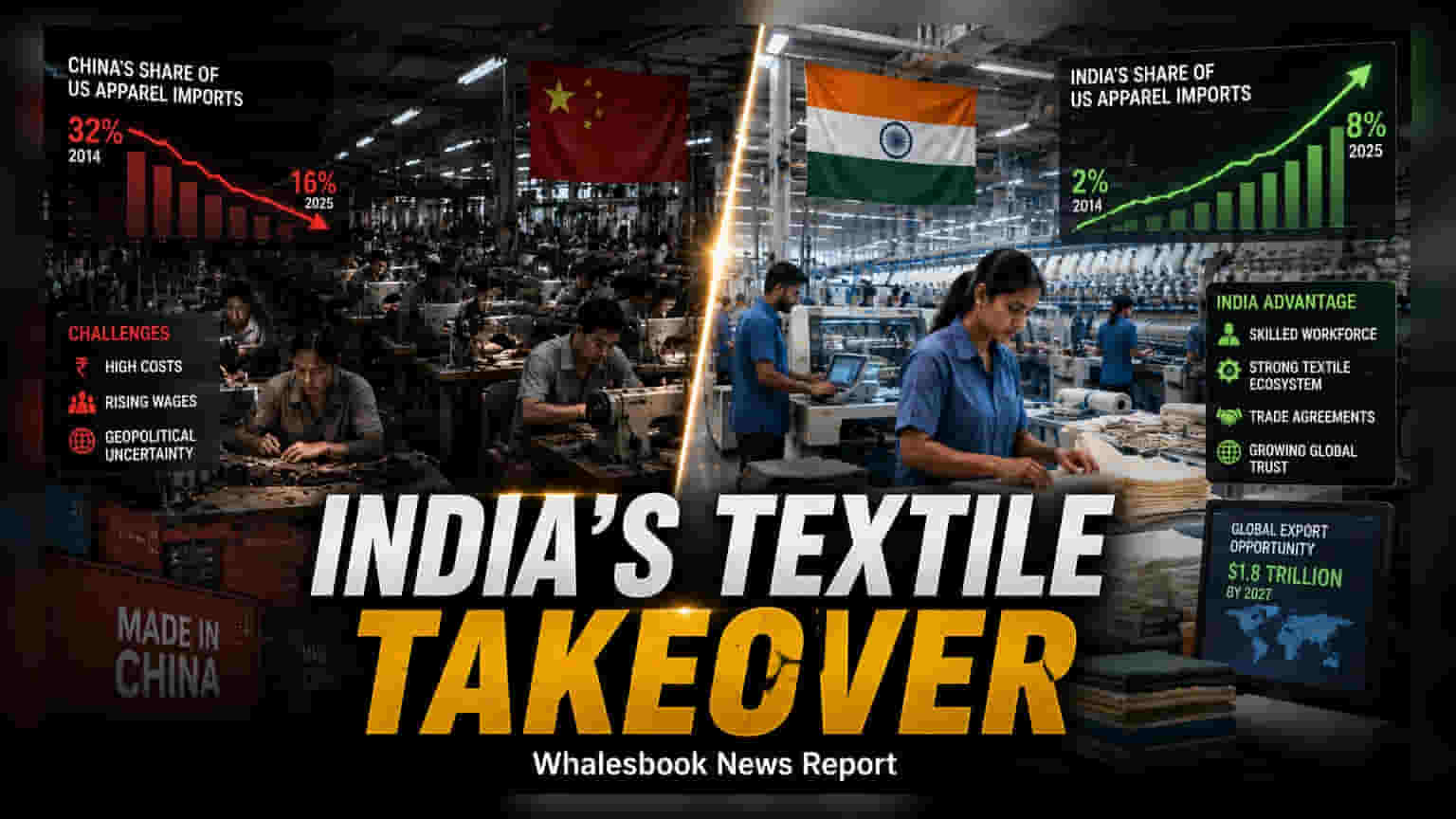
Global textile brands are diversifying sourcing away from China, creating fresh opportunities for Indian manufacturers, particularly in home textiles. While trade agreements like the India-UK CETA and strong recent stock performance reflect optimism, long-term success hinges on overcoming structural hurdles and competition from neighbors like Vietnam and Bangladesh.
The global textile industry is undergoing a structural change as major international brands and retailers shift their sourcing strategies to reduce dependency on China. This trend, often referred to as the 'China+1' strategy, is opening doors for Indian textile manufacturers to capture a larger share of a global market projected to reach approximately $1.8 trillion by 2027. China's dominance in apparel exports has declined steadily over the past decade, with its share of US apparel imports now halved. This gap is increasingly being filled by nations that can offer reliable supply chains and consistent quality.
Trade Agreements and Export Potential
For India, the opportunity is significant, particularly in the home textile segment where the country already holds a strong reputation for producing bedding and furnishings. Recent policy updates have also provided a boost to sentiment. For instance, the India-UK Comprehensive Economic Trade Agreement (CETA), which came into force on July 15, 2026, is expected to enhance market access for Indian exporters. Market optimism has been reflected in share prices, with an analysis of 65 listed Indian textile companies showing an average return of 21.5% as of August 10, 2026, indicating strong investor interest in the sector's growth potential.
The Competitive Reality
Despite the positive outlook, the road to capturing this market share is not guaranteed. India faces intense competition from established regional players like Bangladesh and Vietnam, which have successfully built large-scale, cost-effective export models. These competitors often hold an edge in specific garment segments where lower labor costs and large-scale manufacturing capacity are critical. Furthermore, the Indian textile sector faces internal structural challenges, including high energy and logistics costs, which can impact the final price of exported goods. While the domestic market for textiles is projected to reach $350 billion by 2030, the export-oriented companies remain heavily dependent on discretionary spending in Western markets, which can be volatile.
What Investors Should Monitor
For investors, the immediate focus shifts from sentiment to execution. While the broader industry trends are supportive, the final benefit for individual companies will depend on their ability to manage raw material price fluctuations and improve operational productivity. The key monitorable for the coming quarters will be how well Indian firms scale their manufacturing capabilities to compete on price with regional peers while maintaining the quality standards required by global brands. Future earnings calls and management commentary regarding capacity utilization and order book growth in export markets will provide better clarity on whether the current optimism can translate into sustained profit margin expansion.