

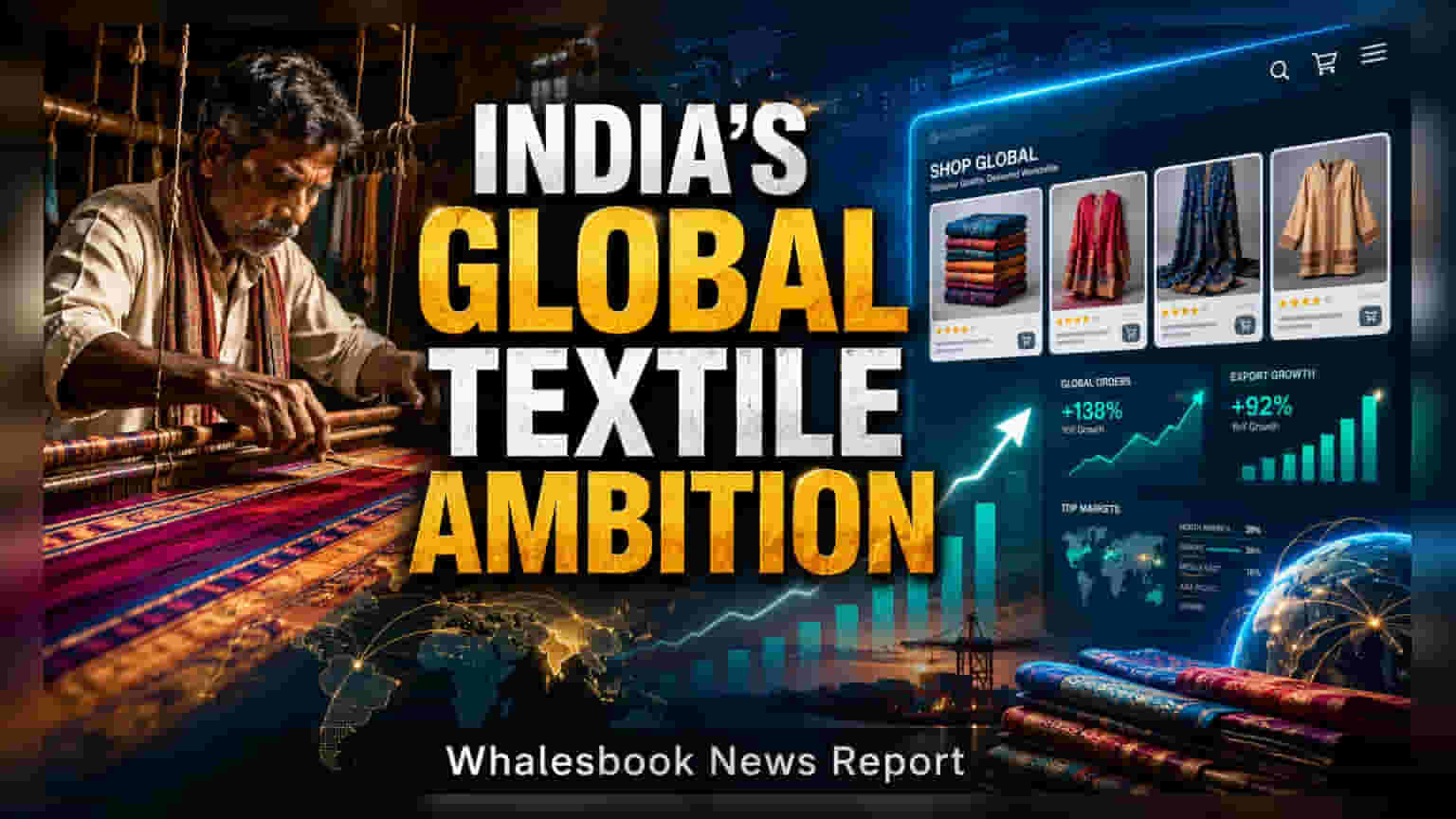
The Indian government has set an ambitious target to nearly triple textile exports to ₹9 lakh crore by 2030, following a performance of ₹3.16 lakh crore in 2025-26. Achieving this requires scaling designer houses, enhancing digital visibility, and meeting strict global sustainability standards. The plan highlights a shift toward value-added products and integrated supply chains to compete in international markets.
India’s textile sector is aiming for a major transformation as it looks to scale its global presence. Union Minister Giriraj Singh recently confirmed that the country is shifting its focus toward building recognizable international lifestyle and textile brands. This strategy relies on blending India’s traditional strengths in heritage and craftsmanship with modern requirements like sustainability and digital reach.
Scaling Exports and Infrastructure
In the 2025-26 fiscal year, India recorded textile and apparel exports of approximately ₹3.16 lakh crore. To reach the ambitious target of ₹9 lakh crore by 2030, the government and industry leaders are focusing on more than just raw material volume. The strategy includes creating stronger Indian designer houses and investing in shared infrastructure to help smaller players compete internationally. Currently, many domestic manufacturers struggle with supply chain fragmentation, which can lead to higher costs and delays in meeting global order specifications.
Digital and Sustainability Hurdles
Modern retail growth for Indian textiles is increasingly tied to e-commerce and omnichannel strategies. While online marketplaces provide a direct route to international consumers, success depends on the ability of manufacturers to integrate these platforms into their existing production models. Furthermore, global markets, particularly in Europe and North America, are enforcing stricter environmental standards. Sustainability is no longer optional; it is a prerequisite for entry into these high-value markets. Companies that fail to adopt environmentally friendly production processes may face exclusion or reduced competitiveness in the coming years.
Market Dynamics and Risks
While the target for 2030 is substantial, the path to reaching it involves addressing structural challenges. India faces stiff competition from countries like Vietnam and Bangladesh, which often benefit from lower production costs and advantageous trade agreements. Additionally, the textile sector remains sensitive to fluctuations in raw material prices, such as cotton and synthetic fibers. Investors should monitor whether domestic players can successfully move toward higher-value products to maintain healthy profit margins amidst global pricing pressure. The reliance on large-scale exporters to mentor smaller creative designers will also be a key factor in ensuring the consistency and quality needed for global brand building.
Looking ahead, the next important updates will be the progression of these shared infrastructure projects and the success of domestic brands in establishing direct-to-consumer footprints on global e-commerce platforms. Investors may also track individual company performance regarding their transition to sustainable manufacturing practices, as this will likely dictate their ability to secure and retain international buyers over the next few years.