

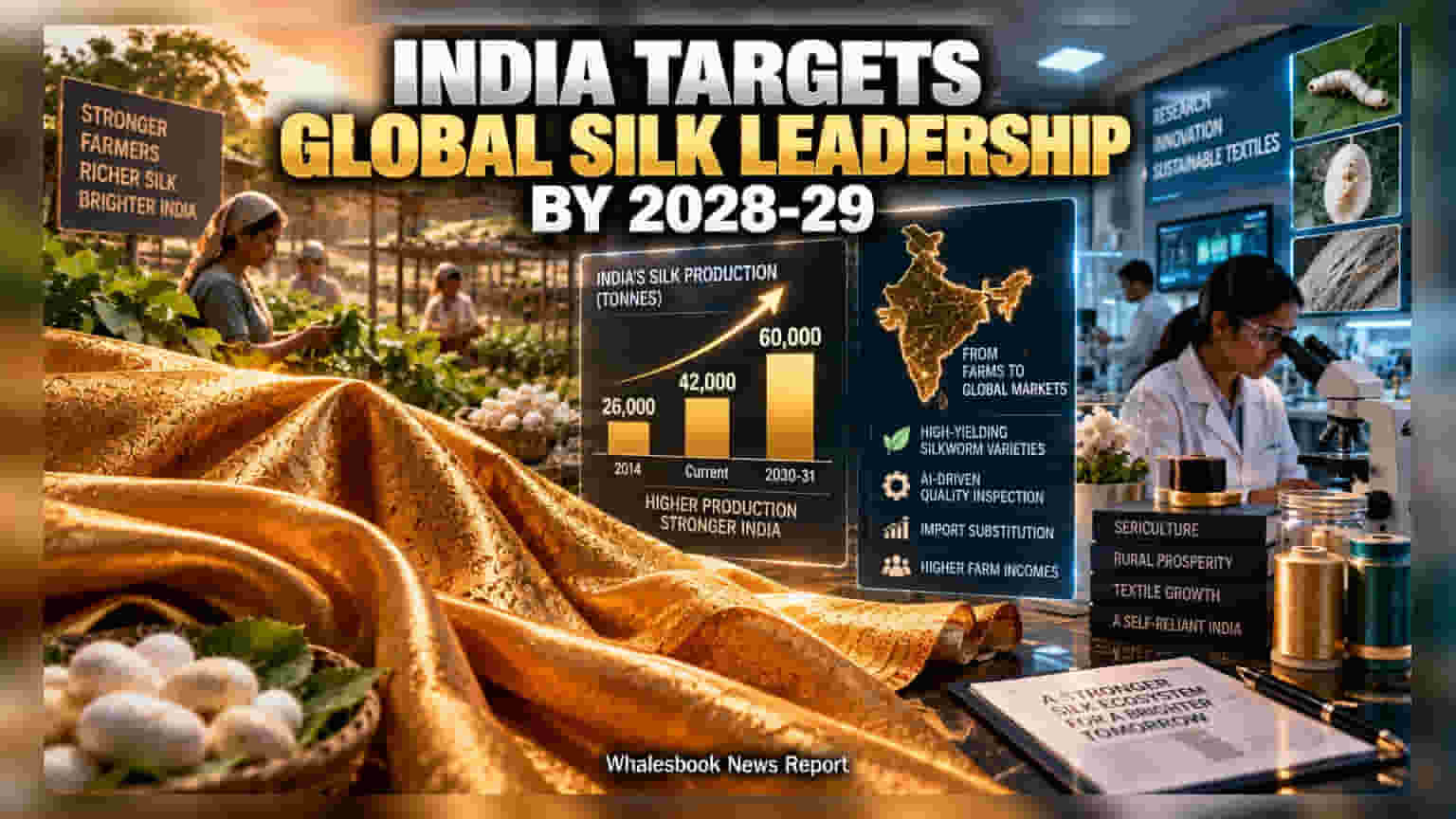
The government has set a roadmap to increase annual silk production to 60,000 tonnes by 2030-31 to reduce import dependency. This shift aims to provide Indian textile manufacturers with a more stable, domestic supply of raw materials, potentially reducing costs associated with global price volatility. Investors should monitor how effectively the sector adopts technology to meet international quality standards and manage agricultural risks.
The Indian government has launched a strategic roadmap to make the country the world's leading silk producer by the 2028-29 fiscal year. The plan targets an annual production of 60,000 tonnes by 2030-31, a significant increase from the current output of 42,000 tonnes. This follows a period of steady growth, with output rising from 26,000 tonnes in 2014, showing the country's existing momentum in the sericulture sector.
For the textile industry and investors, the primary significance of this roadmap is the potential for import substitution. India currently relies on raw silk imports, primarily from China, to meet the requirements of its domestic weaving and apparel industry. This dependency exposes local manufacturers to global supply chain disruptions and price fluctuations. If India successfully scales production and improves the quality of domestic silk to match international standards, textile mills could benefit from a more stable and cost-predictable raw material supply. This could help companies manage profit margins more effectively by reducing reliance on imported inputs that are subject to currency risk and international trade policy shifts.
To achieve these targets, the Ministry of Textiles is emphasizing modernization. The initiative involves the introduction of high-yielding hybrid silkworm varieties and the integration of artificial intelligence and machine learning to improve quality inspection. However, the sector faces inherent challenges. Sericulture is an agricultural activity, meaning it remains sensitive to climate variability, water availability, and pest management. Achieving the planned production scale requires widespread adoption of these technologies by farmers, which can face execution delays.
Another important factor for investors is the quality consistency of the output. International textile buyers require specific grades of silk, and historical efforts to scale production have sometimes faced hurdles in matching the quality of imported high-grade silk. The government’s focus on improving farm-level income to between ₹10 lakh and ₹12 lakh is designed to incentivize quality production, but the economic success of the move will depend on how effectively these support mechanisms reach the ground level.
Investors tracking this sector should watch for updates on actual production milestones, raw material import data, and the consistency of domestic silk quality. The ability of the industry to shift from a net importer to a competitive producer will be a key driver for long-term supply chain stability in the Indian textile space.