 Whalesbook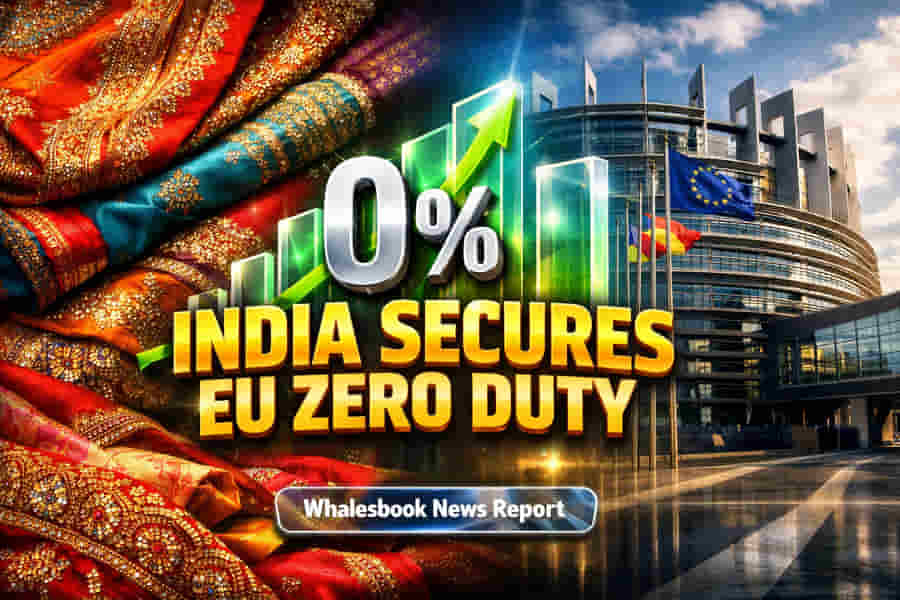
### Navigating the EU's Shifting Trade Terrain
Indian cotton textile producers are intensifying efforts to secure preferential access to the European Union market as critical trade deal negotiations approach their conclusion. The prevailing tariff structure in the EU currently disadvantages Indian exporters, particularly when compared to nations enjoying favored status. This situation directly impacts the competitiveness of a sector that already ships approximately $1.3 billion worth of cotton-based textile products to the EU annually [cite: News1, 21].
The recent withdrawal of tariff preferences under the EU's Generalised Scheme of Preferences (GSP) from January 1, 2026, has amplified these concerns. While official statements suggest only a minor percentage of exports are affected, the textile sector, being price-sensitive, faces increased competitive pressure. Reports indicate that nearly 87% of Indian goods faced higher import tariffs from the EU starting this year due to the GSP suspension, a situation expected to persist until December 2028. This shift forces Indian exporters to absorb higher duties, potentially eroding margins and reducing their appeal to EU buyers who might pivot to duty-free suppliers like Bangladesh and Vietnam.
### The Promise and Peril of the India-EU FTA
The impending conclusion of the India-EU Free Trade Agreement (FTA) offers a potential lifeline. Industry stakeholders, including the Cotton Textiles Export Promotion Council and the Apparel Export Promotion Council, view the FTA as a crucial step to rectify the current imbalance and create a "level playing field" [cite: News1]. A zero-duty regime via the FTA could significantly boost India's competitiveness, bolster Micro, Small, and Medium-sized Enterprise (MSME) exporters, and foster the growth of sustainable and value-added products. The sector is actively looking to Prime Minister Narendra Modi's leadership to ensure a favorable outcome [cite: News1].
The EU represents a substantial market, importing around $125 billion of textiles and apparel annually, yet India's current share is modest, around 5-6%, trailing far behind China and other South Asian nations that benefit from zero tariffs. The FTA is seen as an opportunity to rectify this, potentially unlocking significant gains for Indian exporters who have also faced challenges in the US market due to tariff impositions. Optimism was evident among Indian exporters at the recent Heimtextil Show in Frankfurt, Germany, where the upcoming trade pact was viewed as a key catalyst for growth [cite: News1].
### Sectoral Dynamics and Future Outlook
The Indian textile industry is a vital contributor to the national economy, accounting for about 4% of GDP and a significant portion of exports. The nation has set ambitious targets, aiming for $40 billion in apparel exports and $100 billion in total textile exports by 2030. In fiscal year 2024-25, India's total textile and apparel exports to the US, EU, and UK collectively reached $20.7 billion, with $7.6 billion specifically to the EU. Cotton textile exports alone reached $11,683 million in 2023-24, showing growth despite headwinds.
However, the sector faces a mixed market environment. While government support through initiatives like the Production Linked Incentive (PLI) scheme and increased budget allocations offers a foundation, recent stock market performance for many textile companies has been inconsistent, with several showing negative short-term returns. Key players like Trident and Vardhman Textiles have market capitalizations in the range of ₹116-126 billion, with sector-wide P/E ratios around 25.72. The successful negotiation and implementation of the India-EU FTA are paramount for capitalizing on projected growth and achieving the sector's considerable export ambitions, especially as competing nations face their own trade policy shifts, such as Bangladesh's graduation from LDC status impacting its preferential access.