

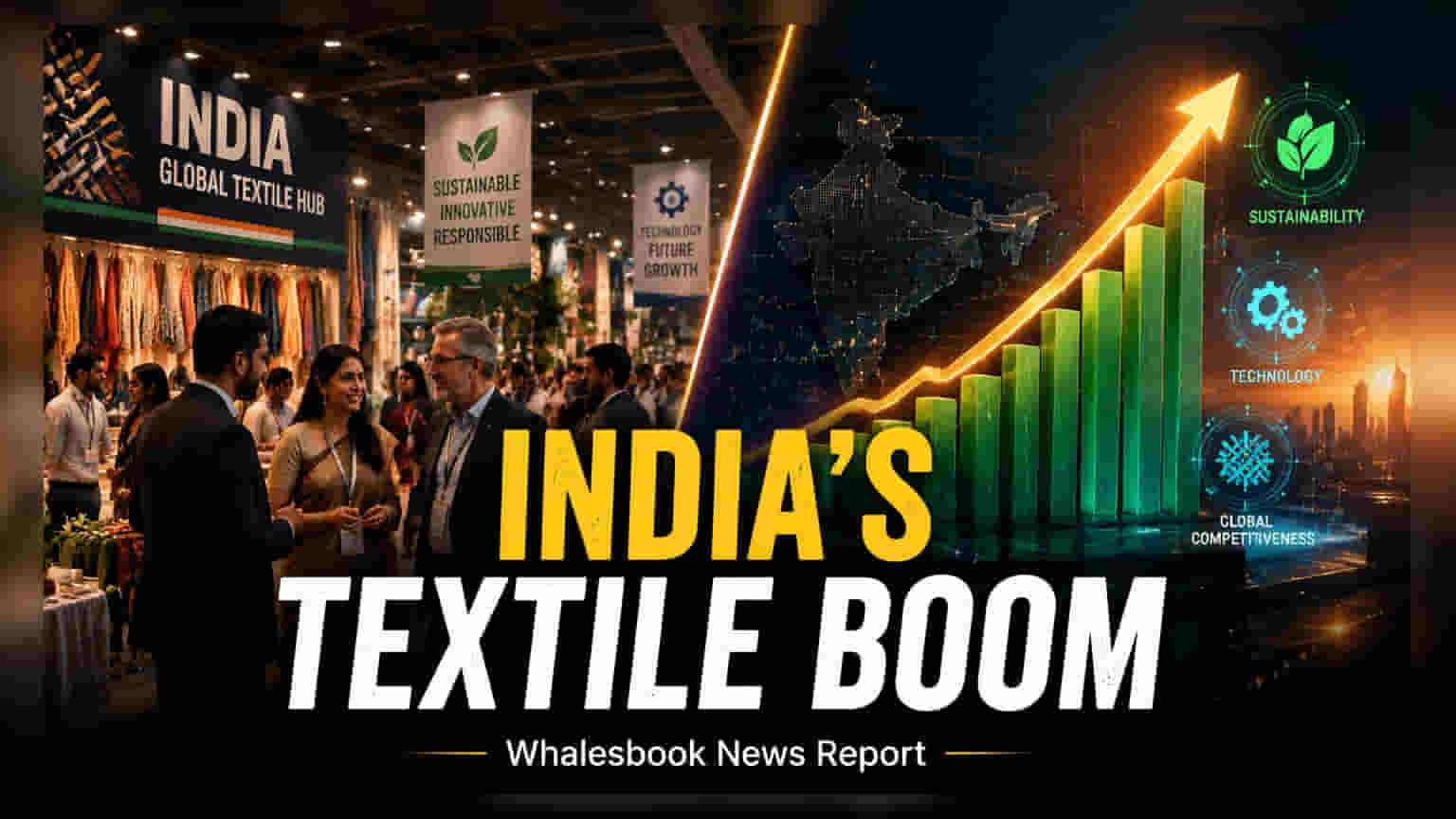
Bharat Tex 2026 at Bharat Mandapam is drawing 7,000 international buyers across 130 countries, signaling a major push for India’s textile export ambitions. The event highlights the government’s 5F framework and a shift toward sustainability to gain global trust. For investors, the focus remains on whether this networking will convert into measurable order books and capacity utilization for domestic firms.
The Bharat Tex 2026 exhibition at Bharat Mandapam has emerged as a focal point for India’s textile sector, recording over 69,000 visitors by its second day. With more than 1,600 companies participating—75% of which are micro, small, and medium enterprises—the event aims to bridge the gap between local manufacturers and global demand. The international presence has grown significantly since 2024, now encompassing 130 countries and 7,000 overseas buyers, a sharp increase from the 111 countries and 3,600 buyers reported in the previous edition.
Scaling India’s Textile Value Chain
The event serves as a practical demonstration of the government’s 5F framework: farm to fiber, factory, fashion, and foreign markets. While the scale of the event is notable, the strategic objective is to integrate the fragmented textile value chain. Over 100 knowledge sessions and 50 partner countries are facilitating discussions on complex topics such as Free Trade Agreements, technical textiles, and the development of PM MITRA Parks. These parks are intended to create integrated manufacturing clusters, which, if executed effectively, could help companies reduce logistics costs and improve export competitiveness.
Sustainability as a Competitive Asset
A recurring theme at the exhibition is the transition toward sustainability and circularity. As global brands reconfigure their supply chains, Indian manufacturers are positioning themselves as reliable partners by adopting environmental standards. Minister of Textiles Giriraj Singh emphasized that trust has become a vital economic asset in this reconfiguration. For listed textile companies, this shift is critical because global buyers are increasingly prioritizing suppliers who can demonstrate transparent and sustainable production methods. However, the move toward these higher-value products often requires significant capital spending, which investors should monitor for its impact on balance sheets and margins.
What Investors Should Monitor
While the event highlights a positive trend in international interest, the actual financial impact on Indian textile manufacturers will depend on the conversion of these interactions into confirmed orders. The industry continues to face challenges, including fluctuating raw material costs, the need for technological upgrades to match global standards, and competition from other manufacturing hubs. Investors may track the progress of the 30 signed Memoranda of Understanding and whether these collaborations lead to material revenue growth in upcoming quarters. Additionally, the ability of companies to manage debt while funding the capacity expansion required for technical textiles will be a key factor in long-term profitability.