

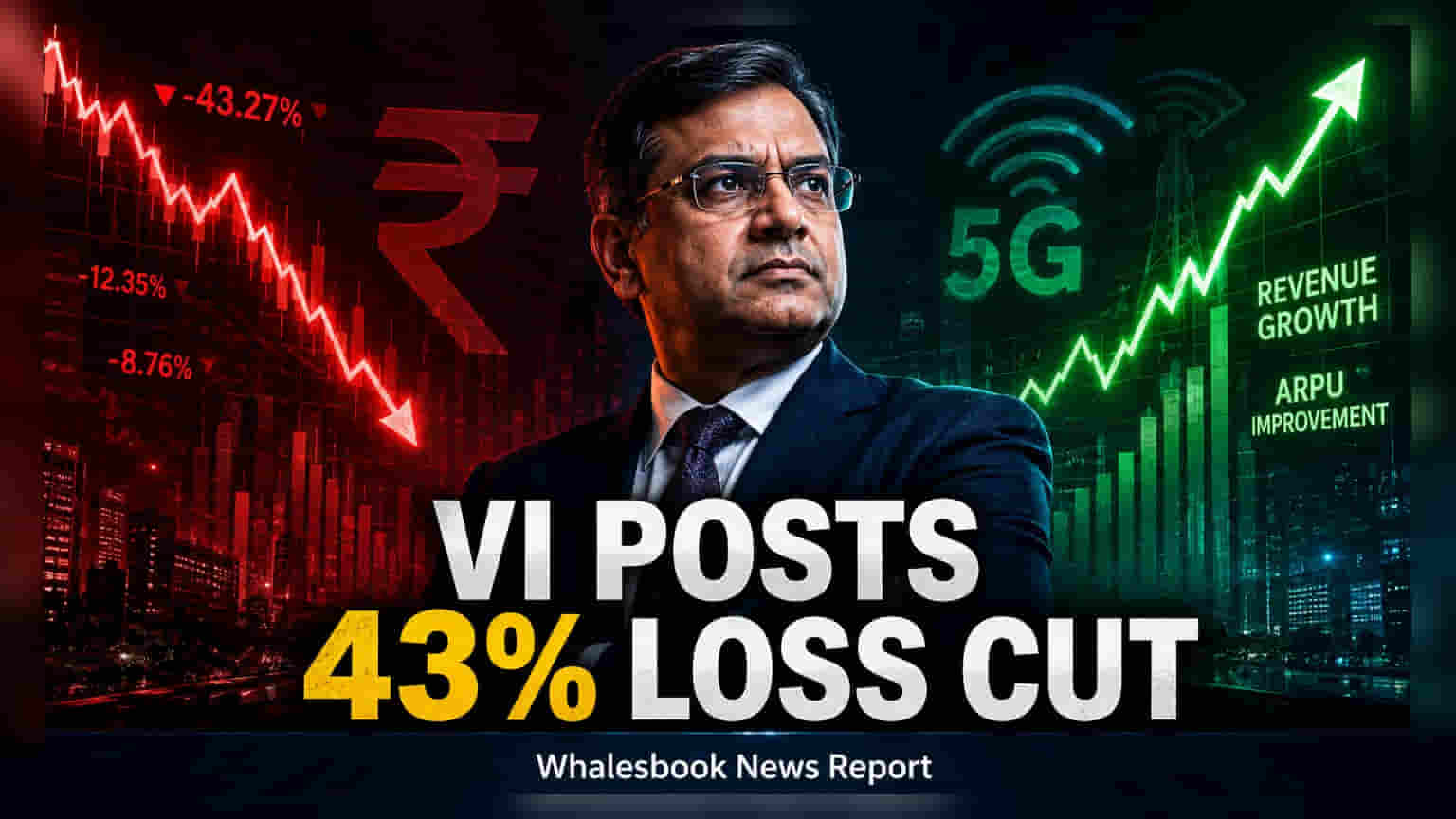
Vodafone Idea narrowed its net loss to ₹3,754 crore for the first quarter of FY27, supported by a one-time legal settlement gain and higher revenue. In a key milestone, the company reported positive subscriber additions for the first time since its merger. Investors are now closely watching the company's aggressive infrastructure spending and its ability to sustain these performance gains in a highly competitive market.
Vodafone Idea (Vi) posted a significant improvement in its financial performance for the quarter ended June 30, 2026. The company reported a net loss of ₹3,754 crore, which is a marked reduction from the ₹6,608 crore loss it recorded in the same period last year. This improvement was supported by a 6% increase in revenue, which reached ₹11,689 crore. A one-time accounting gain of ₹1,611 crore, stemming from legal and regulatory settlements, also contributed to the bottom line.
A key highlight of these results was the trend in user numbers. For the first time since the merger that created the current entity, Vodafone Idea recorded a positive net increase in its subscriber base. This brought the company's total active user count to 193.1 million. The amount the company earns from each user, known in the industry as ARPU, also climbed by 10.2% year-on-year to reach ₹195. This increase suggests that the company’s efforts to upgrade its service quality and attract premium users are beginning to show in its revenue figures.
CEO Abhijit Kishore has described the current fiscal year as the 'year of execution' for the company. To support this strategy, Vodafone Idea has placed new orders for capital spending worth ₹9,000 crore to expand and improve its network infrastructure. The company is actively scaling up its technology, with 5G services now operational in more than 200 cities across India. With ₹6,558 crore in cash and bank balances, the company is positioning itself to prioritize these infrastructure projects to drive future growth.
While these trends are positive, the Indian telecom sector remains fiercely competitive, with constant pressure to attract users and maintain profitability. Although the company has managed its immediate bank debt levels to ₹211 crore, the broader challenge of managing long-term liabilities and financing costs remains a significant monitorable for shareholders. The company’s ability to turn this quarter's subscriber growth into a long-term trend will be crucial for its financial stability.
Looking ahead, the key factors for investors to track are the progress of the ₹9,000 crore infrastructure projects and whether the company can maintain its current ARPU growth. The market will also be watching to see if the company can sustain its subscriber addition momentum as it continues to roll out 5G services.