

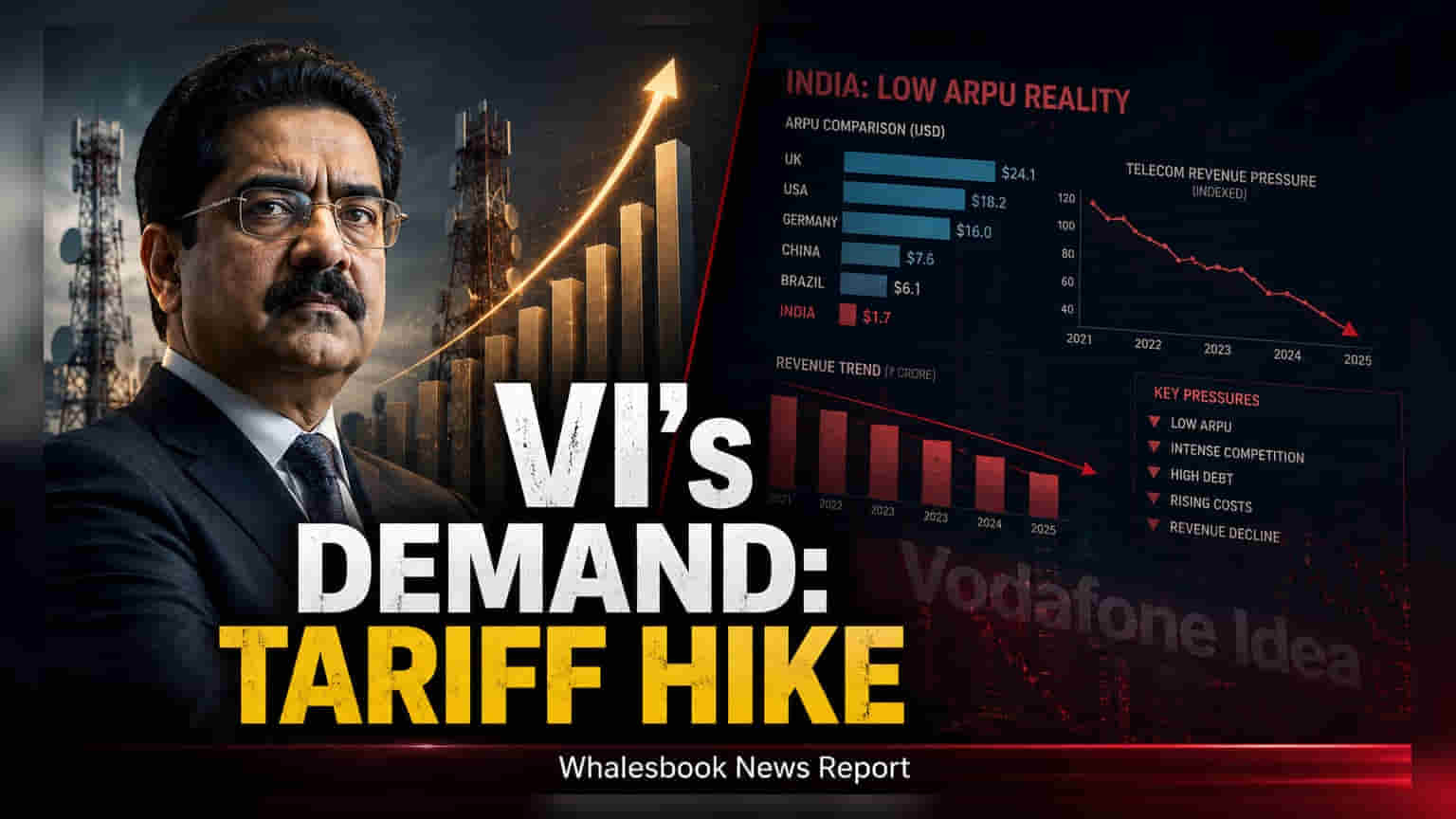
Vodafone Idea Chairman Kumar Mangalam Birla has stated that periodic tariff hikes are essential for sustaining network investments. The telecom operator is currently in talks with lenders to secure funding for a ₹45,000 crore capital expenditure plan running through fiscal year 2029. While the company saw a profit in FY26 due to regulatory liability reassessments, its long-term health depends on managing its substantial statutory debt and competitive pressures.
Vodafone Idea (Vi) Chairman Kumar Mangalam Birla has emphasized that regular tariff adjustments are necessary for telecom operators to sustain network investments and support the rollout of next-generation technology. In a recent outlook, the company highlighted the need for higher consumer revenue to fund the critical infrastructure required for India's digital goals.
The company has set an ambitious capital expenditure program of ₹45,000 crore spanning fiscal years 2027 to 2029. To execute this plan, Vodafone Idea is actively engaged in discussions with lenders to secure the required long-term funding. This spending is intended to upgrade network capacity and maintain competitiveness in a market that has consolidated into a few large players.
Investors should view the company's recent financial results with context. While Vodafone Idea reported a consolidated profit after tax of ₹34,552 crore for the fiscal year 2026, this figure was largely driven by a one-time exceptional gain following a reassessment of Adjusted Gross Revenue (AGR) liabilities by the government. The company's underlying financial situation remains tied to its significant statutory debt, which includes a finalized AGR liability of ₹64,046 crore that is scheduled to be repaid in installments through 2041.
As of the end of fiscal 2026, Vodafone Idea served a subscriber base of 192.8 million, with 128.9 million of these users utilizing 4G and 5G services. The company's strategy focuses on increasing its Average Revenue Per User (ARPU) to support infrastructure costs, noting that India’s current ARPU levels remain among the lowest globally.
There are several factors for investors to monitor regarding the company's future performance. The execution of the ₹45,000 crore expansion plan carries significant risk, particularly as it depends on successfully finalizing funding agreements with lenders. Additionally, the telecom sector continues to face high competitive pressure, which influences pricing and market share. Managing high debt levels alongside the need for consistent infrastructure investment will remain a challenge. The most important updates to track will be the progress of the company's lender discussions and subsequent trends in revenue per user.