

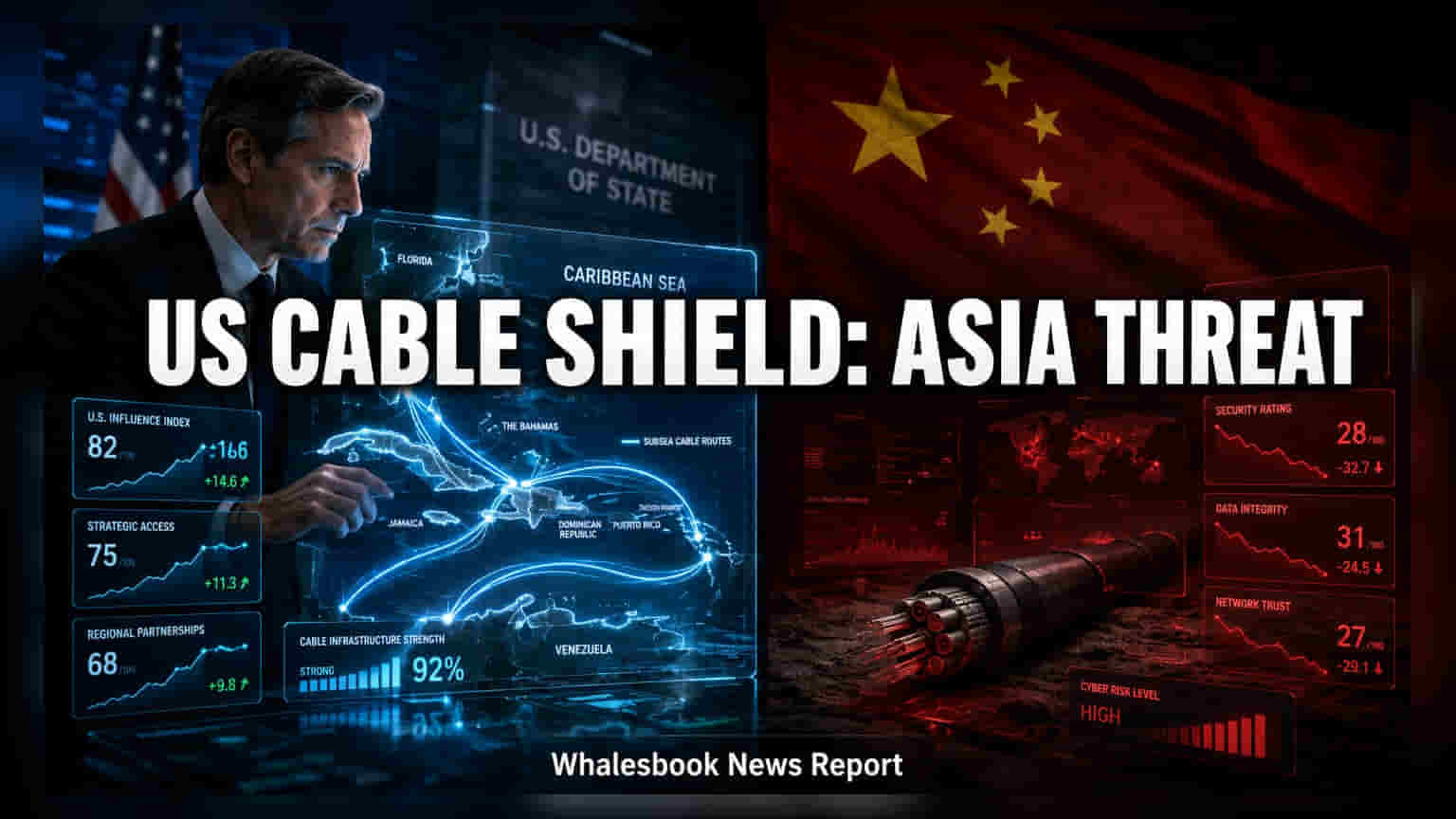
The United States has proposed a $175.8 million initiative to replace aging undersea telecommunications cables in the Caribbean and Central America. This infrastructure project aims to reduce regional reliance on Chinese technology and strengthen national security. Investors should track how this effort impacts global telecom equipment players and future regional infrastructure contracts.
Detailed Coverage
The United States government has announced a $175.8 million proposal aimed at replacing outdated undersea telecommunications cables throughout the Caribbean and Central America. The initiative, officially referred to as the Countering CCP Control of Caribbean and Central America Undersea Cables project, is designed to secure critical digital infrastructure in the Western Hemisphere.
Strategic Digital Infrastructure Shift
This project seeks to provide regional governments with secure, U.S.-supported alternatives to Chinese telecommunications infrastructure. The State Department has indicated that these investments are intended to mitigate potential national security risks associated with Chinese-backed technology providers. By facilitating partnerships between foreign governments and trusted private sector installers, the U.S. aims to ensure the integrity of data networks that are vital for regional economic and diplomatic stability.
Financial documents suggest that this move is part of a wider strategic push to regain diplomatic and technological influence in regions where China has previously expanded its footprint. The U.S. administration is also evaluating additional funding programs reaching nearly $500 million, targeting areas in Africa, Asia, and other parts of the Western Hemisphere to counter the economic and diplomatic leverage of the Chinese Communist Party.
Investor Context and Regional Impact
For investors and companies involved in the global telecommunications sector, this shift highlights an increasing trend of governments prioritizing security in critical infrastructure procurement. While the initial investment of $175.8 million is specific to this cable project, it signals a potential pivot toward higher compliance and security standards for international digital projects. Companies that can demonstrate robust security protocols and long-term reliability may find new opportunities in markets where Western governments are actively seeking to reduce dependence on existing Chinese-led infrastructure models.
However, the project faces several practical uncertainties. The success of this initiative will depend on the ability of U.S. and partner firms to deliver competitive pricing and manage complex logistics across multiple sovereign nations. Historically, large-scale infrastructure projects in international regions are prone to execution risks, including regulatory delays, cost overruns, and geopolitical hurdles. Additionally, the ability of private sector participants to scale these operations alongside local government requirements will be a key factor in determining the financial viability of such contracts.
Investors should monitor future updates regarding the selection of private sector partners for these cable installations and any subsequent announcements concerning the additional $500 million in proposed funding. The long-term impact on telecom equipment providers and the broader market for secure digital infrastructure will depend heavily on the actual deployment timelines and the depth of private sector involvement.