 Whalesbook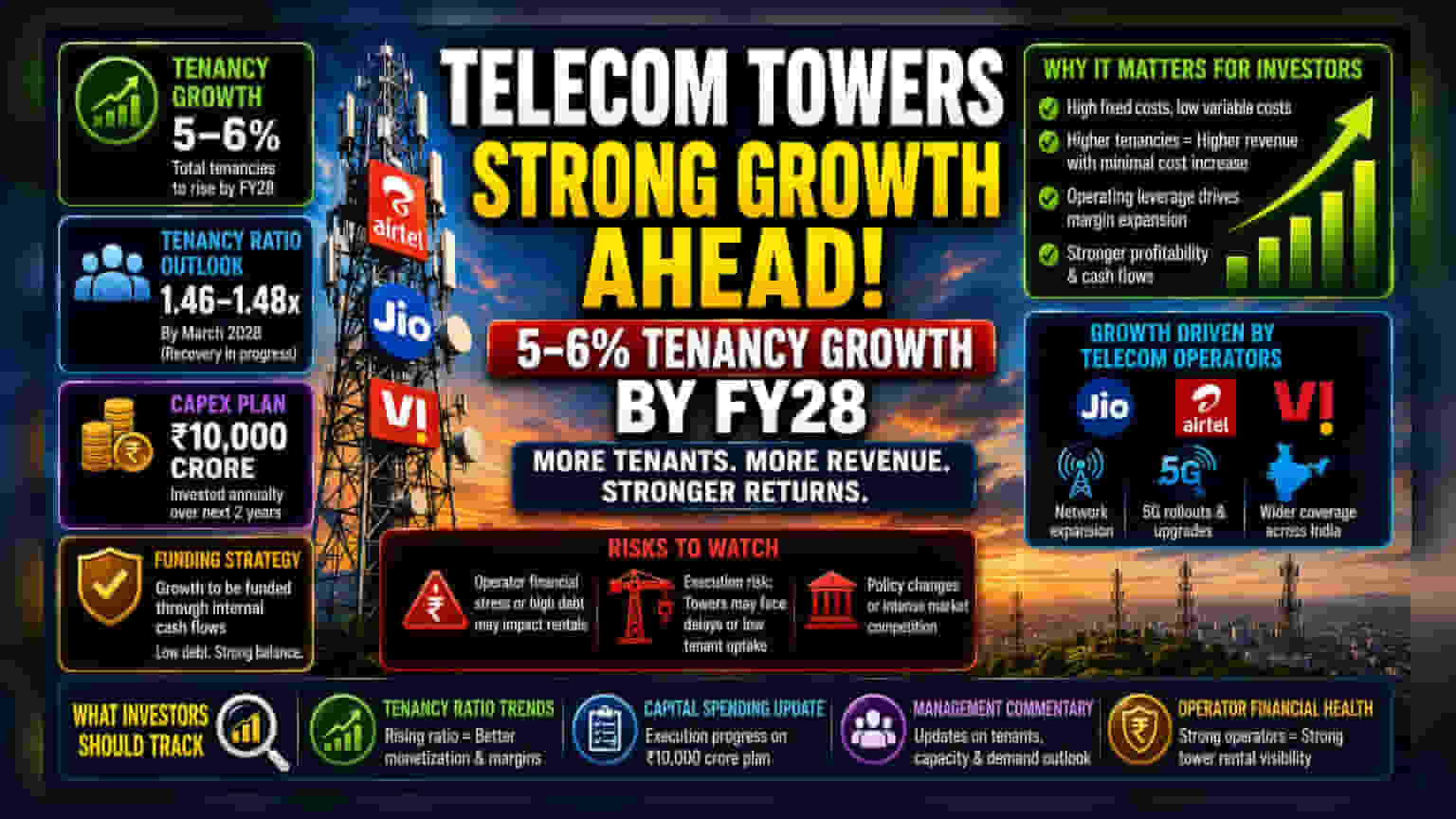


Telecom tower companies expect 5-6% growth in tenant numbers through 2028, driven by increased network expansion by major telecom operators. Analysts suggest this will help improve profit margins to near 50%.
What Happened
Indian telecom tower companies are looking at a period of steady growth. According to reports from rating agency Crisil, these infrastructure providers are expected to see a 5-6% increase in their total tenancies by the end of the 2028 financial year. Tenancy refers to the number of telecom operators sharing a single tower. When more operators install their equipment on the same tower, the tower company earns more rent, which significantly boosts its profitability.
Why This Matters For Investors
For investors, the most important aspect of this news is the impact on financial performance. Telecom tower businesses have high fixed costs—meaning they spend a large amount of money to build and maintain the tower structure, regardless of how many operators use it. When more operators (tenants) come on board, the tower company’s revenue increases without a similar rise in maintenance costs. This concept is called operating leverage. As tenancy ratios rise, it helps companies improve their profit margins.
The Financial and Growth Outlook
Industry analysts project that the tenancy ratio—a measure of how many tenants are present on average per tower—will climb to between 1.46 and 1.48 times by March 2028. This is a recovery from a slight dip seen in recent years as network expansion had slowed down. Another positive sign for the sector is the funding plan for future growth. Tower companies are expected to invest around Rs 10,000 crore annually over the next two years to expand capacity and add new technology, such as energy-efficient lithium-ion batteries. Importantly, these companies aim to fund this expansion through their own cash flow, which helps avoid taking on extra debt.
Sector and Business Context
Companies like Indus Towers are major players in this space, and their business model is closely linked to the spending plans of India's large telecom operators. When operators like Reliance Jio, Bharti Airtel, and Vodafone Idea expand their network coverage or upgrade to better technology, tower companies benefit. The past few years saw a boost from 5G rollouts, and this new phase of growth is expected to come from further network densification and wider coverage across the country.
Risks and Concerns
While the outlook appears stable, investors should remain aware of inherent sector risks. The primary risk is the financial health of the telecom operators themselves. Tower companies rely on these operators for rental income. If telecom operators face financial trouble, struggle with heavy debt, or slow down their network expansion due to changing government policies or market competition, it could directly impact the tower companies' revenue growth.
Additionally, there is always an execution risk. While companies plan to invest Rs 10,000 crore annually, the final benefit depends on whether these towers are actually deployed on time and if they successfully secure multiple tenants. If the new towers do not get enough tenants, the company may end up with high costs and lower-than-expected returns.
What Investors Should Track
Moving forward, the key monitorable for investors is the actual tenancy ratio reported by major tower companies in their quarterly results. A rising tenancy ratio is the strongest sign that the company is successfully monetizing its infrastructure. Investors may also watch management commentary regarding capital spending plans and any updates on the financial stability of the major telecom operators, as their network growth is the main engine for the tower sector's expansion.