 Whalesbook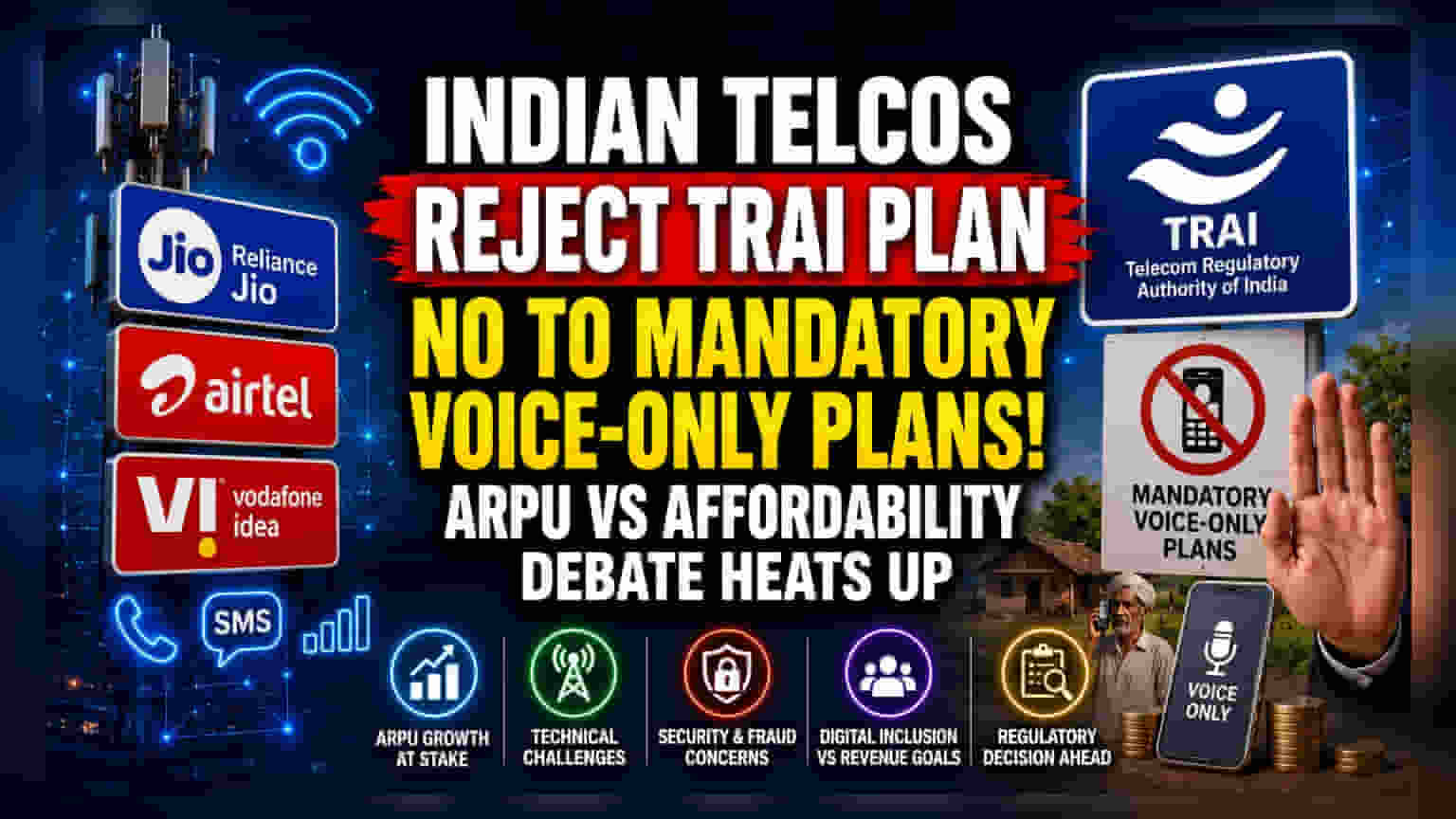


Reliance Jio, Bharti Airtel, and Vodafone Idea have opposed a TRAI mandate for standalone voice and SMS plans. This development is significant for investors as telecom firms are currently focused on improving ARPU through data adoption. A shift back to voice-only plans could complicate revenue growth strategies for entry-level users.
What Happened
Major Indian telecom operators—Reliance Jio, Bharti Airtel, and Vodafone Idea—have collectively rejected a proposal from the Telecom Regulatory Authority of India (TRAI). The regulator had suggested that telecom companies should offer mandatory, affordable, standalone voice and SMS plans. The goal of this proposal was to provide budget-friendly options for low-income, elderly, and rural users who do not require data services. However, the telecom industry has formally pushed back against this suggestion, creating a rift between the regulator’s push for affordability and the industry’s current operational strategy.
The ARPU and Revenue Angle
For investors, the significance of this conflict lies in the telecom sector’s ongoing efforts to improve Average Revenue Per User (ARPU). Over the past few years, Indian telecom companies have consistently worked to migrate their subscriber base from basic feature phones to 4G and 5G smartphones. Data consumption is the primary driver of revenue growth in this segment. By encouraging users to switch to data-based plans, companies can increase the value they earn from each customer. If telecom operators were forced to introduce low-cost, voice-only plans, it could potentially slow down the migration of entry-level users to higher-value data packs. This directly impacts the industry's long-term strategy to boost profitability per subscriber.
Why Telcos Say No
Telecom operators have presented two main arguments against the regulator's proposal. First, they argue that the technical architecture of modern networks makes the request difficult. Reliance Jio, for instance, has noted that 4G and 5G networks are built entirely on data-based technology. In this system, voice calls are essentially an application running over the data network. Separating voice from data in these networks is not just a policy change but a technical challenge that would require significant adjustments. Second, the telcos raised security concerns. They believe that offering very cheap, short-validity plans could lower the entry barrier for scammers, potentially leading to a rise in fraud and spam calls. Additionally, companies like Vodafone Idea have pointed out that modern smartphones constantly use small amounts of data for essential services like security updates and one-time passwords (OTPs). A voice-only plan might lead to unexpected bill charges for users if these background data activities are not covered.
The Digital Inclusion Conflict
On the other side of the debate, consumer advocacy groups argue that the current market structure is unfair. These groups estimate that a large portion of India’s feature phone users do not need or use data services. They contend that these consumers are effectively forced to subsidize the data costs for others. These advocates suggest that entry-level plans often have a high per-gigabyte cost, making them expensive for low-income users who have no use for the bundled data. This highlights a fundamental tension in the Indian telecom sector: the government and regulator’s goal of making digital services accessible to everyone, versus the industry’s goal of building a modern, data-first digital infrastructure.
What Investors Should Monitor
Investors should track the final regulatory stance on this issue, as it could have implications for tariff structures at the lower end of the market. The key monitorable is whether the regulator persists with the mandate or finds a compromise that balances consumer needs with the industry’s technical and financial constraints. Furthermore, any shift in how entry-level subscribers are handled will directly influence the ARPU growth trajectory for these companies. The market will also watch for management commentary in future earnings calls regarding how they plan to balance regulatory requirements with their data-driven revenue strategies.