

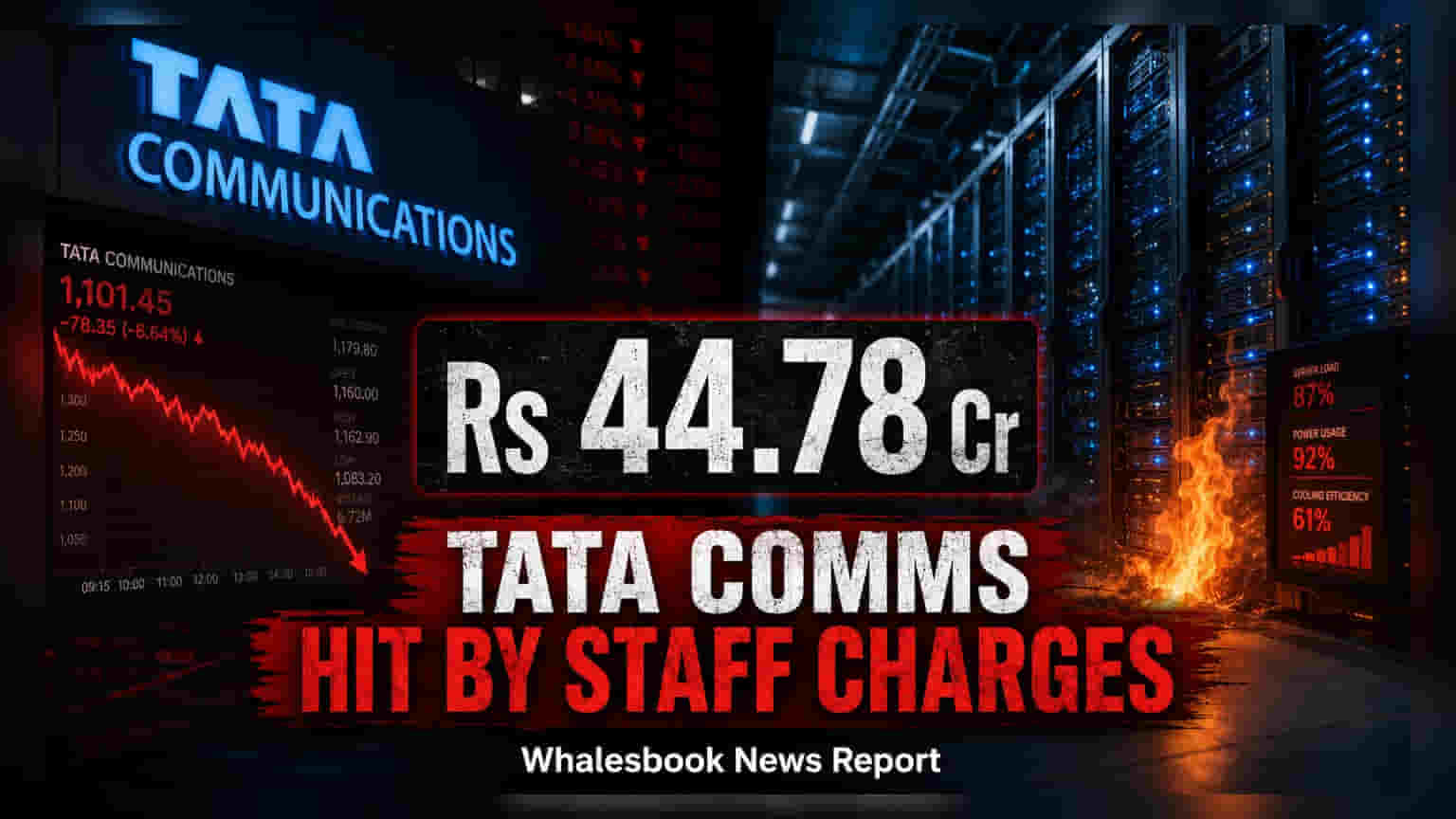
Tata Communications reported a 29.35% drop in net profit to Rs 134 crore for the June quarter. The decline was driven by a Rs 44.78 crore restructuring charge and losses from a data center fire. While revenue grew 10.5% year-on-year, profit margins faced pressure from these one-time expenses and provisions.
Detailed Coverage
Tata Communications reported a challenging June quarter as it balanced strong revenue growth against significant one-time expenses. The company announced a consolidated net profit of Rs 134 crore, marking a 29.35% decline compared to Rs 189 crore in the same quarter last year. This dip was primarily linked to exceptional losses totaling Rs 106.36 crore, which included restructuring costs and provisions for operational incidents.
Impact of Restructuring and Operational Issues
The company initiated an organizational restructuring program aimed at improving long-term efficiency, which resulted in a one-time staff cost optimization charge of Rs 44.78 crore. While the company stated that this effort is designed to align its talent pool with changing business needs, it also led to a reduction in its total headcount by 1,067 employees over the past year, bringing the total to 11,739.
Beyond restructuring, profitability was impacted by physical and contractual setbacks. A fire at a joint venture data center in New Delhi during June necessitated a Rs 30.10 crore provision for estimated losses. Furthermore, management booked a Rs 50 crore provision for amounts that are considered potentially unrecoverable under specific contractual obligations. These combined factors created a significant drag on the bottom line.
Revenue and Operational Trends
On the operational front, Tata Communications showed resilience with a 10.5% year-on-year rise in consolidated revenue, which reached Rs 6,583 crore. Earnings before interest, taxes, depreciation, and amortization, or EBITDA, grew by 8.2% to Rs 1,230.2 crore. Despite this growth in absolute terms, the EBITDA margin contracted slightly by 30 basis points to 18.7%, down from 19% in the previous year. This tightening suggests that rising operational costs, including the provisions mentioned, outweighed the revenue gains during this period.
Management has maintained a positive outlook, emphasizing that the company remains on track for double-digit EBITDA growth for the full fiscal year. The strategic focus is shifting toward scaling the network fabric business, increasing platform-based revenue, and improving the conversion of EBITDA into actual cash flow. Investors may continue to monitor how effectively the company manages these restructuring-related savings and whether the current provisions for unrecoverable amounts increase or stabilize in upcoming quarters. The speed at which the data center business recovers from the recent fire and the impact of the new organizational structure on overall cost efficiency will be key factors for the market to track.