

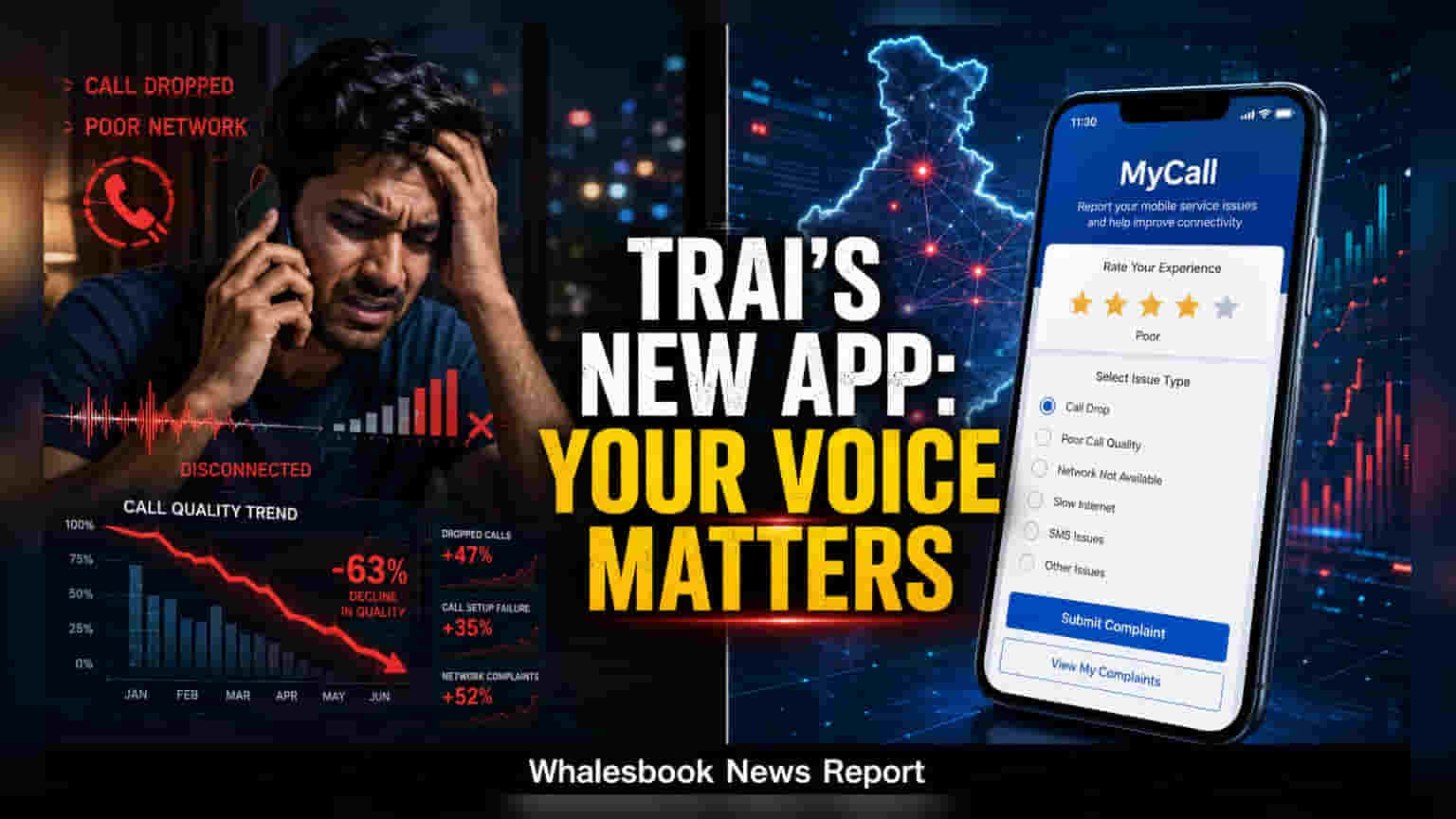
The Telecom Regulatory Authority of India has launched a revamped 'MyCall' app allowing users to rate voice call quality and report technical issues. This initiative aims to increase service provider accountability by using real-time consumer data to address network performance problems like call drops.
The Telecom Regulatory Authority of India (TRAI) has officially updated its 'MyCall' mobile application, a move designed to gain a clearer picture of voice call quality across the country's telecom networks. By enabling users to provide direct feedback, the regulator is establishing a new mechanism to hold mobile service providers accountable for the quality of service they deliver to subscribers.
New Features and Reporting Mechanism
The updated application introduces a simplified rating system where users can assign a score between 1 and 5 stars for each voice call. Beyond simple ratings, the app allows subscribers to flag specific technical issues that often plague mobile communication. These include frequent call drops, echoing, audio delays, and voice interruptions. By capturing this granular data, TRAI intends to create a feedback loop that highlights specific network deficiencies that may not always be visible in general performance reports.
Impact on Telecom Service Providers
For major telecom players like Reliance Jio, Bharti Airtel, and Vodafone Idea, this initiative represents a push toward greater transparency in service quality. Historically, telecom companies have relied on their own network monitoring systems to report compliance with Quality of Service (QoS) benchmarks. However, the use of crowdsourced data from the MyCall app provides an independent layer of consumer-centric performance tracking. If the aggregated data consistently shows poor performance in specific areas or for specific providers, it may lead to increased regulatory oversight or demands for infrastructure upgrades.
Challenges and Market Context
While the initiative aims to improve consumer experience, the practical utility of the app will depend heavily on the number of users who actively participate. Furthermore, telecom service quality is often influenced by factors such as local tower density, spectrum availability, and terrain, which can lead to localized connectivity issues that are difficult to resolve quickly. Investors should monitor whether this data leads to formal regulatory actions, such as penalties for failing to meet service quality benchmarks, or if it primarily serves as a tool for public pressure and performance benchmarking. The effectiveness of this app in driving actual network improvements will be a key factor to watch, especially as telecom companies continue to balance their spending on 5G infrastructure with the need to maintain legacy 4G voice network reliability.