

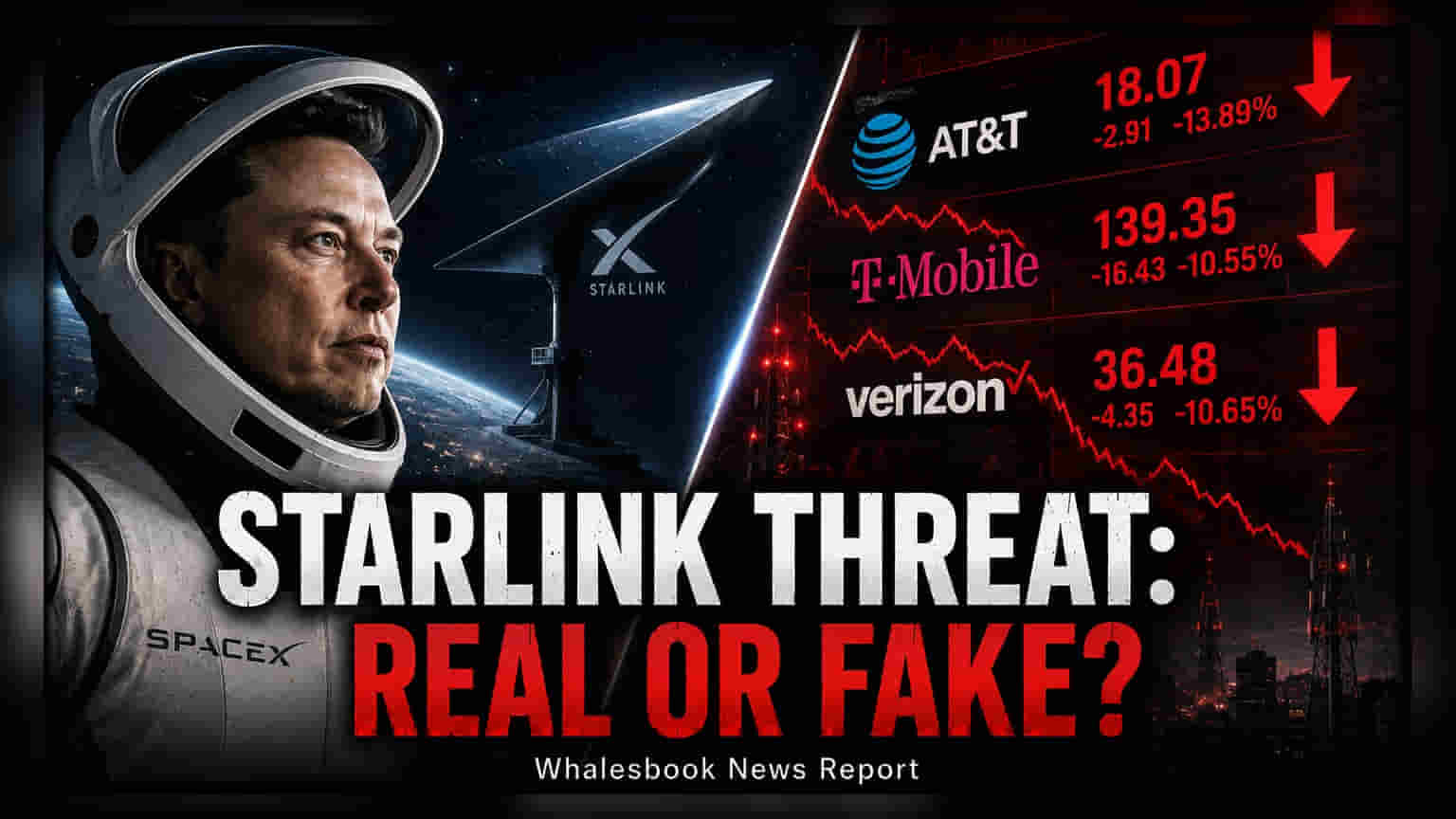
Major U.S. telecom stocks, including AT&T, Verizon, and T-Mobile, fell by 2-4% following SpaceX’s announcement of a planned 2027 mobile service launch. Investors are reacting to the potential entry into a $600 billion market. However, analysts suggest the near-term risk to traditional carriers is exaggerated given the high capital costs and the existing infrastructure advantage of established providers.
Investors in the U.S. telecom sector faced a volatile session as SpaceX detailed its upcoming foray into mobile services during its recent earnings call. Shares of industry leaders, including AT&T, Verizon, and T-Mobile, declined between 2% and 4% as the market digested plans for a 2027 commercial mobile launch. This move represents a significant expansion of SpaceX's business, which currently relies on satellite connectivity.
The Spectrum Strategy
The core of this plan relies on the $19.6 billion worth of wireless spectrum SpaceX acquired from EchoStar. This move directly targets the U.S. wireless market, which SpaceX estimates to be worth $600 billion annually. For investors, this marks a shift from SpaceX providing supplementary satellite connectivity to potentially becoming a direct competitor to terrestrial mobile networks. The market's negative reaction suggests that investors are worried about the potential for price competition and loss of market share for traditional carriers.
Why Analysts Question the Near-Term Impact
Despite the market's immediate sell-off, many market experts argue that the threat to traditional carriers is not immediate. Established telecom companies possess significant competitive advantages that are difficult to replicate. These include decades of investment in ground-based towers, extensive fiber networks, and a deep pool of loyal subscribers. Furthermore, building a nationwide terrestrial network requires massive financial resources, with some estimates suggesting the cost could exceed $100 billion. This high cost of entry serves as a significant barrier that protects incumbent players from rapid disruption.
Collaboration or Competition?
The relationship between SpaceX and existing carriers may be more complex than just rivalry. While the two could compete directly, there is also the possibility of a Mobile Virtual Network Operator (MVNO) agreement. In this scenario, SpaceX could essentially rent space on existing networks, turning a potential threat into a collaborative business partner. T-Mobile, for example, already has existing satellite connectivity partnerships with SpaceX. Analysts suggest such arrangements could be a way for SpaceX to scale its service without the full burden of building a completely new ground-based network from scratch.
Monitoring the Future
The path forward for SpaceX's mobile division remains uncertain. The most critical factors to watch are the progress of the company’s capital-intensive infrastructure build-out and any regulatory approvals required for its spectrum use. Additionally, investors should monitor whether SpaceX decides to pursue a strategy of partnering with established carriers to lower its own investment burden, or if it proceeds with a standalone network strategy that could potentially lead to long-term pricing pressure in the wireless market.