

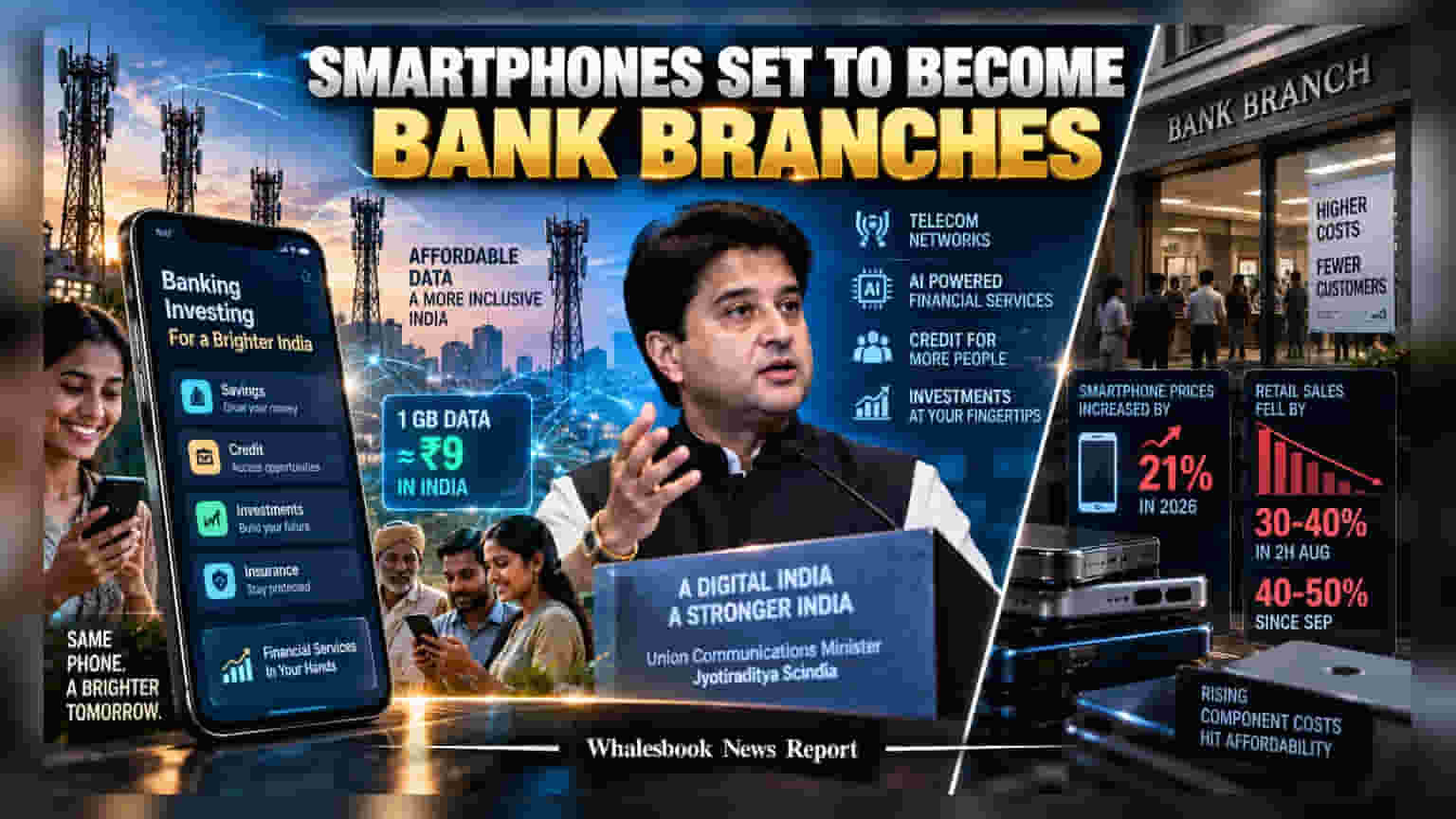
Union Minister Jyotiraditya Scindia envisions smartphones as India's primary bank branches, but high costs are stalling this growth. Smartphone retail prices jumped 21% this year, leading to a 30-50% decline in sales, forcing the industry to rely heavily on financing.
Union Communications Minister Jyotiraditya Scindia has proposed a digital-first future for India, where smartphones and telecom networks replace traditional bank branches. The government’s vision relies on cheap mobile data to turn phones into gateways for credit, investment, and financial services. By leveraging Artificial Intelligence and digital infrastructure, the state aims to bring banking to every user. However, this long-term digital push is currently facing significant friction from the hardware side of the market.
While the government highlights that 1 GB of data costs roughly ₹9 in India, the cost of the actual devices needed to access these services has surged. Smartphone retail prices increased by 21% in 2026, marking the sharpest rise globally. This price hike, largely driven by rising memory component costs like DRAM and NAND, has hit consumer affordability hard, particularly for devices priced below ₹15,000.
This pricing pressure has led to a noticeable slowdown in the retail sector. According to data from the All India Mobile Retailers Association, mainline store sales fell by 30-40% in the second half of August, with the decline worsening to 40-50% since the start of September. For traditional retailers, this drop in footfall is a major concern, as they struggle to move inventory in a market where consumers are delaying upgrades.
Manufacturers are also feeling the heat. Rising component costs have put significant pressure on profit margins, especially in the budget segment. Companies are finding it difficult to maintain competitive pricing while absorbing these costs, leading to a situation where potential buyers are hesitant to upgrade their existing devices. This could delay the migration toward newer technology required to support advanced AI-based financial services.
To manage this affordability crisis, the industry is becoming increasingly dependent on financing models. It is estimated that 42% of all smartphone sales in 2026 will be driven by NBFCs and EMI plans. While this keeps sales moving, it creates a reliance on credit for consumer goods, which could become a risk if economic conditions tighten or if consumers face debt stress.
For investors and market observers, the challenge lies in how these two realities will align. While the structural push toward mobile-based financial services continues, the speed of adoption will depend on how quickly smartphone affordability improves. Key areas to watch include trends in memory component pricing, recovery in retail footfall, and whether the reliance on device financing remains sustainable for both consumers and lenders.