Toyota Challenges EV Race: Is Ethanol Hybrid India's Clean Fuel Secret Weapon?

Overview
Toyota Kirloskar Motor is advocating for government incentives for ethanol-powered hybrid flex-fuel technology, presenting it as a superior clean transport solution over electric vehicles. Citing lifecycle emissions benefits and insulation from geopolitical risks affecting EV supply chains, the company, led by Vikram Gulati, urges tax relief and emission norm advantages for these vehicles. This push, supported by the sugar lobby, contrasts with the prevailing focus on EVs by other major automakers and industry bodies.
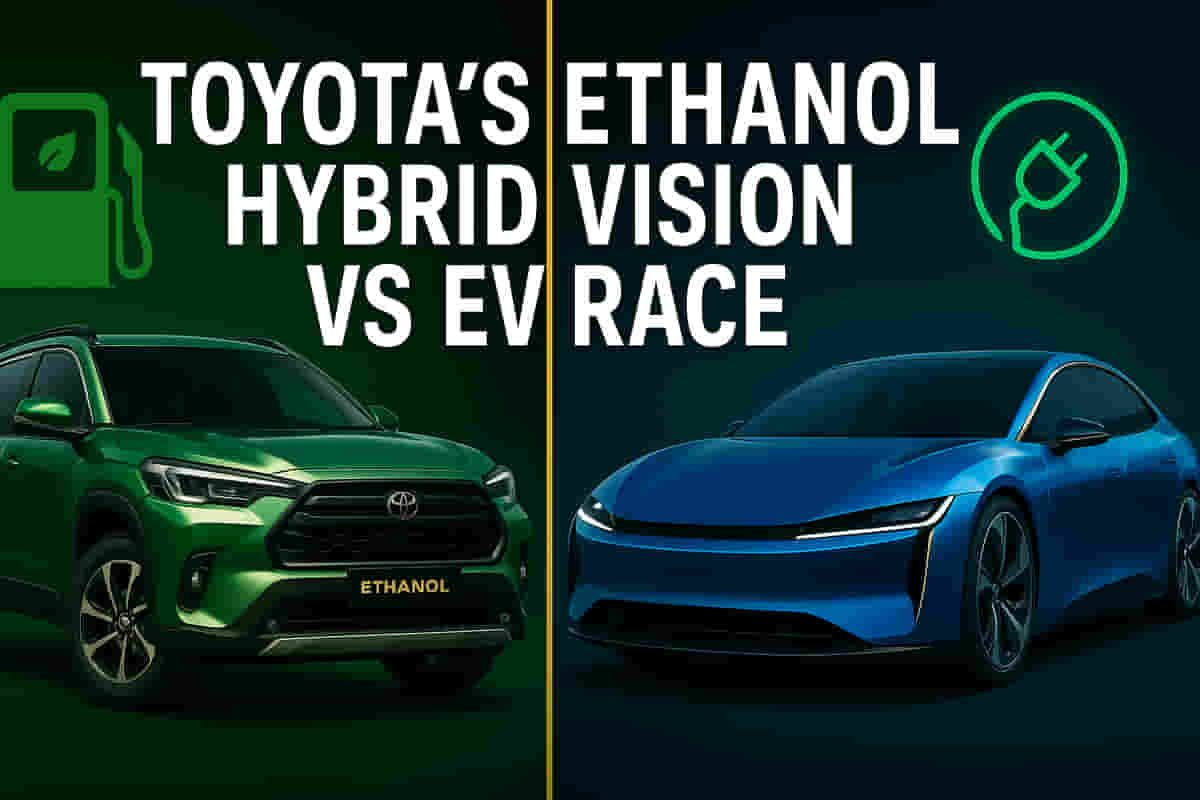
Toyota Kirloskar Motor is making a strong case for hybrid flex-fuel vehicles powered by ethanol, proposing them as India's optimal clean fuel solution, even over electric vehicles (EVs). The company believes that aligning government policy with this technology could secure India's automotive future and energy independence.
The Case for Ethanol Hybrids
- Toyota Kirloskar Motor's country head, Vikram Gulati, argues that ethanol-powered hybrid flex-fuel vehicles offer the cleanest option when considering the entire lifecycle emissions, from manufacturing to end-of-life, not just tailpipe emissions.
- These vehicles can run on various blends of ethanol and gasoline, including 100% ethanol, offering flexibility and a path to reduce crude oil import dependence.
- Combining flex-fuel capability with hybrid or plug-in hybrid technology can provide superior range and efficiency compared to current EV technology, according to Gulati.
Economic and Geopolitical Arguments
- Vikram Gulati highlighted that ethanol hybrids are insulated from geopolitical uncertainties, such as those impacting EV development, referencing challenges posed by China.
- He emphasized the economic significance of the automotive industry, which heavily relies on internal combustion engine (ICE) technologies, contributing significantly to GDP and tax revenues. Prioritizing ICE with clean fuels like ethanol sustains this vital sector.
- The Indian automotive industry has a turnover of approximately ₹20 trillion, with 98-99% derived from ICE technologies. This sector also contributes substantially to tax revenue and road tax for states.
Industry Support and Counterarguments
- Toyota's proposition receives support from the Indian sugar industry, represented by the Indian Sugar Mills Association (ISMA). ISMA notes that India has a significant ethanol production capacity, exceeding current consumption needs for blending.
- Deepak Ballani, Director General of ISMA, stated that enhancing ethanol consumption is crucial, and flex-fuel technology is a key ecosystem for carbon emission reduction.
- However, the prevailing sentiment among other major automakers and industry bodies like the Society of Indian Automobile Manufacturers (SIAM) favors prioritizing EVs for the clean fuel transition. SIAM advocates for greater leeway in emission norm calculations for EVs.
Government Policy and Future Norms
- The government is in the process of finalizing the Corporate Average Fuel Efficiency (CAFE-III) norms. Draft proposals suggest counting one EV as three cars and one hybrid flex-fuel car as 2.5 cars for emission calculations, indicating a nuanced approach.
- Toyota argues that a full life-cycle assessment would favor ethanol-powered flex-fuel vehicles, even with these current calculations.
- The company stresses that a future entirely devoid of ICE technologies is economically non-viable for India and advocates for sustaining ICE technology through sustainable fuels like ethanol.
Impact
- This debate could significantly influence India's automotive policy, affecting investment decisions in EV infrastructure versus ethanol production and hybrid vehicle manufacturing.
- It has the potential to impact the growth trajectory of companies involved in electric vehicles, battery technology, and those tied to the ethanol supply chain, including the sugar industry.
- A shift in policy could lead to varied market reactions from different automotive segments and component suppliers.
- Impact Rating: 8
Difficult Terms Explained
- Electric Vehicles (EVs): Vehicles powered entirely by electricity, stored in batteries.
- Hybrid Flex-Fuel Vehicles: Vehicles that can run on multiple fuel types, including gasoline and ethanol (or blends), combined with hybrid powertrain technology that uses both an internal combustion engine and an electric motor.
- Ethanol Blending: Mixing ethanol (an alcohol fuel made from plants like sugarcane or corn) with gasoline. India currently blends 20% ethanol with petrol (E20).
- Lifecycle Emissions: The total greenhouse gas emissions produced by a vehicle throughout its entire existence, from the extraction of raw materials, manufacturing, use, and disposal.
- Internal Combustion Engine (ICE): A heat engine where the combustion of a fuel occurs with an oxidizer (usually air) in a combustion chamber that is an integral part of the working fluid flow circuit. The expansion of the high-temperature and high-pressure gas products of combustion applies direct force to some component of the engine, such as pistons or turbine blades.
- Corporate Average Fuel Efficiency (CAFE) Norms: Regulations set by governments to improve fuel economy and reduce carbon emissions of vehicles. CAFE-III refers to the third iteration of these norms.
- Tailpipe Emissions: Pollutants released directly from a vehicle's exhaust system during operation.
Transportation Sector

IndiGo Faces Pilot Revolt! Hundreds of Flights Cancelled Amid FIP's Shocking Allegations

IndiGo Faces Regulatory Storm: DGCA Demands Urgent Action Plan Amidst Massive Flight Cancellations!
IPO Sector

NHAI Gears Up for Massive ₹8,000 Crore Infrastructure IPO: Your Chance to Invest in India's Highways!