

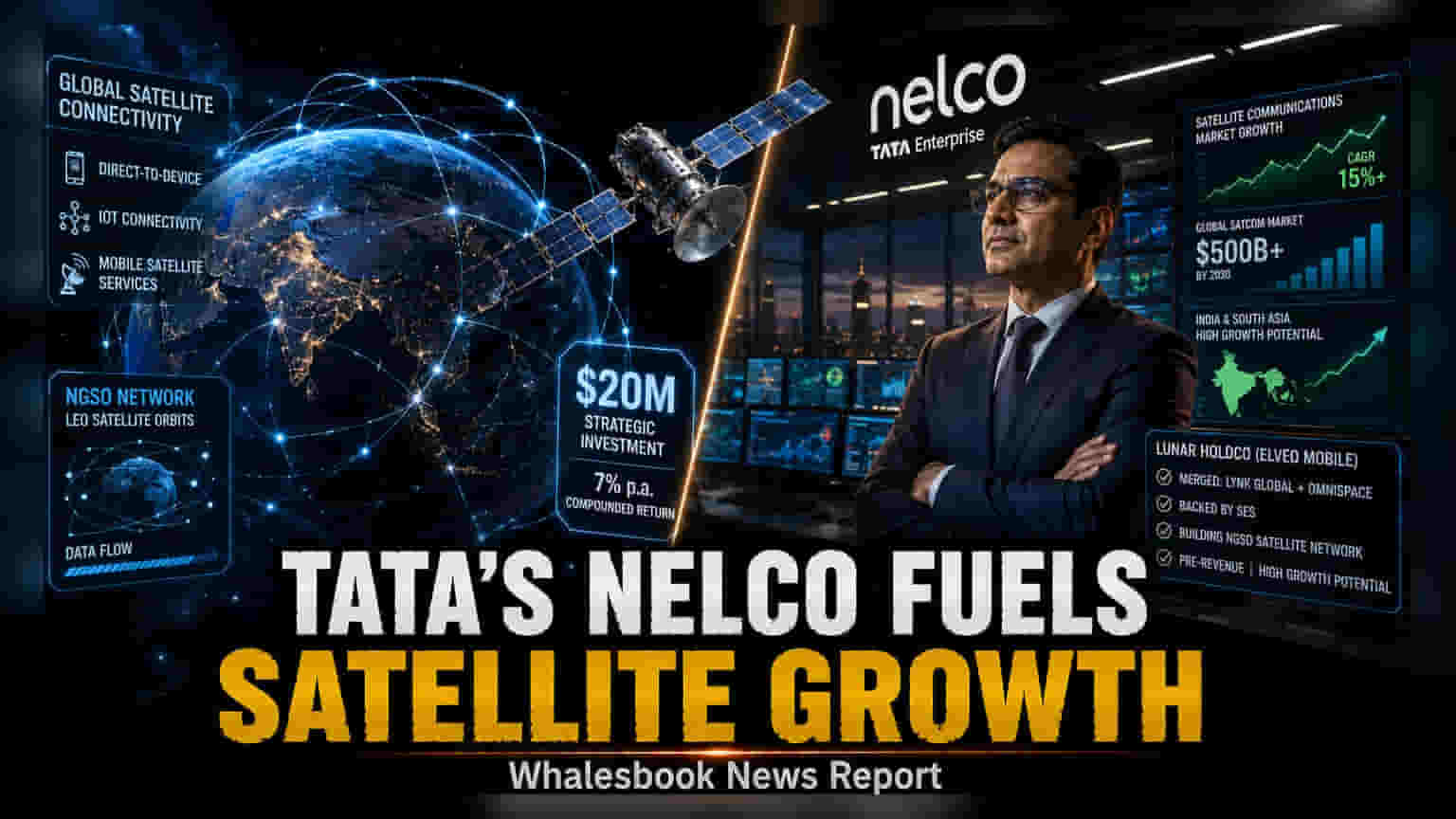
Tata Group company Nelco Ltd has invested $20 million in US-based satellite firm Lunar Holdco via convertible debentures. The move aims to secure access to next-generation satellite connectivity services, including D2D and IoT, for the Indian market, though operations remain subject to regulatory approvals.
Nelco Ltd, the satellite services division of the Tata Group, has announced a strategic investment of $20 million in Lunar Holdco, Inc., a United States-based satellite firm. The deal, which was officially finalized on August 17, 2026, involves the subscription of Compulsorily Convertible Debentures (CCDs) that carry a 7% annual compounded return. This partnership is designed to give the Indian company early access to advanced satellite communication technologies as the global market for these services begins to take shape.
Strategic Access to Satellite Tech
Lunar Holdco, which operates under the name Elveo Mobile, was formed in early 2026 following the merger of two satellite technology entities, Lynk Global and Omnispace. The company is currently developing a non-geostationary orbit (NGSO) satellite network meant to support Direct-to-Device (D2D), Internet of Things (IoT), and other mobile satellite connectivity services. Global operator SES is a key backer of the venture, adding weight to the firm’s technological roadmap. For Nelco, the investment is a way to position itself to offer these high-tech communication solutions in India and other South Asian markets once the technology is ready for public use.
Financial and Operational Context
This investment comes at a time when Nelco is managing a relatively modest earnings profile. In its financial results for the quarter ended June 2026, the company reported a net profit of ₹2.34 crore. While the $20 million capital injection is a significant strategic move, it is directed toward a startup that is currently pre-revenue. Because Lunar Holdco is still in the phase of developing and deploying its satellite constellation, it does not yet have a commercial revenue stream. Consequently, the value of this investment for shareholders will depend on the successful deployment of the satellite network and the company's ability to navigate the complex satellite-tech landscape.
Regulatory and Market Risks
Investors should note that this project involves significant uncertainty. While the partnership targets the Indian market, actual commercial operations cannot begin until the company receives necessary licenses and regulatory clearances. The Indian telecommunications and satellite sector is currently governed by specific policies regarding spectrum allocation and licensing, and any delay in these approvals could affect the timeline for introducing D2D or IoT services in the country. Furthermore, as the satellite communication sector is capital-intensive and technologically demanding, the project carries inherent execution risks, including the challenge of successfully launching and operating a global satellite network. The company’s long-term success with this partnership will depend on how quickly and effectively these regulatory and technological hurdles are cleared.