 Whalesbook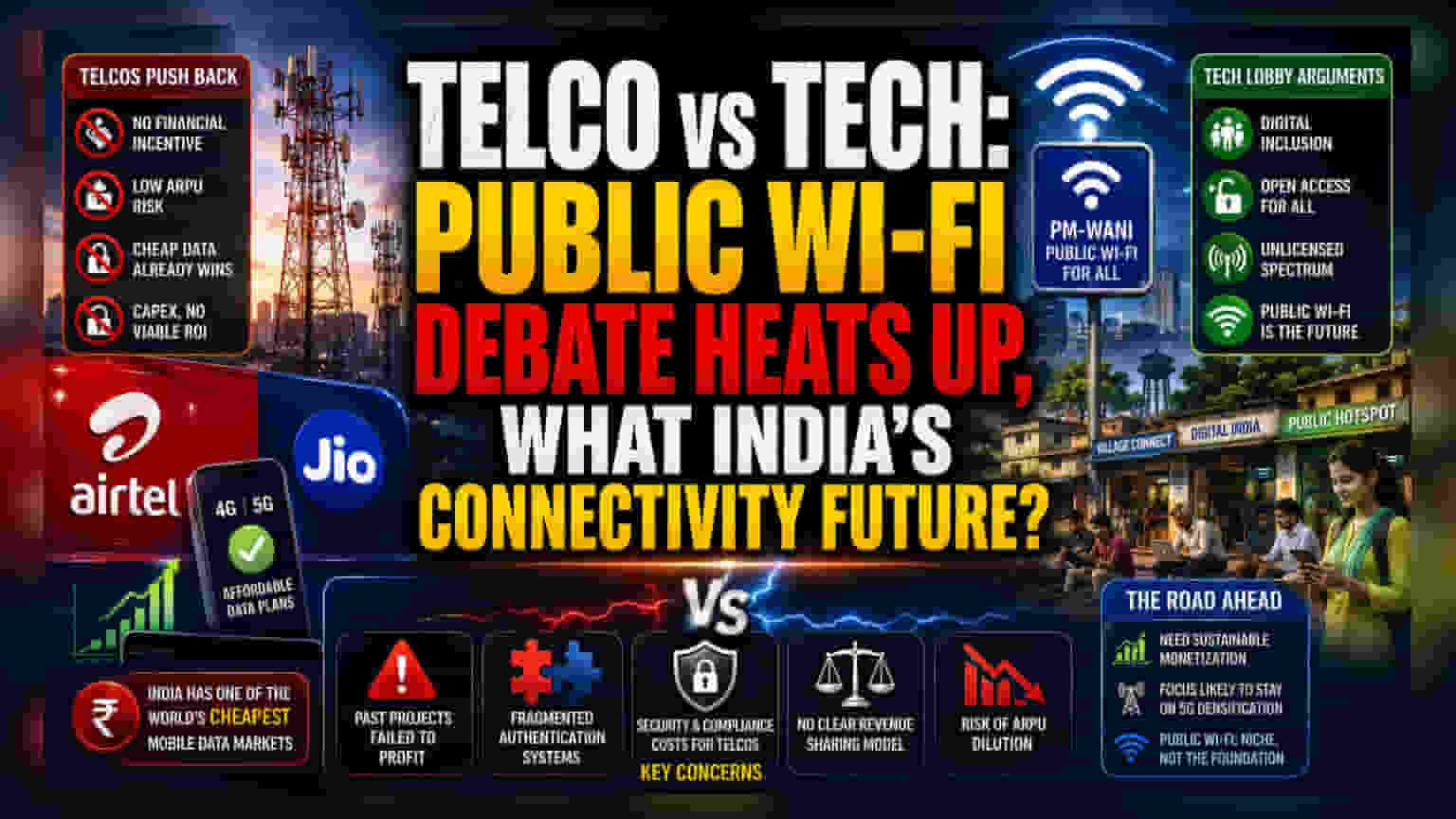


The Economic Schism in Indian Connectivity
The ongoing debate before the Telecom Regulatory Authority of India (TRAI) signals a deepening rift between mobile network operators and the broader technology ecosystem. At the heart of the disagreement is the viability of the PM-WANI framework, a government-backed public Wi-Fi project currently struggling to find a sustainable business model. While proponents argue for a hybrid connectivity strategy, the financial incentive for telecommunications firms to support an alternative to their own high-margin data services remains nonexistent.
Valuation and Market Reality
For major players like Bharti Airtel and Reliance Jio, the capital expenditure required to maintain public Wi-Fi networks offers little promise of a return on investment. India’s status as one of the world's cheapest mobile data markets creates a natural barrier to entry for public Wi-Fi services. Unlike markets where high data costs drive consumers toward free or low-cost hotspots, the ubiquity of affordable 4G and 5G plans renders the public Wi-Fi proposition commercially unattractive. Investors should note that for these telecom giants, the primary asset is the customer’s reliance on their proprietary radio access networks. Integrating public Wi-Fi would only risk diluting the Average Revenue Per User (ARPU) that companies have worked aggressively to increase over the past several fiscal cycles.
The Forensic Bear Case
The skepticism expressed by industry incumbents carries significant weight, particularly regarding the historical performance of public access initiatives. The failure of past high-traffic projects, such as the rail-based Wi-Fi models, to achieve profitability serves as a stark warning. The infrastructure lacks the interoperability required for a seamless user experience, a problem that persistent fragmentation in authentication protocols continues to exacerbate. Furthermore, the regulatory environment remains uncertain; should the government mandate integration with initiatives like BharatNet, telcos may face indirect costs associated with network management and security compliance without a clear mechanism for revenue capture. The tech lobby's insistence on open access and unlicensed spectrum creates a persistent friction point that could lead to prolonged administrative paralysis, slowing the overall deployment of high-speed digital services across rural sectors.
Future Outlook
Market consensus suggests that unless a radically different monetization path—such as B2B service bundling or data offloading credits—is introduced, public Wi-Fi will likely remain a peripheral feature in India's digital strategy. Regulatory attention will likely shift toward reconciling these disparate interests, but the power dynamic remains skewed in favor of the mobile operators. Moving forward, the focus will likely remain on 5G densification, with Wi-Fi relegated to niche, location-specific use cases rather than serving as the foundational national infrastructure requested by the Broadband India Forum.