 Whalesbook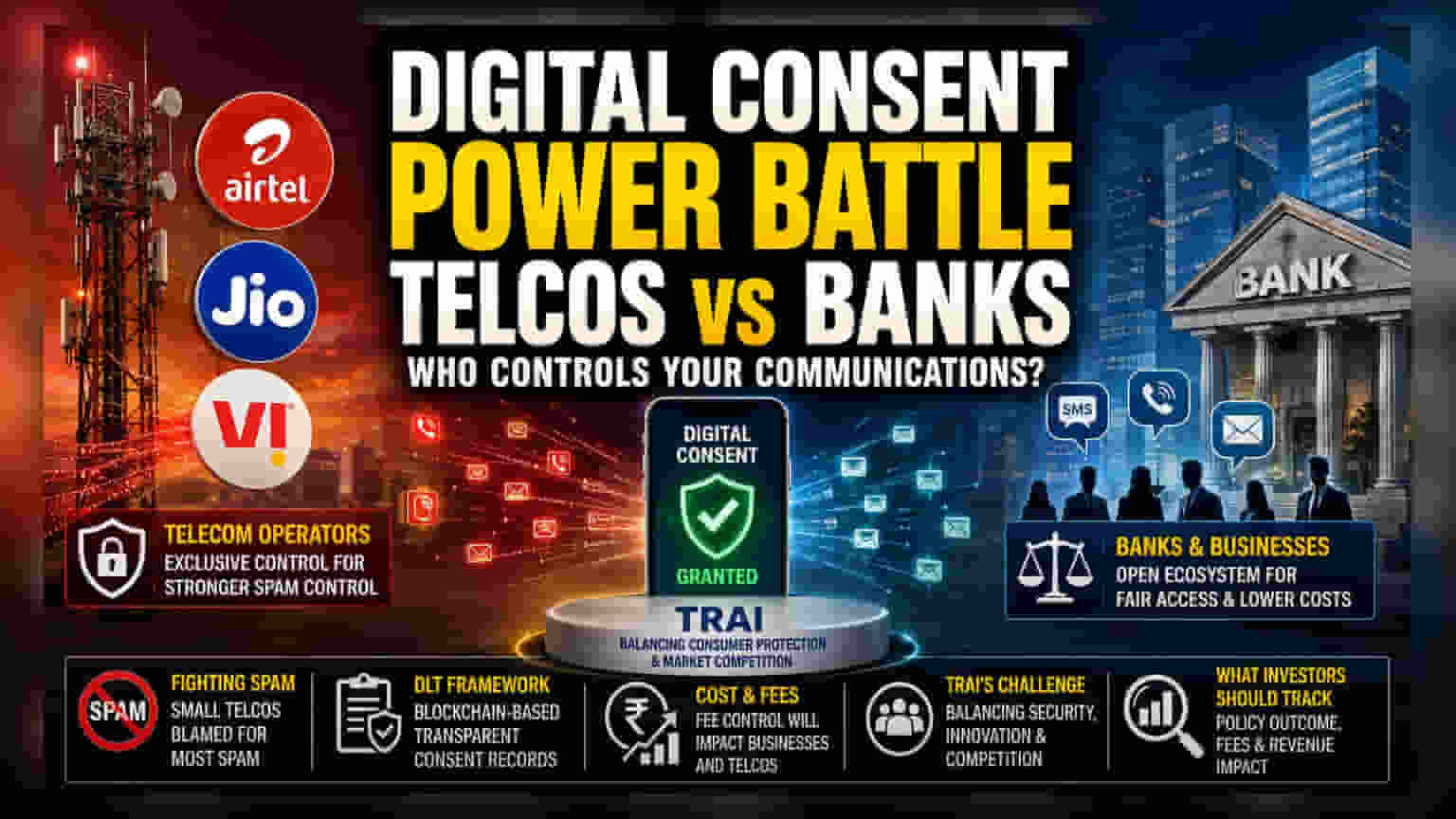


India's top telecom operators and banks are at odds over the control and costs of managing digital consent for commercial calls and SMS. Telecom companies want exclusive control to curb spam, while businesses fear higher costs and reduced competition. The Telecom Regulatory Authority of India (TRAI) is now mediating this regulatory dispute.
What Happened
A major disagreement has emerged between India’s leading telecom operators—Bharti Airtel, Reliance Jio, and Vodafone Idea—and a consortium of banks and other businesses. The conflict centers on who should have the authority to manage and charge for 'digital consent,' which is the mandatory permission required from mobile users before they can receive commercial communications like marketing calls and promotional SMS messages.
Telecom operators are pushing for the exclusive right to own and manage these consent mandates. They argue that as the providers with the most direct access to the vast majority of mobile subscribers, they are best positioned to maintain a secure and reliable digital registry. Conversely, banks and various other businesses that rely heavily on bulk messaging and customer alerts are opposing this, fearing that granting such power to a few dominant telecom companies will stifle competition and increase operational costs for businesses that need to communicate with their customers.
The Push for Spam Control
The root of this conflict lies in the ongoing battle against unsolicited commercial communication, or 'spam.' Telecom operators have expressed strong concerns regarding smaller licensed telecom service providers, such as Quadrant Televentures and STPL. Large telcos allege that these smaller entities contribute significantly to the spam problem, often acting as 'risk-free originators' for bulk commercial traffic.
Bharti Airtel recently highlighted to the Telecom Regulatory Authority of India (TRAI) that a vast majority of blacklisted entities and spam complaints were linked to these specific networks. By pushing for exclusive control over consent, the major telecom operators aim to consolidate the infrastructure used to track and verify these messages. They argue that this centralization will allow for better enforcement of anti-spam measures and higher accountability across the board.
Why Banks and Businesses Are Concerned
For banks and large business enterprises, the ability to send transaction alerts, OTPs, and promotional offers is critical for day-to-day operations. These entities fear that if telecom operators gain total control over the consent framework, it could lead to a monopoly-like situation. There are concerns that telecom operators could unilaterally increase fees or impose restrictive conditions on how businesses collect and manage customer consent.
These businesses argue that a diverse and open ecosystem for consent management is necessary to keep costs competitive and ensure that their ability to reach customers is not unfairly limited by the telecom companies. The prospect of higher charges for using these communication channels remains a primary point of friction for the banking and financial services sector.
The Regulatory Context
TRAI has been working to strengthen the regulatory framework for commercial communications, notably through the implementation of Distributed Ledger Technology (DLT). This blockchain-based system is designed to create a transparent, immutable record of consent, making it easier to verify whether a customer has actually agreed to receive marketing messages.
While the goal is to protect consumers from unwanted spam, the current dispute highlights the operational challenges of executing this framework. TRAI is now in the difficult position of balancing the telecom operators' demand for a secure, unified spam-control mechanism against the business sector's need for an affordable, open, and competitive communication landscape.
What Investors Should Track
Investors should monitor the final direction or policy guidelines issued by TRAI, as this will determine the future cost structure for businesses that rely on bulk SMS and calls. The resolution will indicate whether the regulatory environment will move toward a centralized model favored by telecom majors or a more distributed model supported by banks. Additionally, any changes to the fee structure for commercial communications could impact the revenue margins for both the telecom companies and the business entities involved in these high-volume communication channels.