

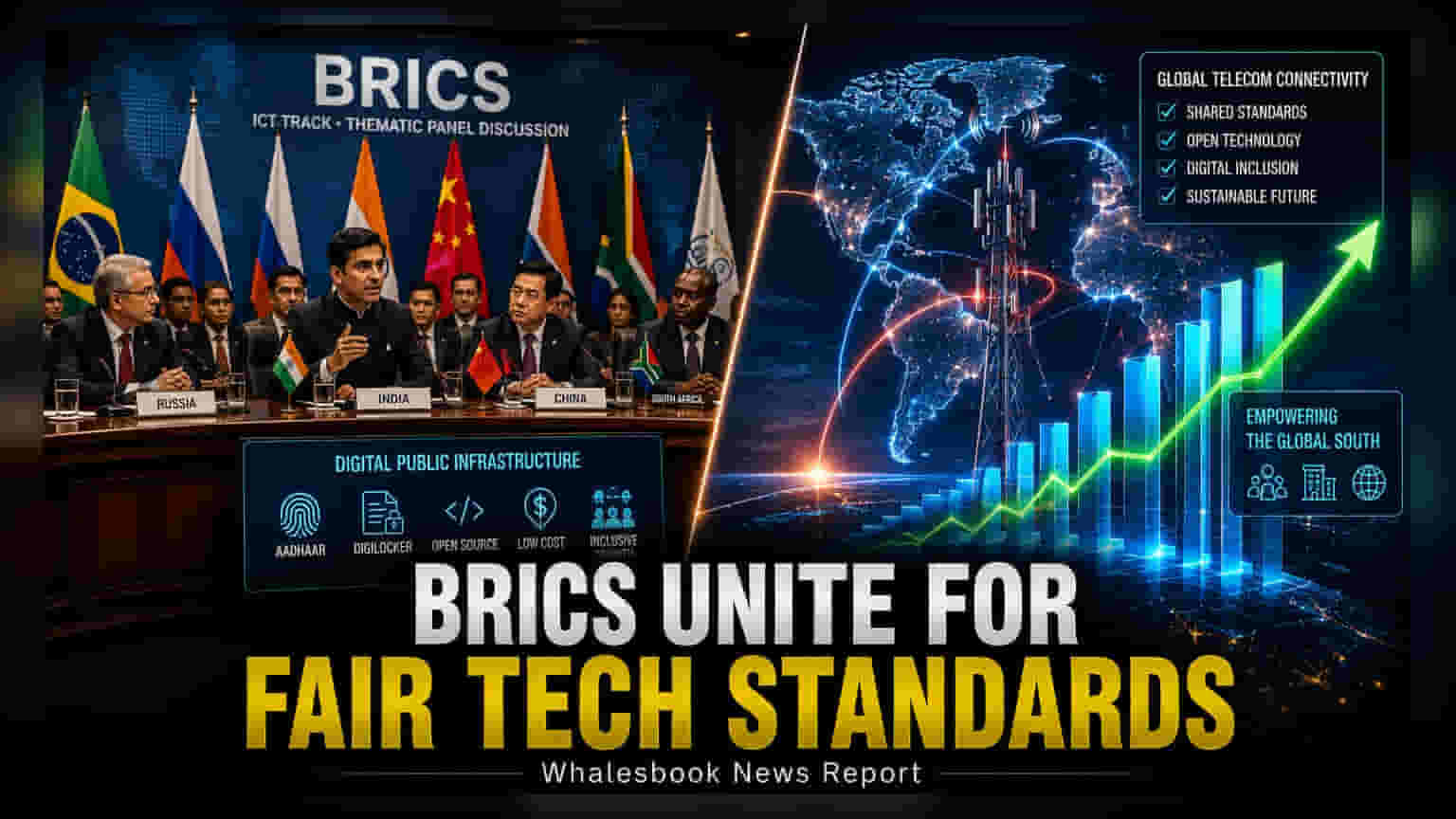
India has called on BRICS member nations to collaborate on fair telecommunications and ICT standards, proposing the sharing of its open-source digital public infrastructure. By advocating for these low-cost systems like Aadhaar, India aims to reduce reliance on expensive proprietary licensing. For the broader IT sector, this initiative could eventually open new export markets for Indian digital infrastructure solutions across the Global South.
India’s Minister of State for Telecom, Chandra Sekhar Pemmasani, has urged BRICS nations to join forces in setting equitable standards for international telecommunications and information and communication technology (ICT). Speaking at a BRICS ICT Track Thematic Panel Discussion, the minister emphasized that joint advocacy is necessary to ensure that global technology standards reflect the needs and interests of all member countries, rather than just a few dominant players.
Sharing India's Digital Infrastructure Models
At the core of India’s proposal is the offer to share its modular, open-source frameworks for digital public infrastructure with BRICS partners. The government aims to help member states bypass the high costs associated with proprietary licensing, which often act as a barrier to entry for developing economies. By using systems similar to India’s digital frameworks, other countries could potentially accelerate their own digitisation efforts without having to build costly systems from the ground up.
The minister highlighted the success of India's foundational identity systems, such as Aadhaar and the DigiLocker platform, as key examples. With over 1.45 billion Aadhaar identities generated and billions of authentications processed, India has demonstrated that scalable digital verification can be achieved at a low cost. Promoting these frameworks to the Global South is positioned by the government as a path toward sustainable development, economic growth, and poverty reduction.
Implications for the Indian IT Sector
While this initiative is primarily a matter of diplomatic and policy cooperation, it carries potential implications for the Indian IT and software services sector. As India seeks to export its 'Digital Public Infrastructure' (DPI) model, it creates a long-term opportunity for Indian IT companies that specialize in building, implementing, and maintaining government-to-citizen (G2C) digital solutions. If other BRICS nations and Global South countries adopt these open-source frameworks, there may be increased demand for Indian technical expertise to help integrate and manage these systems.
However, there are notable challenges to this strategy. The international landscape for technology standards is currently heavily influenced by proprietary technology providers and established global ICT bodies, which may offer resistance to open-source alternatives. Furthermore, successfully implementing these frameworks requires aligning diverse national regulations and technical environments, which can be a complex and time-consuming process.
For investors monitoring the broader technology and telecom sector, the key development to watch will be the specific agreements that arise from these BRICS discussions. Future updates on whether these nations agree to adopt unified standards or common digital frameworks will indicate how quickly this potential market for Indian digital infrastructure solutions could expand.