 Whalesbook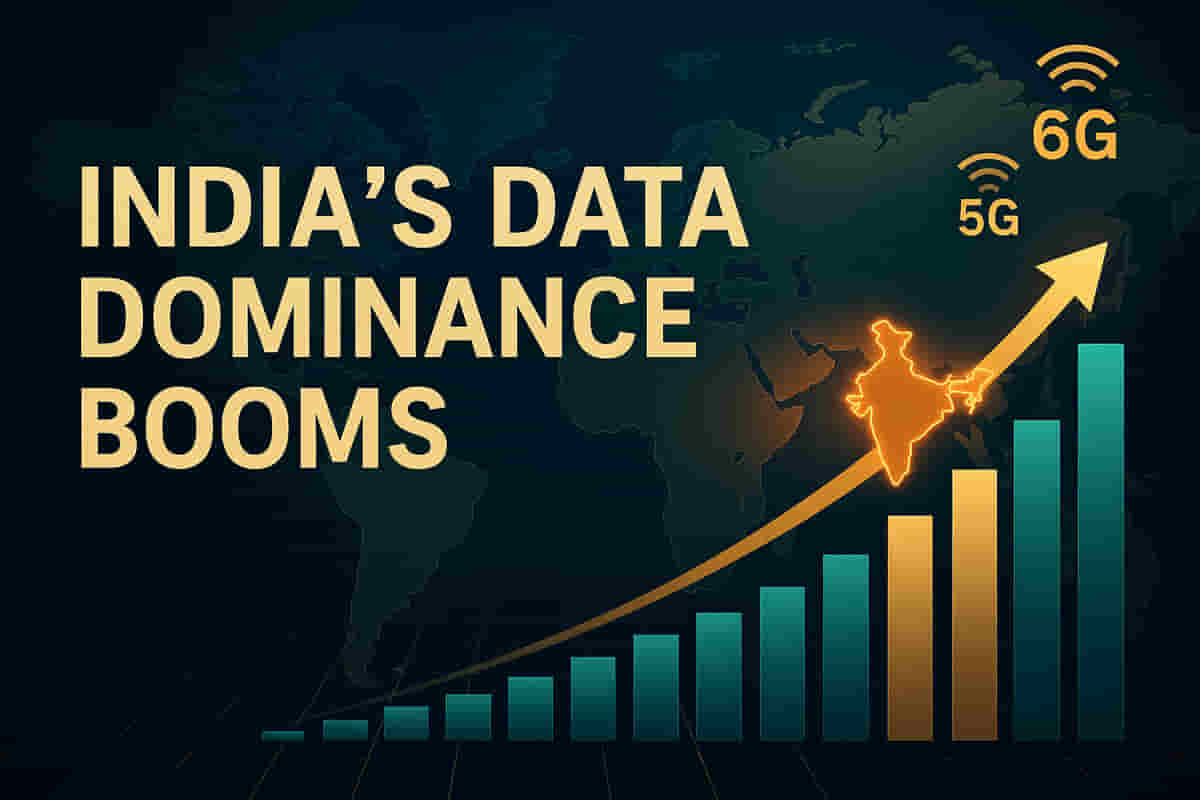
India has emerged as the global leader in mobile data consumption, with users consuming an average of 36GB per month. This figure significantly surpasses other major economies like the US, Western Europe, and China, fueled by extremely low internet tariffs and highly affordable smartphones. The robust content streaming and social media video consumption ecosystems further accelerate this demand.
According to the latest mobility report by Swedish network company Ericsson, India's data usage is expected to more than double to 65GB per user per month by 2031, growing at a Compound Annual Growth Rate (CAGR) of 10%. This is considerably higher than the global average, which stands at 21GB per month and is forecasted to reach 39GB by 2031.
Impact
This news indicates a massive and growing digital economy in India. For investors, it signals strong potential for telecom operators, infrastructure providers, content creators, and smartphone manufacturers. The rapid adoption of 5G and the future prospect of 6G present significant growth opportunities. Companies that can leverage this high data consumption and transition to next-generation networks are likely to benefit. The impact on the Indian stock market, particularly within the technology and telecom sectors, is expected to be positive, encouraging investment in these areas.
Impact Rating: 8/10
Key Terms Explained:
- CAGR (Compound Annual Growth Rate): This is the average annual growth rate of an investment or metric over a specified period, assuming that profits are reinvested at the end of each year. It smooths out volatility and gives a more accurate picture of growth than simple average growth.
- 5G: The fifth generation of mobile network technology, offering much faster speeds, lower latency, and greater capacity than 4G.
- 6G: The anticipated sixth generation of mobile network technology, expected to be even faster and more capable than 5G, potentially integrating AI more deeply.
- FWA (Fixed Wireless Access): A wireless technology that provides broadband internet service to fixed locations, such as homes and businesses, often as an alternative to traditional wired broadband.
- Subscription Penetration: The percentage of the total potential user base that has subscribed to a particular service or technology.