

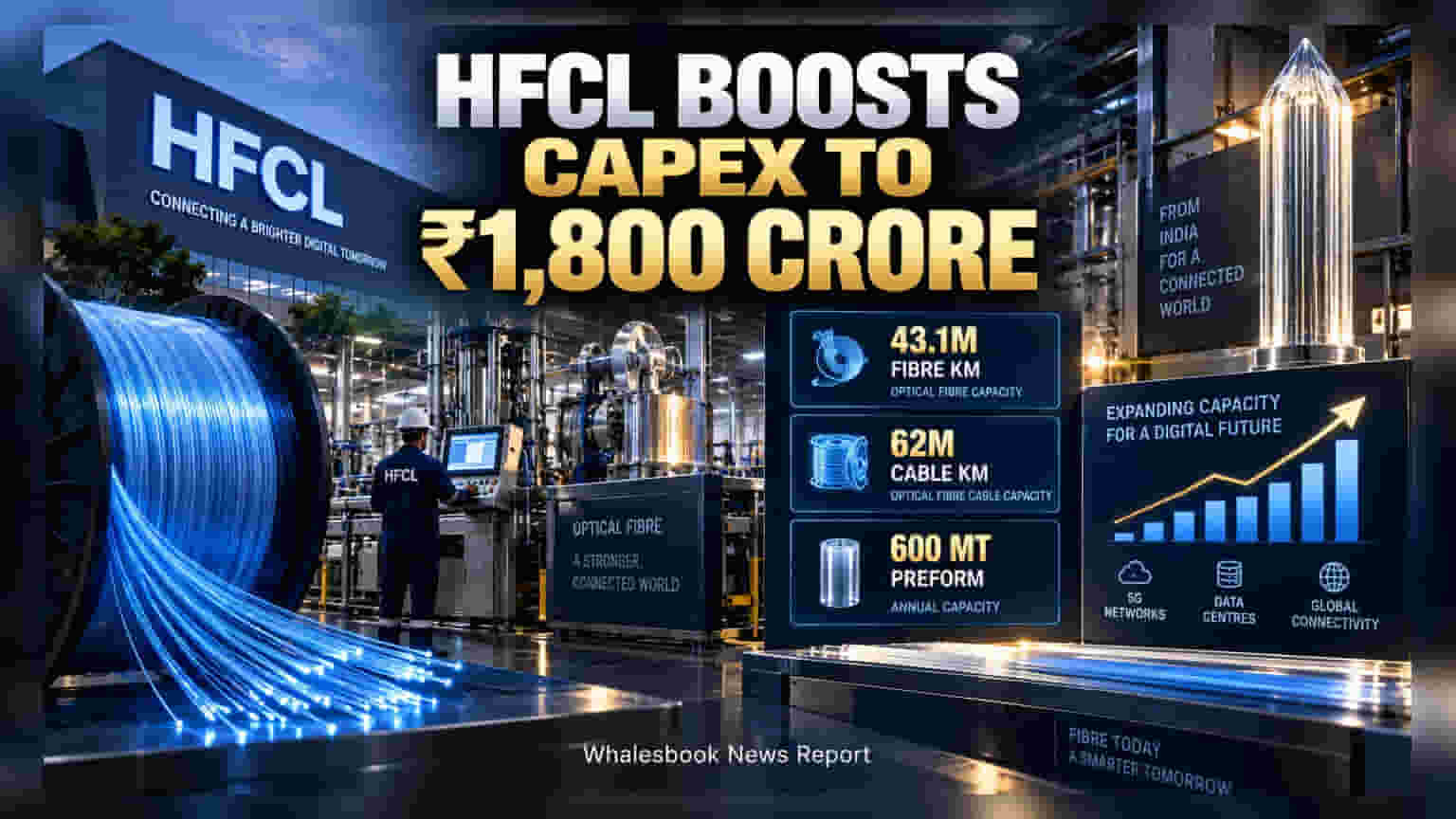
HFCL has increased its capital expenditure plan to ₹1,800 crore to boost manufacturing capacity for optical fibre and cables. This investment aims to meet rising demand from telecom networks and data centres. Investors may track the execution timeline, which runs through 2028, and the impact of the new debt on the company's balance sheet.
HFCL Limited has announced an additional investment of ₹820 crore, bringing its total planned capital expenditure for fibre-related manufacturing to approximately ₹1,800 crore. This expansion is designed to scale up the company's production of optical fibre, optical fibre cables, and preform to keep pace with the growing requirements of global digital infrastructure, including AI-enabled networks and hyperscale data centres.
Once the projects are fully commissioned, the company aims to reach an annual production capacity of 43.10 million fibre kilometres for optical fibre, 62.00 million fibre kilometres for optical fibre cables, and 600 metric tonnes for preform. These capacity upgrades are scheduled to be completed in phases, with fibre and cable production facilities targeted for completion by July 2028, and the preform facility by October 2028.
The financing for this expansion will come from a combination of sources. The company plans to use a mix of internal cash generation, proceeds from preferential warrants issued to the promoter group, and new borrowings from financial institutions. While the company maintains a strong order book of approximately ₹19,000 crore, which provides some visibility for future revenue, the reliance on external debt to fund these large-scale projects means that interest costs and debt levels will be important for shareholders to watch.
For investors, the long timeline of these projects introduces execution risk. Large infrastructure and manufacturing expansions can sometimes face delays or cost increases, which may put pressure on profit margins. The actual benefit of this capacity will depend on how effectively the company can convert these investments into increased sales and improved cash flow in the coming years.
Looking ahead, the next important updates for shareholders will be the progress reports on the commissioning of these facilities and any changes in the company's debt-to-equity ratio as capital is deployed. Monitoring the quarterly updates on order execution will also help in assessing whether the demand environment remains strong enough to justify this significant manufacturing footprint expansion.