

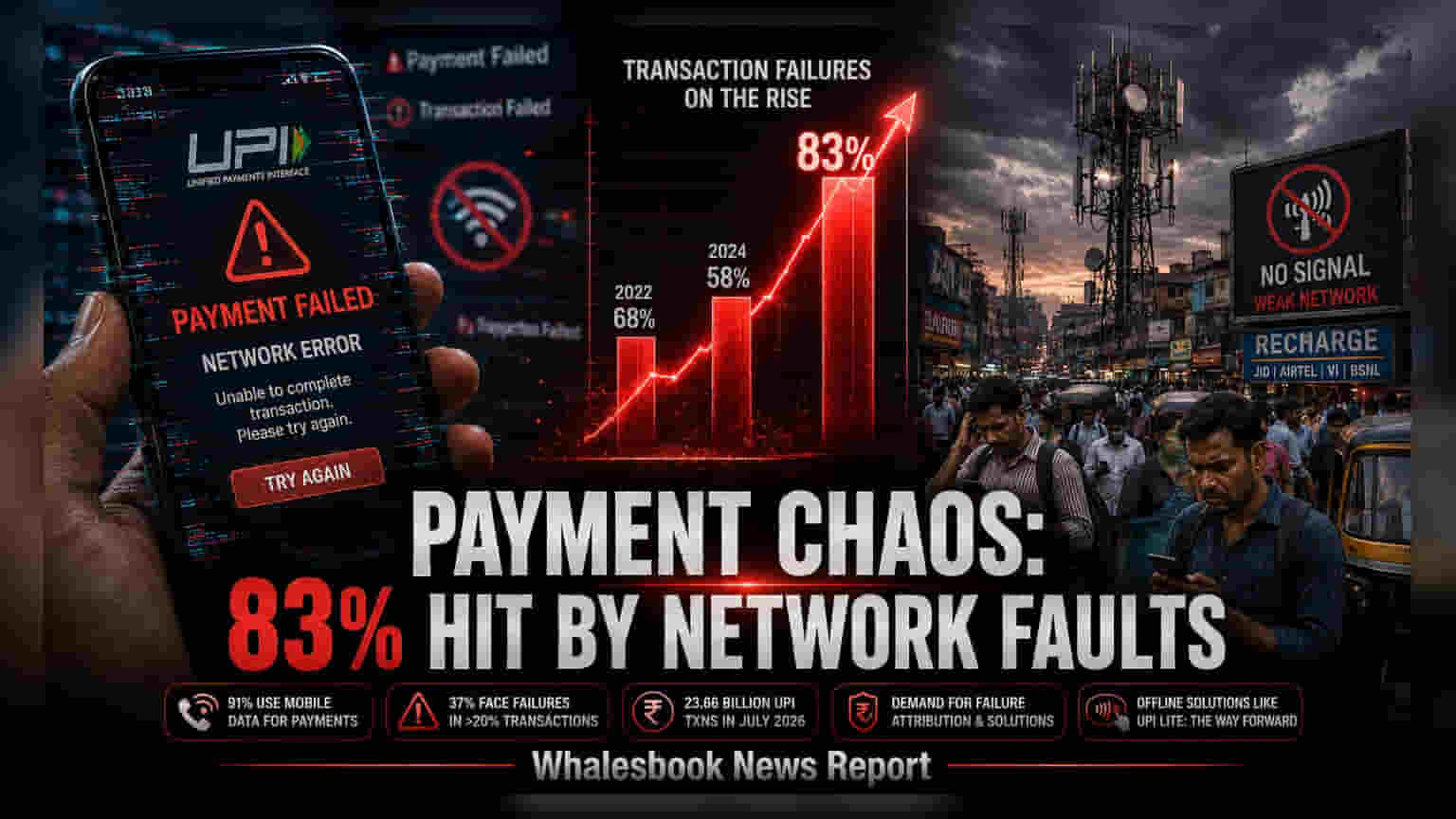
A LocalCircles survey reveals that 83% of Indian digital payment users face monthly transaction failures, up from 58% in 2024. As India's digital economy expands, this reliability gap highlights a critical dependence on mobile network quality. Investors should monitor how the industry addresses these connectivity hurdles, as the focus in the fintech sector shifts from user acquisition to transaction reliability.
India’s digital payment ecosystem is facing a significant infrastructure hurdle as the volume of transactions continues to climb. A new report by community-based platform LocalCircles highlights that 83% of mobile internet users now report at least one payment disruption every month. This trend indicates a worsening reliability issue, as the figure stood at 58% in 2024 and 68% in 2022.
The findings are particularly relevant for investors monitoring the fintech and telecommunications sectors. While the Unified Payments Interface (UPI) continues to show strong growth—processing a record 23.66 billion transactions worth ₹29.88 lakh crore in July 2026—the underlying infrastructure is struggling to keep pace. The survey, which included responses from over 52,000 users, found that 91% of individuals now rely on mobile data for financial transactions, up significantly from 62% in 2022. With almost everyone dependent on mobile internet, network quality has become the primary bottleneck for digital payments.
The Shift from Adoption to Reliability
The most critical insight for market observers is that the sector has transitioned from a phase of mass adoption to a phase of dependability. Previously, the focus was on getting users to try digital payments. Now, the challenge is keeping them satisfied with a seamless experience. The survey data shows that 37% of users experience network-related failures in more than 20% of their monthly transactions. Such high failure rates pose an operational risk for fintech platforms, as persistent technical glitches can erode consumer trust and potentially stall the growth of transaction volumes.
From a sectoral perspective, the issue of low internet speeds and frequent connectivity disruptions is not just a nuisance but a drag on efficiency. With only 7% of users relying on fixed-line broadband or fiber, the vast majority are vulnerable to the inherent instability of mobile networks. This has prompted calls from industry observers and user groups for stakeholders, including the Reserve Bank of India, the National Payments Corporation of India, and telecom regulators, to prioritize transaction-level failure attribution. This mechanism would allow users to clearly distinguish whether a failed payment is due to a bank system error, a payment app issue, or poor telecom connectivity.
The future growth trajectory of digital payments may increasingly hinge on the deployment of offline or low-bandwidth solutions. Technologies like the UPI Lite tap-and-pay feature, which allows for small-ticket transactions without relying heavily on live internet connectivity, represent a strategic move to bypass these network constraints. Investors should track how rapidly these offline payment solutions are adopted, as they could be the next catalyst for maintaining high transaction growth even in areas with poor network infrastructure. The ability of fintech companies to integrate these reliable payment modes will be a key differentiator in the coming quarters.