 Whalesbook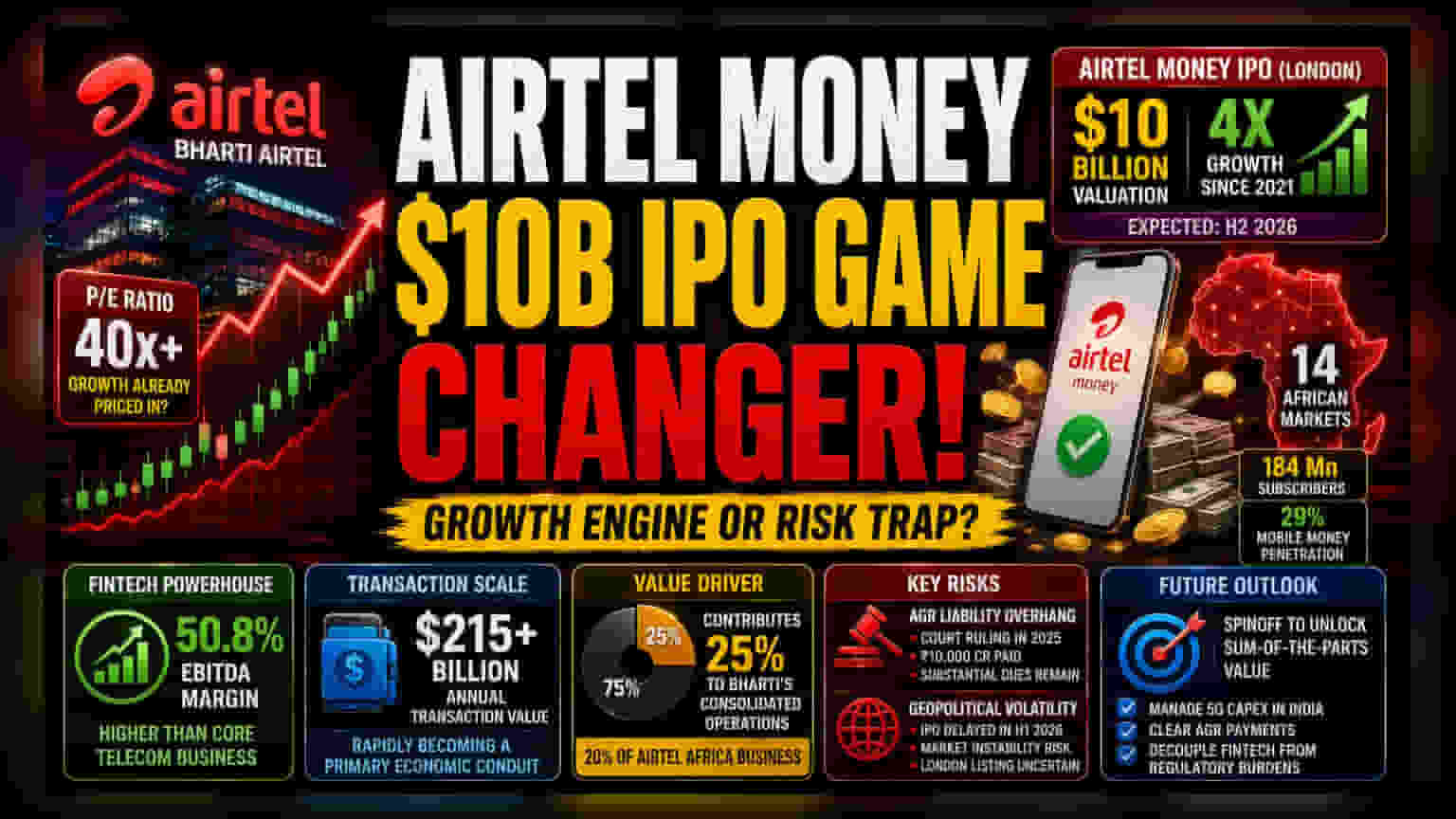


The Valuation Catalyst
Market sentiment surrounding Bharti Airtel has recently been bolstered by institutional projections regarding the upcoming separation of its African mobile money unit. A potential listing in London during the latter half of 2026 is expected to validate the segment's rapid evolution. With a projected valuation of $10 billion, the IPO would signify a fourfold appreciation in value since 2021. This move is strategically designed to isolate and monetize high-growth digital infrastructure, currently contributing 20% to Airtel Africa's total regional business and 25% to Bharti's consolidated operations. Despite the excitement, the current market valuation—trading at a P/E ratio exceeding 40x—suggests that investors have already priced in a significant portion of this growth, necessitating consistent margin outperformance to sustain current price levels.
Operational Divergence and Growth Trajectory
The unit's performance is anchored by a 50.8% EBITDA margin, which consistently exceeds that of the parent telecom business. With annual transaction values recently crossing $215 billion, the platform is transitioning from a niche service to a primary economic conduit across 14 African markets. While East Africa remains the revenue engine, Nigeria represents the primary growth frontier. With mobile money penetration across the group's 184 million subscribers sitting at just 29%, the company maintains a massive runway. However, this growth remains subject to execution risk in competitive, highly regulated environments where incumbents like Safaricom's M-PESA have historically dominated local market share.
The Forensic Bear Case
Despite the long-term potential, the equity remains tethered to significant structural weaknesses. Foremost is the lingering Adjusted Gross Revenue (AGR) dispute. Following a 2025 judicial judgment, Bharti Airtel has been mandated to clear substantial dues. While the company recently settled an initial tranche of approximately ₹10,000 crore, total outstanding liabilities continue to weigh heavily on the balance sheet, especially as the government has denied requests for the same level of relief granted to competitors like Vodafone Idea. Furthermore, the timing of the Airtel Money IPO is highly sensitive to geopolitical volatility. Previous delays in the first half of 2026 were explicitly attributed to market instability, highlighting that the company is vulnerable to external shocks that could render a London listing unfavorable or force further postponements.
Future Outlook
Brokerage consensus remains largely constructive, driven by the belief that the spinoff will clarify the conglomerate's sum-of-the-parts value. However, the path forward requires a delicate balance: managing the cash-intensive 5G rollout in India while simultaneously satisfying the government's demand for AGR payments. Investors should monitor whether the upcoming IPO can truly decouple the high-margin fintech business from the legacy regulatory burdens of the parent telecom entity.