

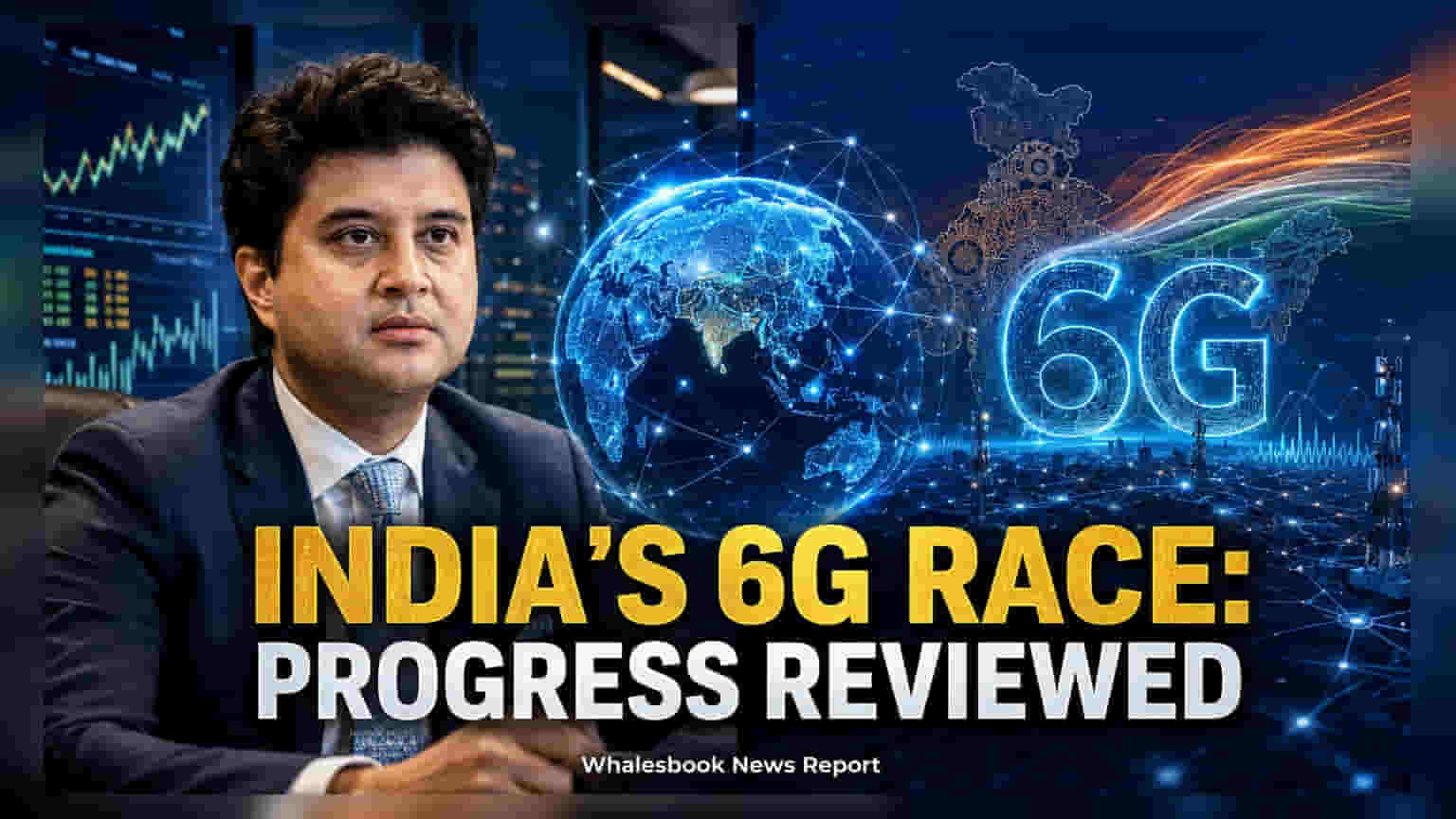
Communications Minister Jyotiraditya Scindia reviewed the progress of the Bharat 6G Alliance, which has now amassed over 7,700 patents in 5G and 6G technologies. This milestone highlights India's push to become a global hub for next-generation telecom innovation by 2030. Investors may monitor how this intellectual property translates into future commercial manufacturing and local technology adoption.
Detailed Coverage
Communications Minister Jyotiraditya Scindia held a high-level review of the Bharat 6G Alliance on Tuesday, evaluating the nation's progress toward becoming a leader in future telecommunications. The meeting, which included Minister of State Chandra Sekhar Pemmasani and Telecom Secretary Amit Agrawal, marks a significant checkpoint for the government's long-term roadmap to establish India as a core developer of 6G technology by 2030.
Intellectual Property and Innovation Growth
A primary metric of the alliance's success is its growing focus on intellectual property. Member organizations within the alliance have collectively secured over 7,700 patents covering 5G and 6G technologies. Notably, over 4,400 of these patent filings are international, suggesting that Indian research institutions and private entities are increasingly participating in the global standards-setting process. For investors, this shift from being a technology consumer to a contributor could play a role in reducing future dependency on imported intellectual property, potentially lowering long-term licensing costs for domestic telecom equipment manufacturers.
Strategic Working Groups and Commercialization
The Bharat 6G Alliance manages its goals through seven specialized working groups. These teams cover diverse domains including spectrum allocation, device manufacturing, green energy usage in telecom networks, and identifying viable revenue streams for 6G applications. While the current focus remains heavily on research, development, and patent acquisition, the long-term objective is to foster a local manufacturing ecosystem.
Developing a local 6G ecosystem involves significant financial risk and technical complexity. Unlike 5G, where infrastructure could be built upon existing global standards, 6G is still in the research and development phase worldwide. The success of this initiative will largely depend on the government’s ability to facilitate partnerships between academic researchers, public sector units, and private telecom companies to bridge the gap between laboratory success and large-scale industrial deployment.
Sector Context and Future Monitorables
The Indian telecom sector has moved rapidly from 4G to 5G, but the transition to 6G will require massive capital spending on new hardware and software architectures. The ability of the alliance members to convert their 7,700 patents into marketable products will be a critical monitorable. Furthermore, investors should track future policy announcements regarding spectrum pricing for 6G bands and the level of state funding dedicated to developing indigenous hardware, as these will directly influence the operational margins of domestic telecom equipment providers and service providers in the coming years.