 Whalesbook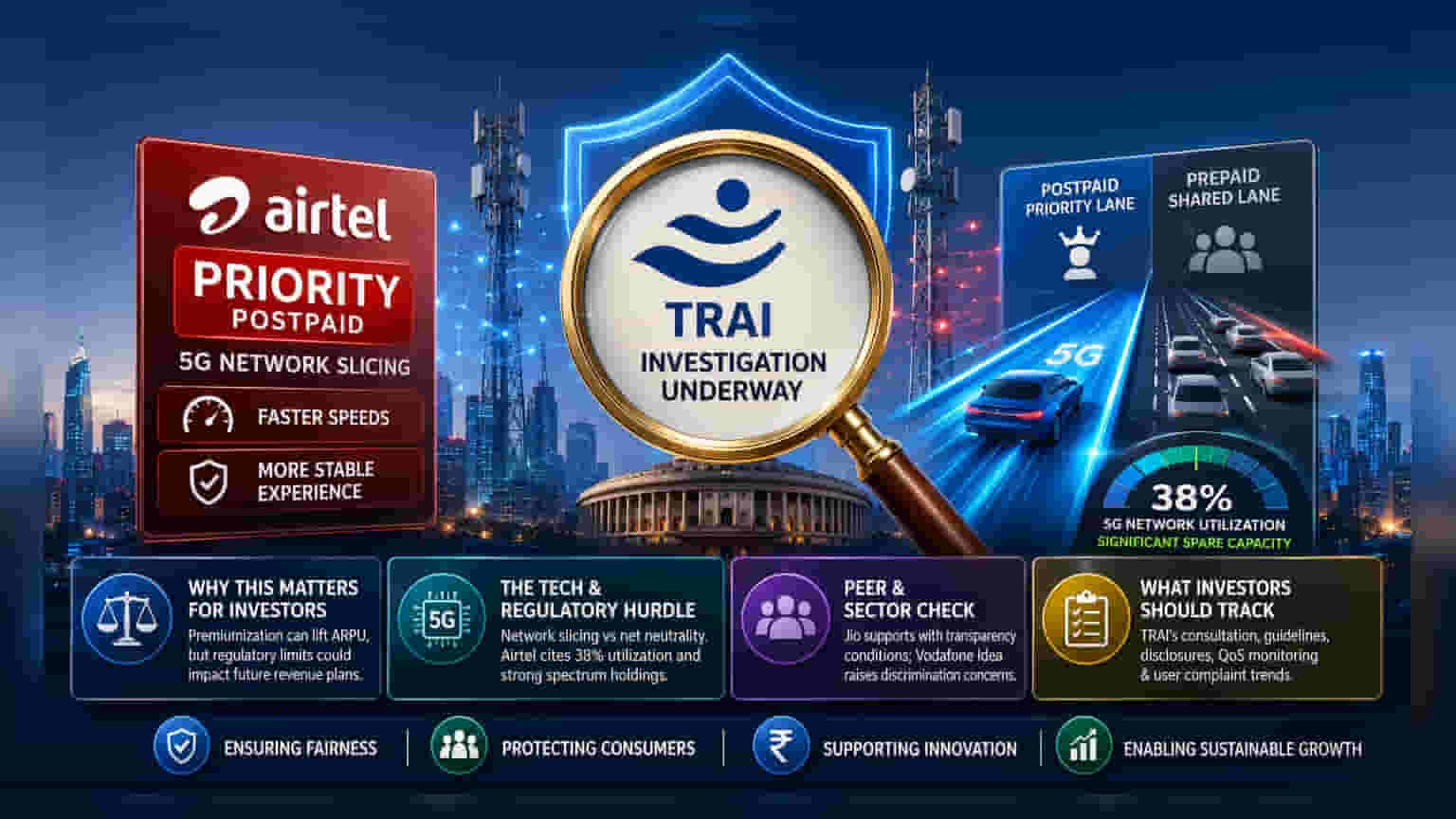


India’s telecom regulator, TRAI, is reviewing Bharti Airtel's 'Priority Postpaid' service to check if 5G network slicing unfairly impacts non-priority users. This investigation is key for investors as it touches on the broader push for telecom premiumization. The final decision could impact how carriers charge for enhanced 5G features and balance service quality for all subscribers.
What Happened
The Telecom Regulatory Authority of India (TRAI) has started an examination of Bharti Airtel’s "Priority Postpaid" service. This service uses a technology called 5G network slicing to give postpaid customers a more stable and faster internet experience, especially during times of high traffic. The regulator is checking whether this system creates a disadvantage for prepaid subscribers—who make up a large portion of the user base—by potentially reducing the network quality available to them.
Why This Matters For Investors
For telecom investors, this is about the industry's strategy for "premiumization." Major telecom players are looking for ways to increase their average revenue per user (ARPU) by offering paid features, like faster or more reliable 5G connections. If regulators decide that these premium services negatively impact the average user, it could create hurdles for future revenue plans. The investigation is not necessarily a sign of a ban, but it suggests that the regulator will be very careful about how these new paid features are rolled out to ensure fairness across all user groups.
The Tech And Regulatory Hurdle
Network slicing allows a mobile operator to create virtual, dedicated lanes for specific types of data or users. While this is a standard capability of 5G technology, it conflicts with older net neutrality rules, which were designed to keep internet access equal for everyone. Airtel has defended its position by stating that its network has significant spare capacity. The company noted that its 5G network is currently operating at about 38% utilization, suggesting that giving priority to one group does not have to come at the expense of others. Investors should note that the company has significantly increased its spectrum holdings since the 5G auctions, which supports their argument that they have enough capacity to handle these extra services without degrading the overall network.
Peer And Sector Check
Different telecom operators have different views on this technology. Reliance Jio, the market leader, has acknowledged that network slicing is a legitimate 5G feature but has urged that any preference given to users must be transparent and technically justified. On the other hand, Vodafone Idea has taken a more cautious stance, reportedly expressing concerns that such services could be seen as discriminatory. This split in industry opinion shows that while 5G offers new ways to make money, the sector is still figuring out the boundaries of fair play under current regulations.
What Investors Should Track
Moving forward, the key factor for investors is not just this specific service, but the broader framework that TRAI will likely develop. The regulator is expected to launch a consultation process to set new rules for these types of differentiated services. Investors should watch for official guidelines on what is permissible, how companies must disclose these services to the public, and how service quality will be monitored. Updates on whether any official complaints arise from users regarding service drops will also be important, as those would likely trigger stricter regulatory responses.