 Whalesbook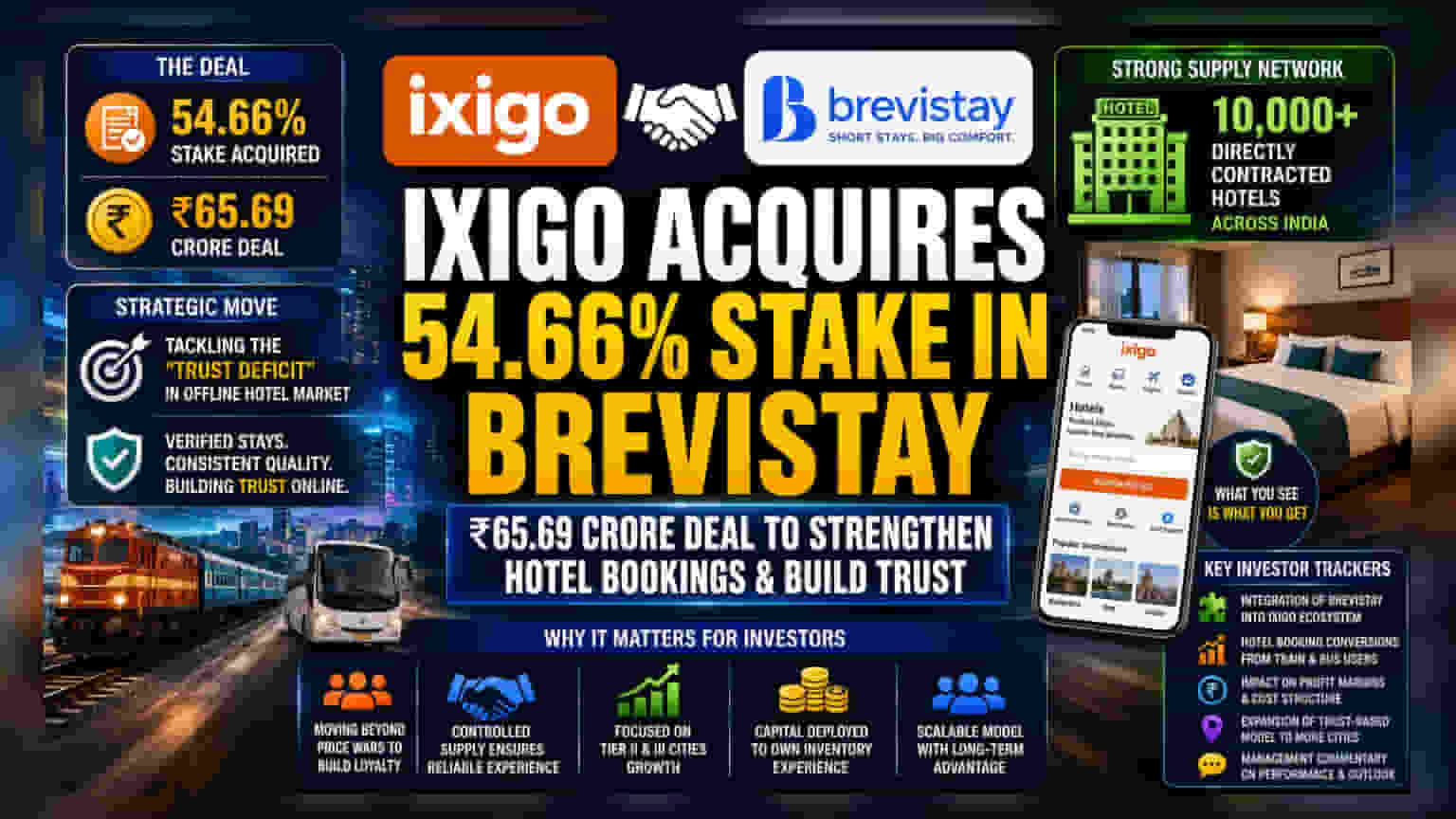


ixigo, the travel tech platform, has acquired a majority stake in Brevistay for ₹65.69 crore. This strategic move aims to capture India’s massive offline hotel market, where millions of travelers still prefer in-person negotiations over online bookings due to trust issues. By integrating Brevistay’s short-stay hospitality network, ixigo is shifting its focus toward building reliability and supply depth in Tier II and III cities, moving beyond simple price-based competition.
What Happened
Le Travenues Technology, the parent company of the travel booking platform ixigo, has acquired a 54.66% stake in Brevistay for ₹65.69 crore. Brevistay is a hospitality company that specializes in short-duration and overnight hotel bookings. This acquisition allows ixigo to gain control over a network of over 10,000 directly contracted hotels across India, marking a focused effort to expand its presence in the hotel accommodation segment.
Why This Matters For Investors
For a long time, the Indian online travel agency sector has competed largely on price, offering discounts to attract users. However, ixigo’s management has identified a different problem: a "trust deficit" in the offline hotel market. In India, a significant portion of hotel bookings, particularly those made by budget-conscious travelers arriving via trains or buses, still happens in person at the hotel reception.
Many travelers are hesitant to book online because they fear the actual room, amenities, or hygiene will not match what they saw on an app. By acquiring Brevistay, ixigo is trying to tackle this by creating a more reliable, managed supply of hotels. The goal is to shift these "offline-first" travelers onto their digital platform not by offering the lowest price, but by offering a trusted, consistent product.
The Strategic Pivot
This move represents a shift in strategy for ixigo. Instead of fighting for market share in the already crowded premium or corporate travel segments, the company is doubling down on its existing base of train and bus travelers, who often frequent Tier II and III cities.
By controlling the supply through direct contracts—rather than just being a middleman listing inventory—ixigo aims to ensure that customers get exactly what they book, such as functional air conditioning and clean rooms. This "product-first" approach is designed to increase user retention and loyalty, which could prove more valuable than one-time transaction growth driven by temporary discounts.
How Investors May Read This
This deal is a capital allocation decision. Investing ₹65.69 crore to acquire a majority stake is a clear sign that the company wants to own the inventory experience rather than just the booking interface. Investors will be looking to see if this model can be scaled profitably. The travel industry often faces a trade-off between growing volume and maintaining quality. If ixigo can successfully integrate Brevistay and manage these hotels without significant overhead costs, it could create a competitive advantage. However, scaling this model requires significant effort in managing hotel relationships and ensuring consistent service standards across thousands of locations.
The Challenges of the Budget Segment
The budget hotel segment is notoriously difficult to organize. Previous attempts by various players in the Indian hospitality market have shown that ensuring quality and preventing hotels from bypassing online platforms—known as "leakage"—is a constant challenge. There is also the risk of heavy operational costs if the company decides to invest heavily in upgrading or monitoring these properties. Additionally, the sector is highly competitive, with established players like MakeMyTrip, OYO, and global giants like Booking.com and Agoda constantly vying for the same budget-conscious customers.
What Investors Should Track
The most important monitorables moving forward will be the integration of Brevistay into ixigo’s existing app ecosystem and the uptake in hotel booking conversions among the train and bus passenger base. Investors may also want to watch for updates on how this acquisition affects the company’s profit margins, as direct supply management can sometimes be more expensive than a pure booking agency model. Finally, any management commentary regarding the expansion of this "trust-based" model to more cities will be key to understanding whether this strategy is effectively capturing the offline market as intended.